Electric Oven Troubleshooting Assistant
Diagnostic Checklist
Select the step you have performed or observed.
Check Power Source
Breakers, outlets, and plugsInspect Thermal Fuse
Continuity test for safety cutoffTest Door Switch
Sensor detection and clicking mechanismEvaluate Control Board
Burn marks, smells, and error codesCheck Heating Elements
Visual inspection and resistance testSelect a step above to begin diagnostics
Click on any troubleshooting step to see specific checks and update your diagnostic progress.
Diagnostic Result
Estimated Repair Cost
Quick Summary: Why Your Oven Died
- Power issues: Check if the circuit breaker has tripped or if a GFCI outlet was reset by a surge.
- Safety switches: The thermal fuse may have blown due to overheating, cutting power to prevent fire.
- Control board failure: A spark or smell of burning plastic often indicates a dead main control board.
- Door switch problems: If the oven thinks the door is open, it won’t start cooking.
- Heating element burnout: Visible breaks or blisters on the element mean it needs replacement.
Your dinner is ready to go in, you press the button, and... nothing. No heat, no light, just silence. It’s frustrating, especially when you’re hungry or hosting guests. An electric oven is a kitchen appliance that uses electricity to generate heat for baking and roasting. When it stops working suddenly, it’s rarely because the machine just gave up out of spite. Usually, a specific safety mechanism kicked in, or a component failed. Before you call a technician, you can solve about half of these cases yourself with a multimeter and some basic logic.
Step 1: Check the Power Source First
It sounds too simple, but most "sudden" failures are actually power delivery issues. Electricity doesn’t always flow smoothly. A surge from a storm, a heavy load from another appliance, or even a loose connection can interrupt the flow.
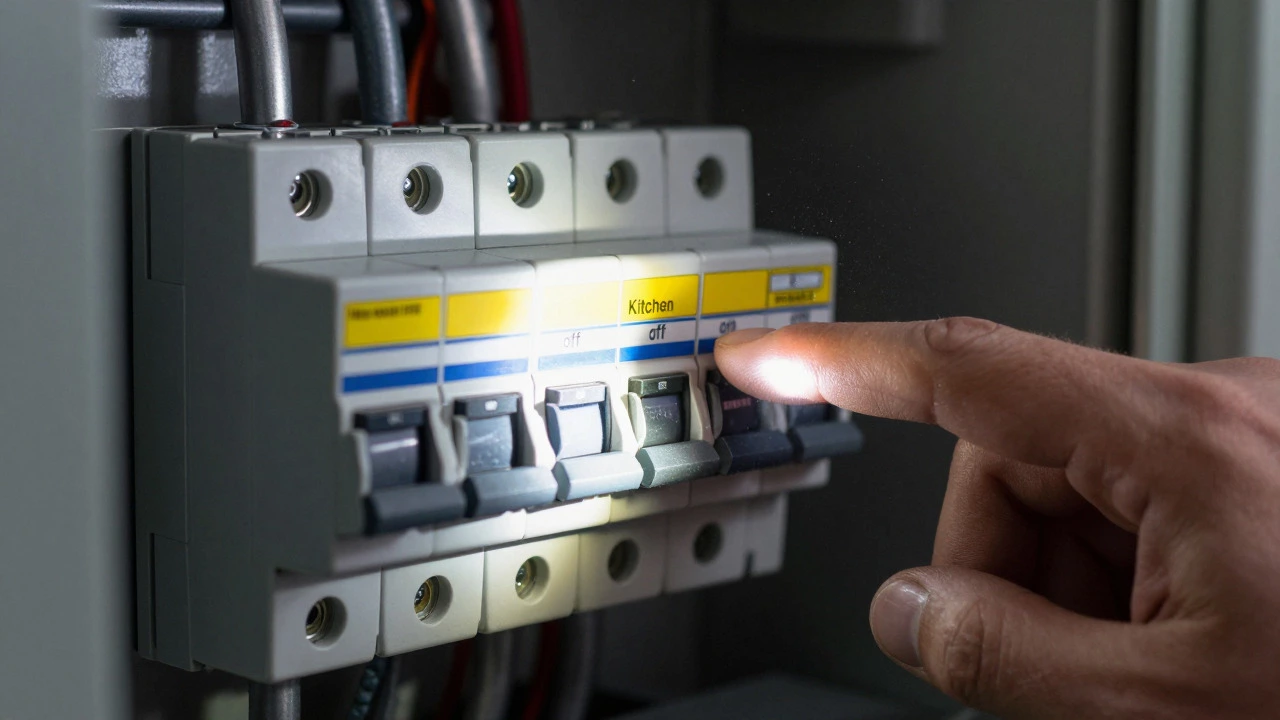
Start at your home’s electrical panel. Look for the breaker labeled "Kitchen," "Range," or "Oven." If the switch is in the middle position (off) or flipped to the opposite side of the other breakers, it has tripped. Flip it fully off, then back on. If it trips again immediately, stop. You likely have a short circuit inside the oven, and forcing it could cause a fire.
Next, check the wall outlet. Many modern ovens plug into a dedicated 240-volt outlet rather than being hardwired. Ensure the plug is seated tightly. If your oven shares a circuit with other high-draw appliances like a microwave or dishwasher, try turning those off. Sometimes, the combined load causes a voltage drop that confuses the oven’s sensitive electronics.
| Symptom | Likely Cause | Action |
|---|---|---|
| Breaker tripped | Overload or short circuit | Reset breaker; if it trips again, call a pro |
| No display, no lights | Loose plug or dead outlet | Check plug tightness; test outlet with another device |
| Oven works, but clock resets | Voltage fluctuation | Reprogram clock; monitor for recurring issues |
Step 2: Inspect the Thermal Fuse
If power is reaching the oven but it still does nothing, look for the thermal fuse is a one-time safety device that cuts power if the oven exceeds safe temperatures. Think of it as the oven’s panic button. If the oven gets too hot-perhaps because the door was left open during a bake cycle or the fan failed-the fuse blows to prevent a fire. Unlike a circuit breaker, a thermal fuse cannot be reset. Once it blows, it must be replaced.
The thermal fuse is usually located near the back of the oven cavity or behind the control panel. To check it, you’ll need a multimeter set to continuity mode. Touch the probes to the two terminals of the fuse. If you hear a beep or see a reading of zero ohms, the fuse is good. If there’s no continuity (infinite resistance), the fuse is blown. Replace it with an exact match from the manufacturer. Using a higher-rated fuse defeats its safety purpose.
Step 3: Test the Door Switch
Does your oven have a light that turns on when you open the door? If that light stays on while the door is closed, or if the oven refuses to start any cycle, the door switch is a mechanical sensor that detects whether the oven door is open or closed might be stuck or broken. The oven’s computer assumes the door is open, so it disables the heating elements to save energy and prevent burns.
Locate the switch, typically found in the door frame or hinge area. Press the plunger manually. If it feels mushy or doesn’t click, the switch is likely faulty. You can also test it with a multimeter for continuity. When pressed, it should show continuity; when released, it should break the circuit. Replacing a door switch is usually a quick job involving a few screws.
Step 4: Evaluate the Main Control Board
The main control board is the electronic brain of the oven that manages temperature, timing, and safety signals is the most expensive part to replace, but it’s also a common failure point. Modern ovens rely on complex circuits to regulate heat. If this board fails, symptoms vary widely: the display might flicker, error codes appear randomly, or the oven simply dies without warning.
Look for signs of physical damage. Burn marks, melted plastic, or a smell of ozone suggest a capacitor or relay on the board has failed. Moisture intrusion is another culprit. If you recently steam-cleaned the oven or had a spill near the controls, water might have seeped into the board. In such cases, drying the area thoroughly might revive it temporarily, but replacement is often necessary for long-term reliability.
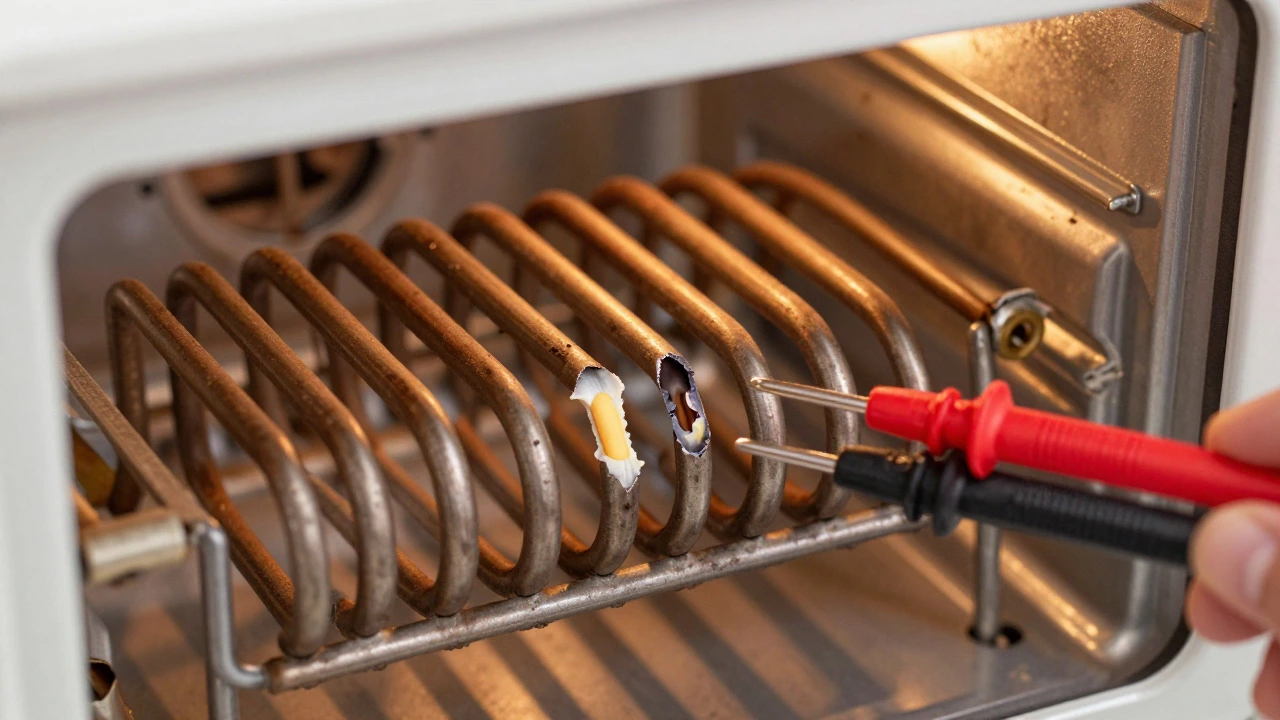
Step 5: Check the Heating Elements
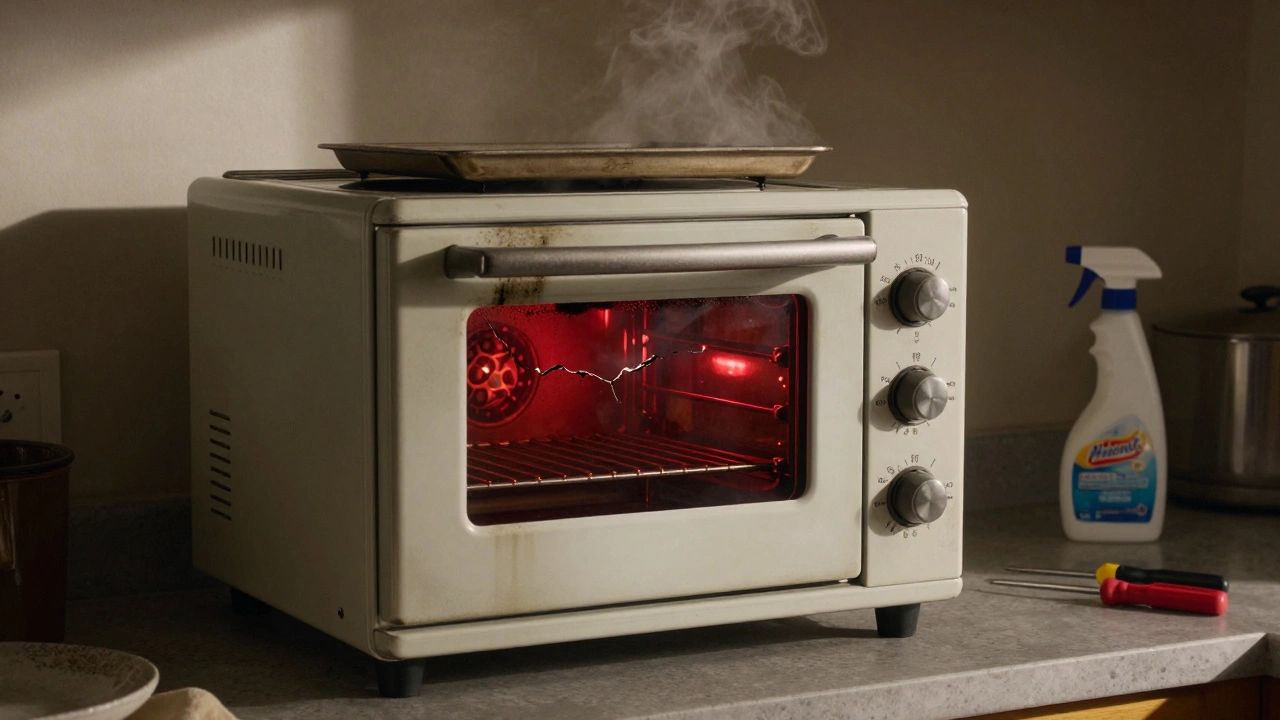
If the oven powers on but doesn’t get hot, the issue might be the heating element is the coiled metal rod that glows red to generate heat for baking and broiling. Over time, these elements wear out. Look for visible breaks, bulges, or dark spots on the coil. Even if it looks intact, it could have an internal break.
Test the element with a multimeter. Set it to resistance (ohms). A healthy upper bake element typically reads between 10 and 30 ohms. A lower broil element might read slightly higher. If the meter shows infinite resistance, the element is dead. Replacement is straightforward: remove the mounting screws, disconnect the wires, and install the new part. Make sure to buy the correct wattage and size for your model.
When to Call a Professional
While many oven issues are DIY-friendly, some require expert attention. If you suspect a gas leak (even in electric ranges with gas ovens), evacuate and call emergency services. If the wiring inside the oven looks frayed or burnt, turn off the power at the breaker and hire an electrician. Complex electronic failures, like intermittent glitches that don’t follow a pattern, often need diagnostic tools only professionals possess. Don’t risk electrocution or further damage if you’re unsure.
How much does it cost to fix an electric oven?
Costs vary widely. Simple fixes like replacing a thermal fuse or door switch cost $50-$150 in parts and labor. Main control board replacements can run $300-$600. Heating elements are cheaper, usually $100-$200 including installation. Always get a written estimate before authorizing work.
Can I use my oven if the door switch is broken?
Technically, yes, but it’s risky. The oven might think the door is open and refuse to heat, or worse, stay on when opened. Bypassing the switch removes a safety feature. Fix it promptly to avoid accidents or wasted energy.
Why does my oven make a buzzing noise but not heat?
A buzzing sound often indicates a failing relay on the control board trying to send power to the heating element. If the element isn’t receiving full voltage, it won’t glow. This usually means the control board needs replacement.
Is it worth repairing an old oven?
If the repair costs more than 50% of a new oven’s price, consider replacing it. Older models are less energy-efficient and lack modern safety features. However, if it’s a high-end brand with reliable parts, repair might extend its life significantly.
How do I prevent my oven from breaking down?
Clean spills immediately to avoid damaging seals and switches. Avoid slamming the door. Don’t overload the oven with large pans that block airflow. Regularly check the door gasket for tears, which can cause overheating and blow fuses.