Dishwasher Repair vs. Replace Calculator
Imagine standing in front of a sink full of dirty plates after a long week, only to realize your dishwasher is making a sound like a blender crushing ice. It’s not draining. The water is stagnant. Your first thought isn’t usually “I love plumbing”; it’s “How much will this cost?” The short answer to whether dishwashers are easy to fix is: it depends entirely on what broke. Some issues are five-minute fixes that require nothing more than a screwdriver and a YouTube video. Others involve stripping down the entire cabinet or replacing a sealed motor assembly that costs half the price of a new machine.
Before you call a technician or throw in the towel, you need to understand the landscape of dishwasher repair. Modern appliances are built with modular components, which is great for us because it means parts are often replaceable without specialized training. However, they are also packed with electronics and sensors that can be finicky. This guide breaks down exactly what you can handle yourself, what requires a pro, and how to diagnose the problem before spending a dime.
The Quick Wins: Fixes You Can Do Today
Most dishwasher failures aren’t catastrophic mechanical breakdowns. They are blockages, settings errors, or minor wear-and-tear items. If your unit is under warranty, check your manual first-opening certain panels might void coverage. But for most older units, these are safe bets.
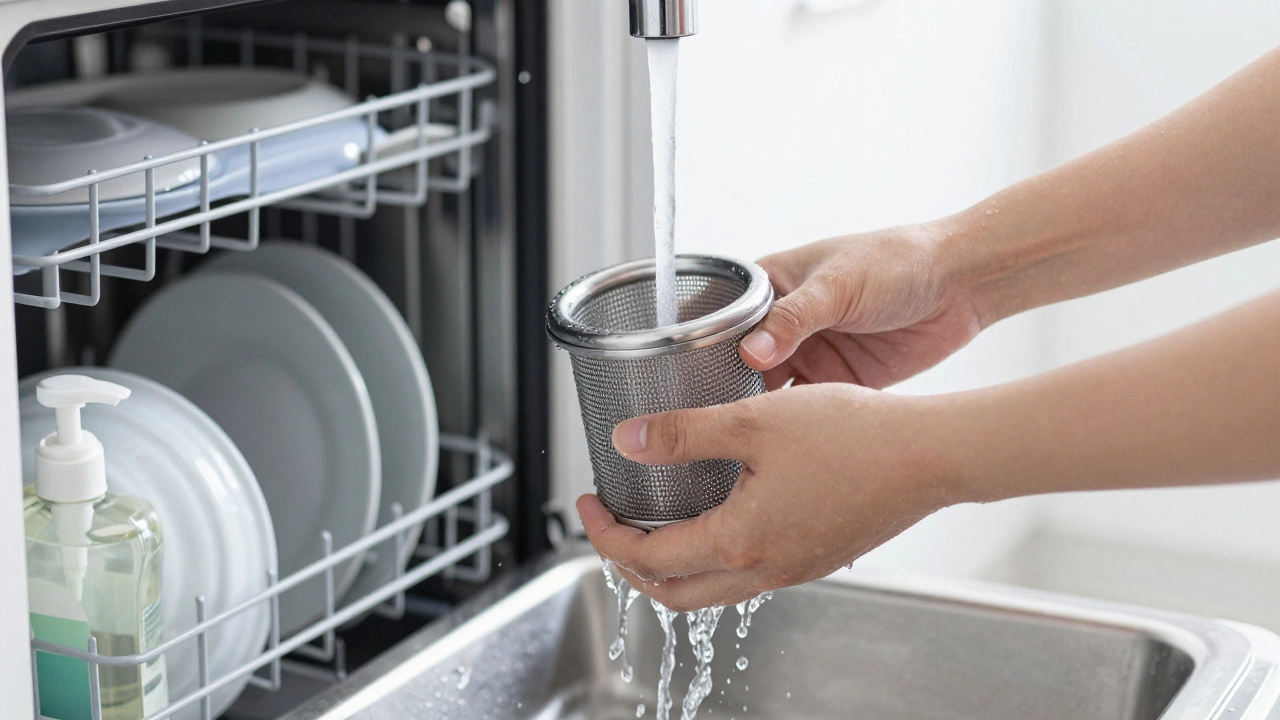
- Clogged Filters: This is the number one reason for poor cleaning or drainage issues. Locate the filter at the bottom of the tub (usually a cylindrical mesh piece). Twist it out, rinse it under hot water with a little dish soap, and scrub away any food debris. Reinsert it firmly. If your dishes come out cloudy or smelly, this is almost always the culprit.
- Spray Arm Blockages: The spray arms have tiny holes that shoot water onto your dishes. Over time, mineral deposits from hard water or bits of plastic wrap can clog them. Remove the upper and lower spray arms. Use a toothpick or a pin to clear the holes. Check if the arms spin freely by hand; if they’re stiff, the bearing might be worn, but often just clearing debris helps.
- Kicked-in Door Latch: If your dishwasher won’t start, check the door latch. Sometimes the plastic tab that engages the lock gets pushed in or broken. If it looks loose, try bending it back into place carefully. If it’s snapped off, you’ll need a replacement latch kit, which usually screws in easily.
- Resetting the Control Board: Electronics glitch. If your display is frozen or the cycle won’t start, unplug the dishwasher from the wall outlet (or flip the breaker) for two minutes. Plug it back in. This resets the main control board and clears temporary memory errors.
When It Gets Tricky: Intermediate Repairs
If the quick wins didn’t solve it, you might be looking at component failure. These repairs require removing the kick plate (the toe-kick at the bottom) and sometimes the inner door panel. You’ll need a basic tool set: Phillips head screwdrivers, nut drivers, and pliers.
| Component | Symptom | Difficulty | Estimated Cost (NZD) |
|---|---|---|---|
| Drain Pump | Water won't drain; error code E15 or similar | Moderate | $80 - $150 |
| Heating Element | Dishes cold; no drying; water not heating | Easy-Moderate | $40 - $90 |
| Door Switch | No power; lights don't turn on when closed | Easy | $30 - $60 |
| Circulation Pump | No water spraying; humming noise but no flow | Hard | $120 - $200 |
| Control Board | Random errors; buttons unresponsive; sparking | Hard | $150 - $300+ |
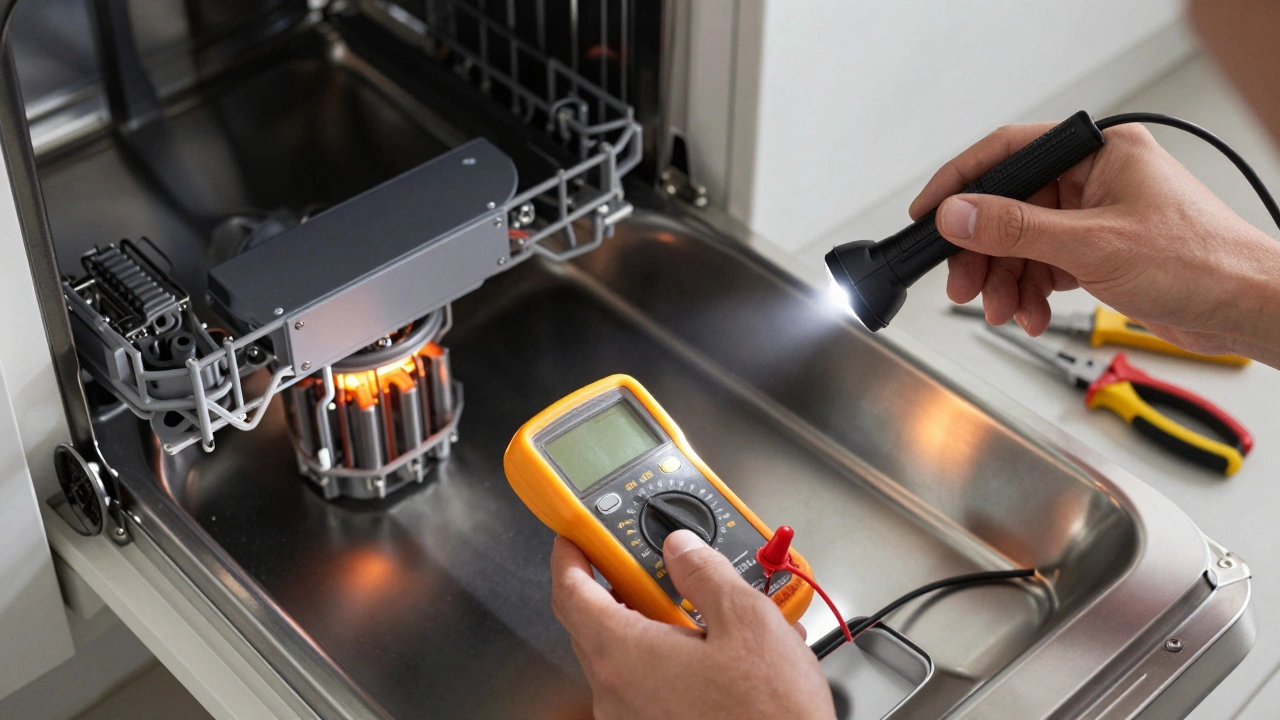
Replacing a heating element is one of the most satisfying DIY jobs. If your dishes are coming out wet and cold, the element is likely dead. You’ll need to remove the lower rack, unscrew the old element from the tub floor, disconnect the wires, and bolt in the new one. Make sure to test continuity with a multimeter before buying a new part if you have one. A reading of zero ohms means it’s open circuit and needs replacement.
The drain pump is another common failure point. If you hear a gurgling noise but the water stays in the tub, the pump impeller might be jammed with a glass shard or bone fragment. Before replacing the pump, remove the access panel at the bottom and look into the pump housing. Use needle-nose pliers to fish out debris. If the impeller spins freely but the pump still doesn’t run, the motor inside has burned out. Replacement involves disconnecting hoses and electrical connectors, so take photos before you start so you remember how everything goes back together.
Red Flags: When to Call a Professional
There’s a line between saving money and causing damage. Don’t cross it. Here are scenarios where DIY repair becomes risky or not worth the effort.
- Leaking Water from the Bottom Cabinet: If you see water pooling under the machine, it could be a simple hose clamp issue, or it could be a cracked tub. If the leak persists after checking all visible hoses, stop. A cracked tub requires replacing the entire tub assembly, which is labor-intensive and expensive. A pro can assess if it’s salvageable.
- Burning Smell or Smoke: If you smell burning plastic or see smoke, unplug the machine immediately. This indicates an electrical fault, possibly in the motor windings or wiring harness. Continuing to use it is a fire hazard. Let a certified electrician or appliance tech inspect it.
- Complex Error Codes: Modern brands like Bosch, Miele, and Asko use proprietary error codes (e.g., E24, E17). While you can look these up online, some require diagnostic tools to read deeper sensor data. If the code keeps returning after a reset and basic checks, the issue might be intermittent and hard to pinpoint without professional diagnostics.
- Warranty Coverage: If your dishwasher is less than two years old, it’s likely under manufacturer warranty. Opening the chassis yourself can void this. Always call the authorized service center first. They may send a technician for free, saving you both time and money.
Tools and Safety First
Before you start any repair, safety is non-negotiable. Dishwashers combine electricity and water, which is a dangerous mix. Always disconnect power at the circuit breaker, not just by unplugging the cord (if it’s hardwired). Turn off the water supply valve located under the sink. Place towels around the base to catch residual water.
You don’t need a fancy toolkit. Here’s what I keep in my drawer for appliance work:
- Multimeter: Essential for testing continuity in heating elements, switches, and motors. It tells you if a part is electrically dead.
- Socket Set and Nut Drivers: Most dishwasher screws are 1/4-inch hex or Torx. Having the right size prevents stripping heads.
- Flashlight: Looking under a sink or into a dark pump housing is impossible without good light.
- Needle-Nose Pliers: Great for gripping small clips, pulling out debris, and manipulating wires.
Preventative Maintenance: Keeping It Running Smoothly
The best repair is the one you never have to do. Regular maintenance extends the life of your dishwasher significantly. In Auckland, our water can be moderately hard, leading to limescale buildup. Here’s a routine that works:
- Monthly Vinegar Clean: Run an empty cycle with a cup of white vinegar placed upright on the top rack. This dissolves grease and mineral deposits on the interior walls and spray arms.
- Quarterly Filter Cleaning: Even if you scrape plates, fine particles accumulate. Clean the filter every three months as described earlier.
- Check the Door Gasket: Wipe the rubber seal around the door with a damp cloth. Food crumbs and mold can get trapped here, causing leaks and odors. If the gasket is torn or brittle, replace it-it’s cheap and easy.
- Use Rinse Aid: Skip the salt if you don’t have a built-in softener, but always use rinse aid. It helps water sheet off dishes, reducing spots and preventing the heating element from working overtime to dry them.
Cost vs. Replace: Making the Smart Choice
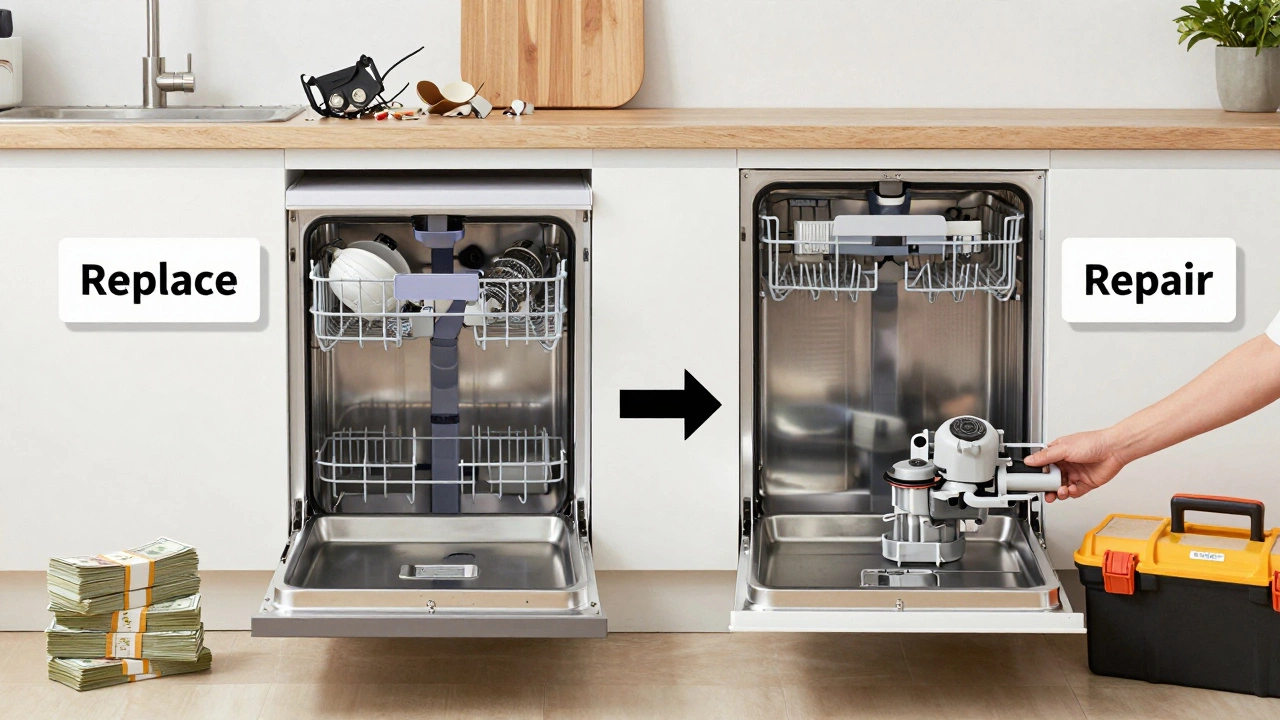
Let’s talk numbers. If your dishwasher is eight years old and the control board fails, should you spend $250 on a repair? Probably not. The average lifespan of a dishwasher is 10-12 years. If the repair cost exceeds 50% of the price of a new, energy-efficient model, replacement is usually the smarter financial move. Newer models use less water and electricity, paying for themselves over time through utility savings.
However, if the machine is three years old and just needs a new drain pump ($100 part + $0 labor if you do it), that’s a no-brainer. Keep detailed records of repairs. If you’ve already replaced the heating element and now the circulation pump goes, the pattern suggests end-of-life.
How much does it cost to fix a dishwasher?
DIY repairs typically cost between $30 and $150 for parts like filters, heating elements, or pumps. Professional repairs in New Zealand range from $100 to $300 depending on the part and labor hours. Major electronic failures can exceed $400.
Can I fix a leaking dishwasher myself?
Yes, if the leak is from a loose hose clamp, a clogged filter, or a damaged door gasket. These are accessible and inexpensive to fix. If the leak comes from the internal tub or pump housing, it’s better to call a professional as it may require extensive disassembly.
Why is my dishwasher making a loud grinding noise?
A grinding noise usually means something hard, like a glass shard or bone, is stuck in the pump impeller. Turn off the power, remove the lower rack, and check the filter area. Use pliers to remove any debris. If the noise persists, the pump bearings may be worn out.
Is it worth repairing a 10-year-old dishwasher?
It depends on the repair cost. If the fix is under $150, it might be worth trying since the machine has likely served its purpose. However, if the cost is high, consider replacing it with a newer, more efficient model that offers better performance and warranty coverage.
What are the most common dishwasher errors?
Common errors include drainage failures (water remaining in tub), heating issues (cold dishes), and door latch problems (won’t start). Error codes vary by brand but often relate to temperature sensors, pressure switches, or motor faults. Always consult your user manual for specific code meanings.