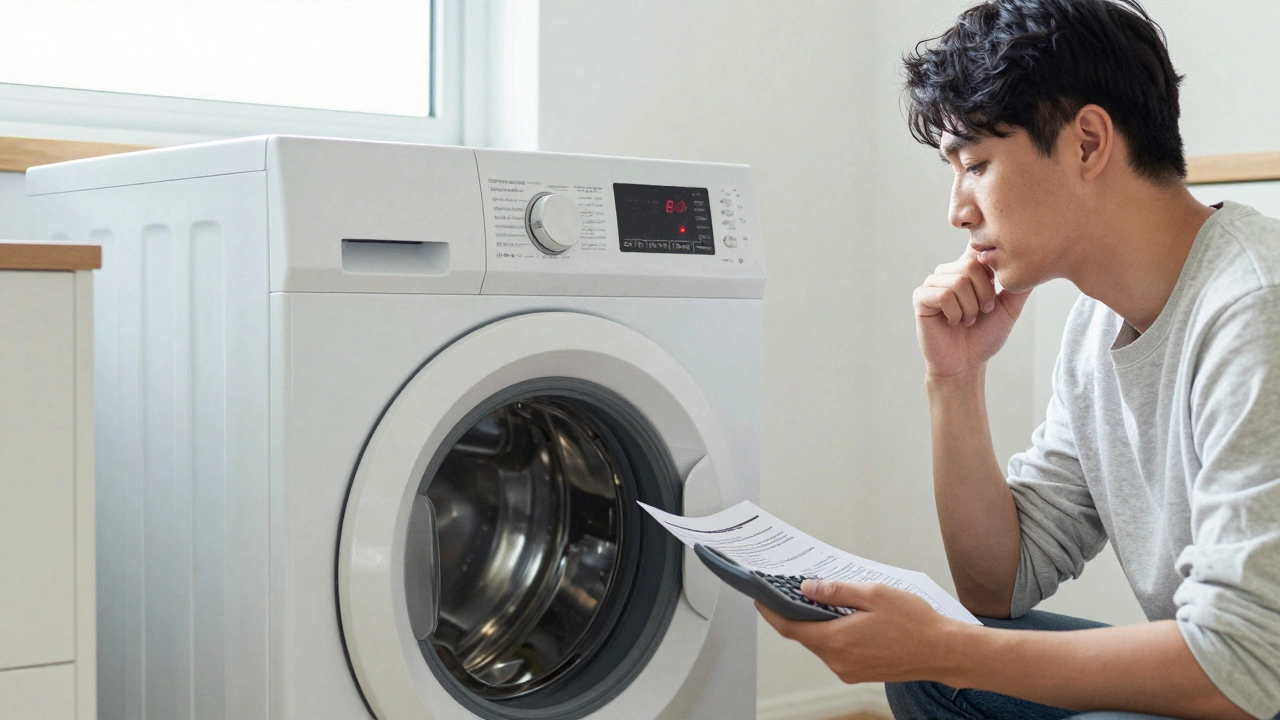
Washing Machine Repair vs Replace Calculator
Calculate Your Best Option
Why This Matters
Most machines last 10-12 years
If your machine is over 10 years old and needs major repairs, replacement is usually better.
50% rule
If repair costs exceed 50% of a new machine's price, replace it.
Energy savings
New models save $120-$180/year in utility costs.
Most people buy a washing machine thinking it’ll last forever. But after five years, strange noises start, the spin cycle gets shaky, or it just stops working mid-load. You wonder: washing machine lifespan - is this normal? Should you repair it or just replace it?
The short answer: a good washing machine should last between 10 and 12 years. But that’s not a guarantee. Some break down at 6. Others keep going past 15. What makes the difference? It’s not magic. It’s how you use it, what brand you bought, and whether you treat it like a machine that needs care - not a magic box.
What Actually Determines How Long a Washing Machine Lasts?
Not all washing machines are built the same. A budget model from a no-name brand might use thinner steel, weaker motors, and plastic parts that crack under pressure. A mid-range or premium machine? It’s got a cast iron drum, a direct-drive motor, and seals designed to last. Brands like LG, Samsung, Bosch, and Miele consistently rank higher in long-term reliability. In New Zealand, where hard water is common, machines with better filtration and anti-lime scale tech last longer.
Usage matters too. Running a full load every day? That’s 365 cycles a year. Most machines are rated for 500 to 1,000 cycles. If you’re hitting 700+ cycles a year, you’re burning through its life fast. A household of two doing laundry twice a week? You’re giving your machine room to breathe.
And don’t ignore maintenance. People forget that washing machines need cleaning too. Leftover detergent, lint, and soap scum build up inside the drum and hoses. Over time, that grime wears out bearings, clogs pumps, and causes leaks. A monthly wipe-down and an empty hot wash with vinegar or a dedicated washing machine cleaner can add years to its life.
Signs Your Washing Machine Is Reaching the End
It’s not always obvious when it’s time to walk away. Here are the real red flags:
- Excessive vibration or loud banging - especially during spin. This usually means the drum bearings are worn out. Replacing them costs $200-$400. If your machine is older than 8 years, that’s often more than half the price of a new one.
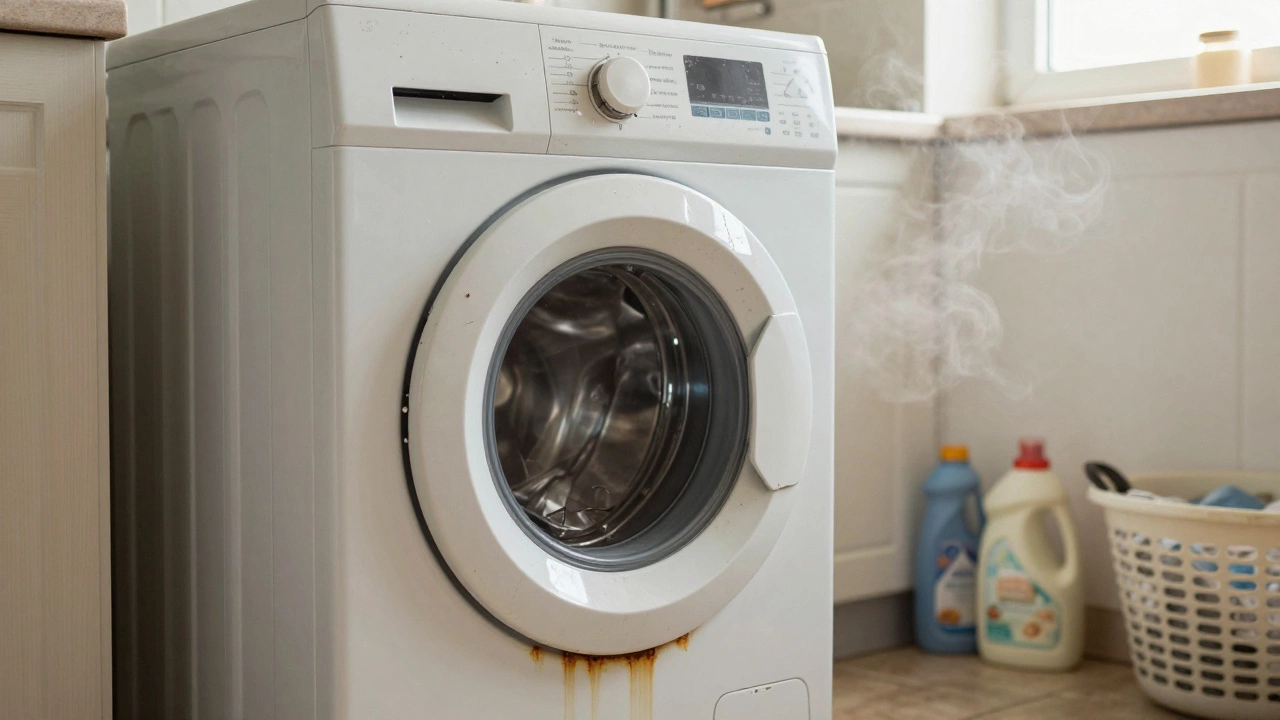
- Water leaks from the bottom - not from a loose hose, but from the casing. That’s a sign of a cracked tub or failing seal. Repairing this is rarely worth it.
- Machine won’t drain or spin - if the pump is clogged, you can fix it. But if the pump motor itself is dead, replacement parts for older models are hard to find.
- Door lock fails - modern machines won’t run if the lock doesn’t engage. A faulty lock can be replaced, but if it keeps failing, the control board might be failing too. That’s a $300+ repair on a 10-year-old machine.
- Electronics glitch - error codes popping up randomly, buttons not responding, or the display going dark. This usually means the control board is dying. These boards are expensive and often not available for models over 7 years old.
If you’re seeing two or more of these issues, you’re not fixing a machine - you’re throwing money at a sinking ship.
Repair vs Replace: The Math That Matters
Here’s a simple rule: if the repair costs more than 50% of what a new machine costs, walk away.
Let’s say your machine is 9 years old. A new mid-range model in New Zealand costs around $800-$1,200. If a technician says it’ll cost $500 to fix the drum bearings? That’s over 50%. Even if it works again, you’re risking another breakdown in 6-12 months. And you’ll be paying for the same repair again next year.
On the flip side, if it’s a 3-year-old machine and the pump needs replacing for $180? That’s under 20% of the cost of a new one. Fix it. You’ve got years left.
Also consider energy. Machines made before 2015 use 2-3 times more water and electricity than today’s models. A new A+++ rated washer can save you $120-$180 a year on bills. That pays for the machine in 5-7 years. If you’re paying $300 a year in power and water for an old machine, you’re losing money by not upgrading.

How to Make Your Washing Machine Last Longer
If you want to squeeze every year out of your machine, here’s what works:
- Don’t overload it. Overstuffing strains the motor and drum. Leave a hand’s width of space between clothes and the top.
- Use the right detergent. High-efficiency (HE) detergents are designed for low-water machines. Regular detergent creates too many suds and leaves residue. That’s a silent killer.
- Clean the filter every month. It’s usually behind a small panel at the front bottom. Pull it out, rinse off lint and coins. Do this religiously.
- Run a hot empty cycle once a month. Use 2 cups of white vinegar or a washing machine cleaner. It dissolves soap scum and kills mold.
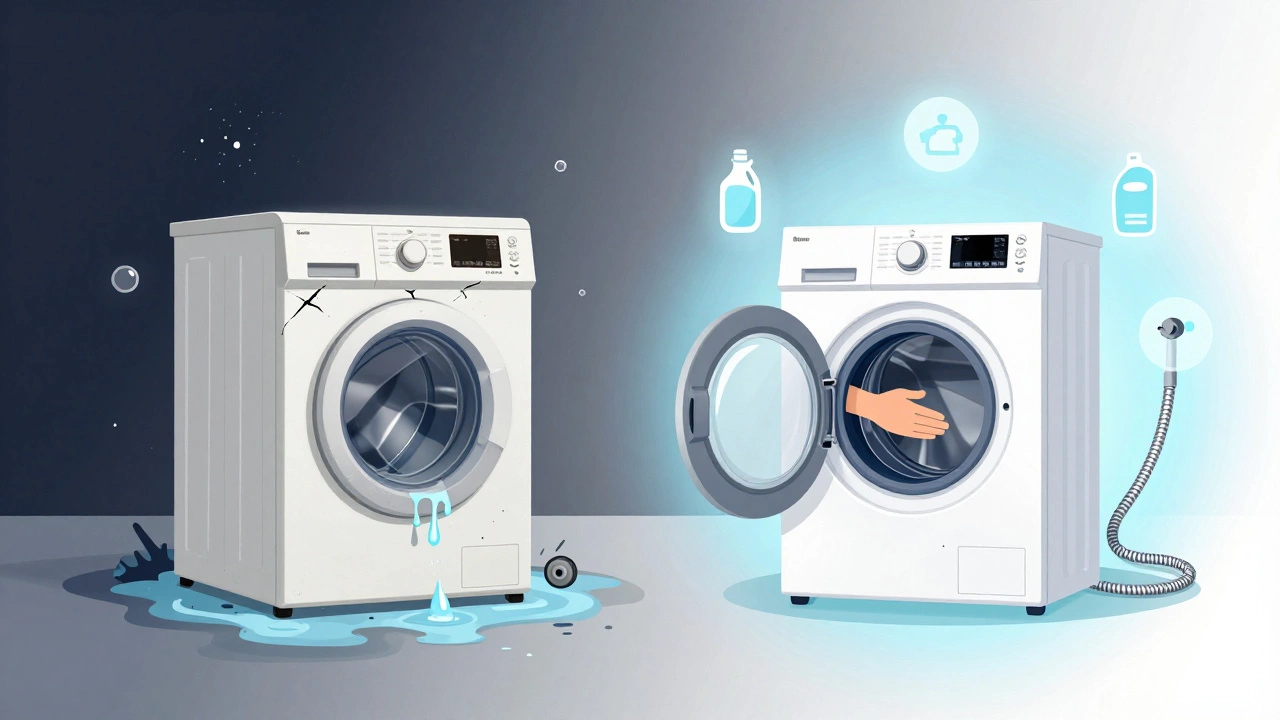
- Leave the door ajar after use. Moisture trapped inside breeds mildew and rots rubber seals. A cracked seal costs $100-$150 to replace.
- Check the hoses every year. Rubber hoses can crack and burst. Replace them with braided stainless steel ones. They cost $40-$60 and last 10+ years.
These aren’t “nice to haves.” They’re the difference between 12 years and 5.
When to Just Buy a New One
There’s a point where repair isn’t just expensive - it’s pointless. Here’s when to pull the plug:
- Your machine is over 10 years old and needs a major repair (drum, motor, control board).
- You’re spending more than $300 on repairs in a single year.
- It’s using way more water or power than it should - check your bill against a new model’s specs.
- You’re tired of waiting for parts or technicians who say, “We don’t carry that anymore.”
- You want features like steam cleaning, smart controls, or quieter operation.
Don’t feel guilty about replacing it. A new machine is more efficient, quieter, and more reliable. You’re not wasting money - you’re investing in less stress, lower bills, and fewer midnight breakdowns.
What to Look for in a New Washing Machine
If you’re buying, here’s what actually matters:
- Capacity - 7-8kg is perfect for most households. Bigger isn’t always better unless you have a family of 5+.
- Motor type - Direct drive (LG, Miele) is quieter and lasts longer than belt-driven motors.
- Energy rating - Aim for A+++ or equivalent. Avoid anything below A++.
- Warranty - Look for at least 2 years on parts, 5+ years on the motor. Some brands offer 10-year motor warranties.
- Customer reviews - Check real user feedback. Look for patterns: “broke after 2 years” or “still running after 8 years.”
Don’t get tricked by flashy features. You don’t need Wi-Fi to wash clothes. Focus on durability, efficiency, and serviceability.
In Auckland, where water pressure can be low and water quality varies, machines with built-in water softeners or advanced filtration (like Bosch or Miele) handle hard water better. It’s worth paying a little extra for that.
Final Thought: It’s Not About the Machine - It’s About Your Habits
Washing machines don’t die from age. They die from neglect. The same machine, treated right, can last 15 years. The same machine, overloaded and never cleaned, dies in 6.
Think of it like a car. You don’t wait until the engine blows to change the oil. You don’t ignore the warning light. You don’t drive on bald tires and wonder why it broke down.
Same with your washing machine. Small habits. Big payoff.
Fix it if it’s young. Replace it if it’s old. But always, always take care of it.