Most people in New Zealand don’t think about their boiler until it stops working. Then they panic. How long should it last? Should I repair it or replace it? Is it even worth fixing at this point? The truth is, there’s no single answer - but there are clear patterns based on real use, brand quality, and how well it’s been cared for. If you’re wondering whether your boiler is on its last legs, here’s what actually happens in New Zealand homes.
Typical Boiler Lifespan in NZ Conditions
In New Zealand, a standard gas boiler usually lasts between 10 and 15 years. That’s the average you’ll hear from plumbers, heating engineers, and appliance retailers across Auckland, Wellington, and Christchurch. But this isn’t a hard deadline. Some boilers struggle past 20 years with perfect care. Others die before 8 because they were installed poorly or never serviced.
Why the range? It comes down to three things: water quality, usage patterns, and maintenance. In areas like Hamilton and Tauranga, where water is harder, limescale builds up faster inside heat exchangers. That’s a silent killer. In Auckland, where many homes use condensing boilers - the most common type since 2007 - efficiency drops sharply if the condensate pipe freezes in winter or gets clogged with debris.
Signs Your Boiler Is Approaching End-of-Life
You don’t need a degree in engineering to tell when your boiler is nearing retirement. Here are the top five red flags most homeowners miss until it’s too late:
- Strange noises - Knocking, banging, or whistling aren’t just annoying. They often mean limescale is cracking inside the heat exchanger, or the pump is failing. Both are expensive to fix.
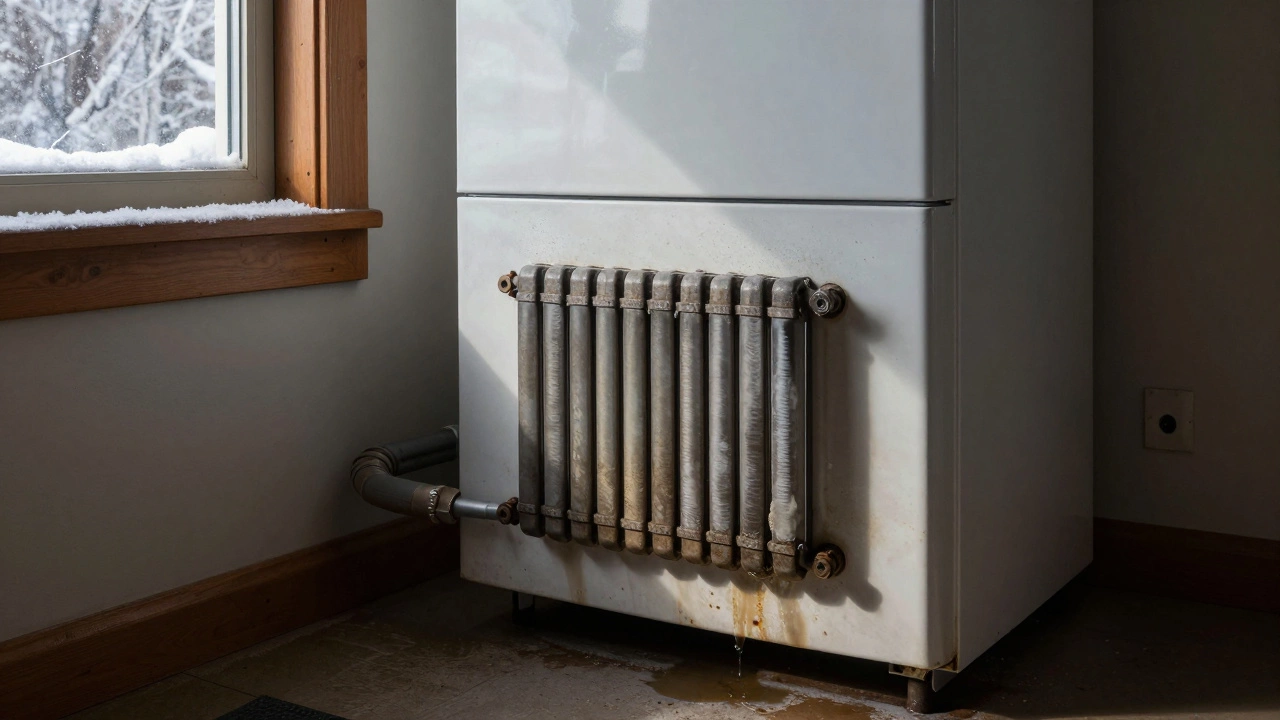
- Water leaks - A small drip under the boiler might seem harmless. But if it’s coming from the pressure valve or pipe joints, it’s likely corrosion from years of internal rust. Once that starts, it spreads fast.
- Uneven heating - If some rooms are freezing while others are too hot, your boiler might still be firing, but it’s not distributing heat properly. This usually means the pump is weak or the diverter valve is stuck.
- High energy bills - A boiler that’s 12+ years old can lose up to 30% efficiency. If your gas bill has crept up 15% over two winters with no change in usage, it’s working harder than it should.
- Frequent breakdowns - One repair a year? Acceptable. Two or more? You’re paying to keep a dying machine alive. Each repair costs $200-$500. After three repairs, you’ve spent more than half the price of a new unit.
Brand Matters - But Not as Much as You Think
Brands like Worcester Bosch, Vaillant, and Baxi dominate the NZ market. They’re reliable, yes - but they’re not magic. A Worcester Bosch installed in 2010 and never serviced won’t outlast a budget model from 2018 that gets an annual check-up.
What really makes a difference is the type of boiler. Condensing boilers (installed since 2007) are more efficient but have more complex parts - like secondary heat exchangers - that fail more often than older non-condensing models. Non-condensing boilers from the 90s were simpler and tougher, but they’re banned in new installations because they waste 20-30% more gas.
Here’s what most NZ installers see in practice:
| Boiler Type | Average Lifespan | Common Failure Points |
|---|---|---|
| Condensing Gas Boiler (2007-present) | 10-15 years | Heat exchanger, condensate pump, pressure sensor |
| Non-Condensing Gas Boiler (pre-2007) | 15-20 years | Pump, thermostat, ignition system |
| Oil-Fired Boiler | 12-18 years | Fuel nozzle, burner, tank corrosion |
| Electric Boiler | 8-12 years | Heating elements, control board |
Notice anything? Electric boilers don’t last as long. Why? They’re often used in smaller homes or flats where they’re turned on and off constantly. That cycling wears out the elements faster than gas boilers, which run longer cycles.
Maintenance Is the Real Game-Changer
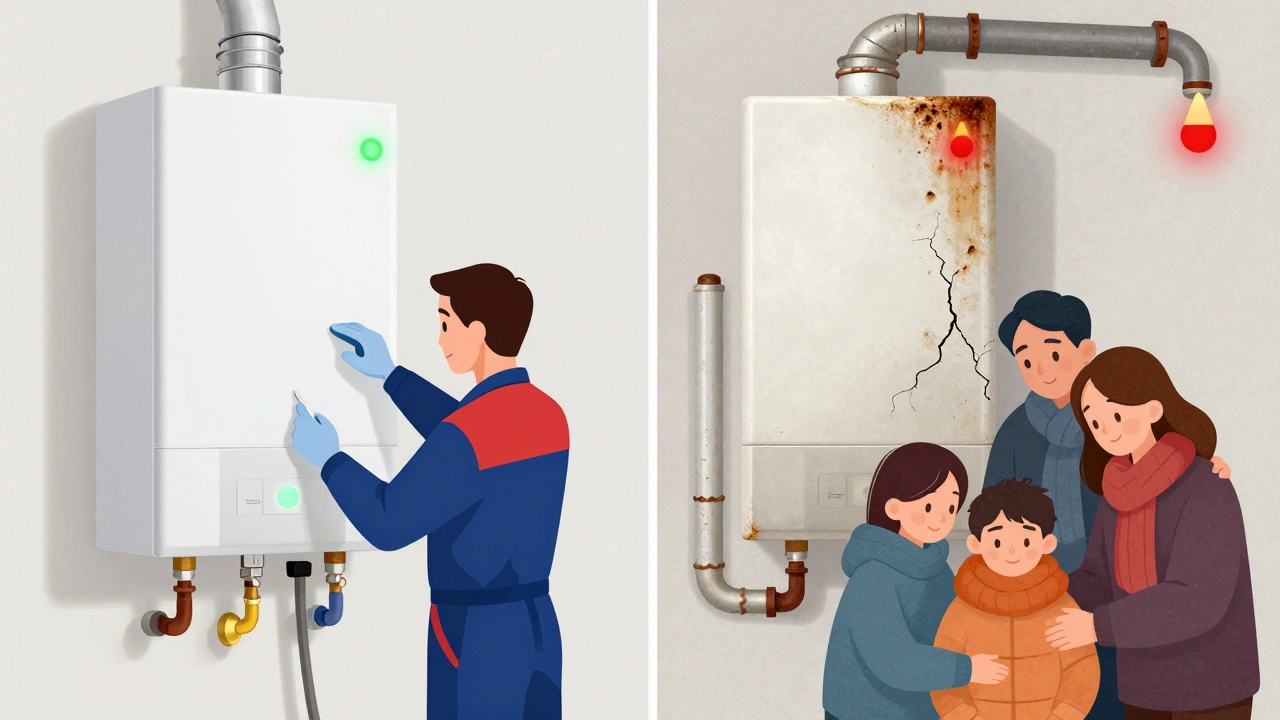
Here’s the truth nobody tells you: a boiler that gets a yearly service can last 5-7 years longer than one that doesn’t. It’s not magic. It’s science.
Annual servicing includes:
- Cleaning the heat exchanger and burner
- Checking gas pressure and flue integrity
- Testing safety valves and thermostats
- Inspecting for carbon monoxide leaks
- Flushing the system if there’s sludge buildup
In Auckland, about 60% of boilers brought in for emergency repairs had one thing in common: they hadn’t been serviced in over three years. That’s not normal. It’s negligence. A $150-$250 service every year prevents $2,000+ emergency replacements.
Some people think, “I don’t use it much, so I don’t need a service.” Wrong. Boilers sit idle for months in summer. That’s when moisture builds up, seals dry out, and internal parts corrode. Annual checks stop that.
When to Replace - Not Repair
There’s a simple rule most plumbers follow: if the repair cost is more than half the price of a new boiler, walk away.
Let’s say your boiler is 12 years old and the heat exchanger has cracked. Replacing it costs $1,200. A new A-rated condensing boiler? Around $2,500 installed. So you’re paying 48% of a new unit’s cost just to fix the old one. That’s not a repair - it’s a gamble. You’re buying time, not value.
Also, if your boiler is over 15 years old and needs a major part replaced - pump, control board, ignition system - it’s time to upgrade. New boilers are 90%+ efficient. Old ones? Often 70% or lower. That’s 20% extra gas every winter. In Auckland, that’s $300-$500 a year you’re throwing away.
And don’t forget government incentives. The Warm Up NZ programme offers rebates up to $1,500 for replacing old boilers with high-efficiency models. That cuts the cost of a new unit by nearly a third. You can’t get that on a repair.
What About Extended Warranties?
Some companies sell 10-year warranties on boilers. Sounds great - until you read the fine print. Most exclude:
- Damage from poor water quality
- Missing service records
- Leaks caused by corrosion
- Issues from unvented systems
Warranties are great if you’re buying a brand-new boiler and you plan to keep it serviced. But if your boiler is 8 years old and you’re trying to extend its life with a warranty? It’s usually not worth it. The cost of the warranty often exceeds the value of the remaining lifespan.
What to Do Next
If your boiler is under 8 years old and running fine - keep it. Service it yearly.
If it’s 8-12 years old and you’ve had one repair in the last year - start budgeting for a replacement. Don’t wait for it to die in July.
If it’s 13+ years old and you’re feeling the cold - act now. Winter in NZ comes fast. A boiler that dies in May gives you months to plan. One that dies in June? You’re stuck with portable heaters and no hot water for weeks.
Get a free quote from a registered gas fitter. Compare three models. Look for ones with a 7-10 year parts warranty. Choose A-rated efficiency. And don’t forget to ask about the Warm Up NZ rebate - you might qualify without even knowing it.
Can a boiler last 20 years?
Yes, but it’s rare. Boilers that last 20 years are usually non-condensing models from the 1990s, installed in homes with soft water, and serviced every year without fail. Most modern condensing boilers don’t reach that mark because their complex parts - like secondary heat exchangers - wear out faster. If your boiler is over 18 years old and still working, you’re lucky - but you should still plan for replacement soon.
Is it worth repairing a 15-year-old boiler?
Only if the repair is minor and cheap - like replacing a thermostat or pressure sensor. If it’s a major component like the heat exchanger or control board, it’s not worth it. At 15 years, the boiler is already past its expected lifespan. Repairing it costs more than half the price of a new one, and you’ll likely need another repair within a year. Replacing it now saves money on energy bills and avoids emergency calls in winter.
Why do boilers fail more often in winter?
Boilers don’t fail more often in winter - they just get pushed harder. Cold weather means the boiler runs longer and more frequently. That stresses worn parts like pumps and valves. Also, condensate pipes freeze in unheated areas, causing shutdowns. And if the system has sludge buildup, winter’s high demand clogs it up. Most winter failures are symptoms of long-term neglect, not sudden faults.
Do electric boilers last longer than gas boilers?
No. Electric boilers usually last 8-12 years, while gas boilers last 10-15. Electric boilers have simpler designs, but they’re often used in smaller homes where they’re turned on and off constantly. That frequent cycling wears out the heating elements faster. Gas boilers run longer cycles and handle continuous demand better. Also, gas boilers benefit from annual servicing, which electric ones rarely get.
Can I extend my boiler’s life by turning it off in summer?
Turning off your boiler in summer doesn’t extend its life - it can shorten it. Boilers sit idle for months, and that’s when seals dry out, internal parts corrode, and moisture causes rust. Instead of turning it off, set it to a low temperature (around 15°C) and run the heating for 10-15 minutes every few weeks. This keeps the system lubricated, prevents sludge buildup, and stops seals from cracking.
Final Thought: It’s Not About Age - It’s About Condition
A 10-year-old boiler with a clean system and recent service might outlast a 5-year-old one that was installed wrong and never checked. Age is just a number. What matters is how it’s been treated. If you’ve been skipping services, ignoring leaks, or letting the pressure drop - your boiler is already on borrowed time. Start planning now. Don’t wait for the cold to hit.