When your oven won’t heat, it’s not just an inconvenience-it’s a disruption to your whole routine. Dinner plans fall apart. Leftovers go cold. You start wondering if it’s time to replace the whole thing. But before you shell out thousands for a new oven, let’s talk about what’s actually broken and how much it’ll cost to fix it. In New Zealand, especially in places like Auckland where homes often have older electric ovens, this is a common problem-and usually fixable.
Most Common Reasons an Electric Oven Won’t Heat
Not all ovens that don’t heat are broken beyond repair. In fact, most of the time, it’s one of three simple parts failing:
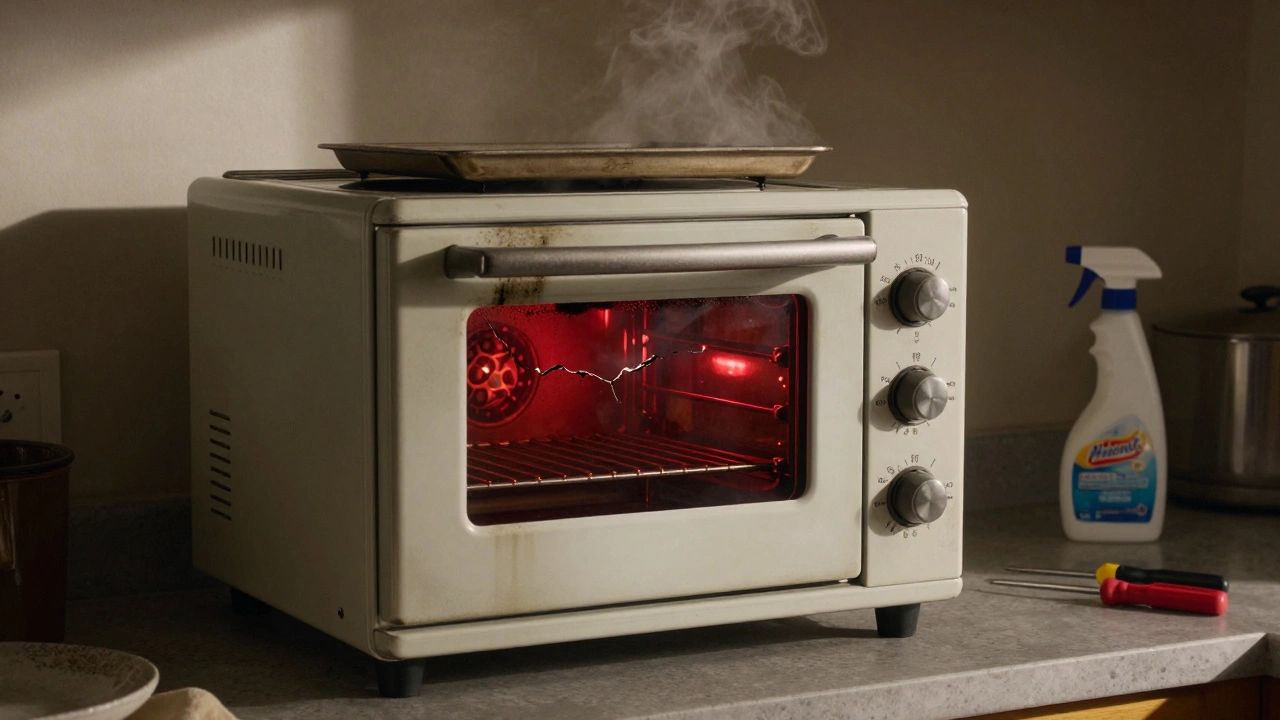
- Heating element - This is the coiled wire at the top or bottom of the oven that glows red when it’s working. If it’s burnt out, cracked, or has a gap, it won’t heat. This happens after years of use, especially if the oven was frequently cleaned with harsh chemicals.
- Thermostat - This controls the temperature. If it’s misreading or stuck, the oven might think it’s already hot when it’s not. You might see the light come on but no actual heat.
- Thermal fuse - A safety device that cuts power if the oven overheats. If it blows-which can happen if the element overheats or there’s a wiring issue-the oven won’t turn on at all.
Less common, but still possible: a faulty control board, broken relay, or damaged wiring. These are harder to diagnose without tools and training. Most DIYers try replacing the heating element first because it’s the easiest and cheapest fix.
Cost Breakdown: Parts vs Labour
In New Zealand, the total cost to fix an oven that won’t heat usually falls between $150 and $500. But that range depends heavily on what’s wrong and where you live.
Heating element replacement is the most common fix. The part itself costs between $40 and $90, depending on your oven model. Brands like Smeg, Belling, or Fisher & Paykel have proprietary parts that cost more. Labour to swap it out? Around $80 to $120. Total? Usually under $200.
If the thermostat is faulty, the part runs $60-$110. Labour is similar, because it’s a bit trickier to access-often behind the control panel. Total: $150-$230.
The thermal fuse is cheap-$10 to $25-but replacing it means you need to find out why it blew in the first place. If the heating element was shorting out or there’s a wiring fault, you’re not done after just swapping the fuse. A technician will check everything else, which adds time. Total: $180-$300.
Now, if it’s the control board-the brain of the oven-you’re looking at $200-$400 for the part alone. Labour adds another $100-$150. That’s $300-$550 total. At this point, many people start wondering if a new oven makes more sense.
What’s the Real Cost of Waiting?
Some people delay repairs because they think, “It’s just the oven.” But waiting can make things worse-and more expensive.
If a broken heating element keeps drawing power unevenly, it can overload the circuit. That might trip your breaker repeatedly. If the thermostat fails in the “on” position, the oven can overheat and damage the wiring insulation. That’s not just a repair-it’s a fire risk.
One Auckland homeowner I spoke with waited six months to fix her oven. When she finally called a technician, the heating element had burned out, and the heat had warped the oven cavity. The repair cost $380, but she’d also been using her stovetop to bake, which led to a cracked glass top from overheating. That added another $420. Total: $800. She could’ve fixed the oven for $180 and saved herself a lot of stress.
DIY vs Professional Repair
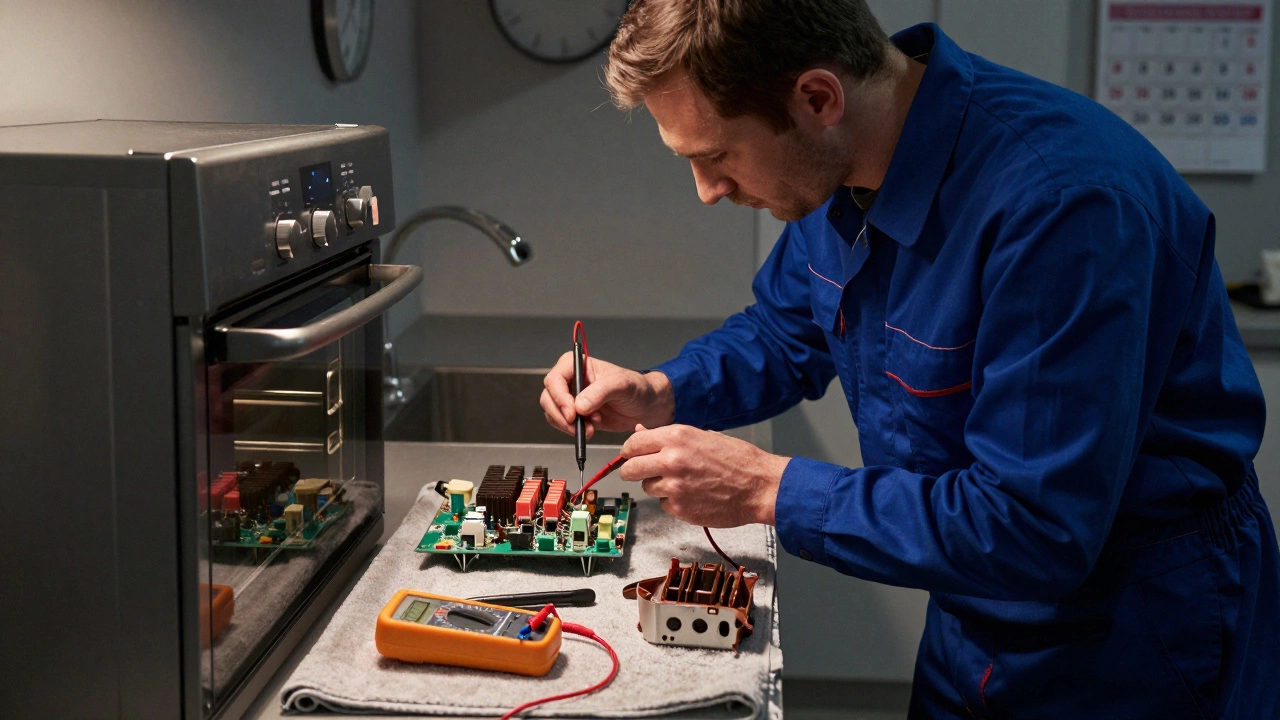
Can you fix it yourself? Sometimes. Replacing a heating element is doable if you’re handy and have basic tools. You’ll need a screwdriver, a multimeter to test for power, and a replacement part that matches your model exactly.
But here’s the catch: electric ovens run on 240 volts. That’s lethal if you don’t know what you’re doing. Even when you turn off the oven, the circuit breaker might not cut all power. Some ovens have capacitors that hold charge. Mistakes can fry your control board or worse.
Most appliance repair technicians in Auckland charge $80-$120 per hour. Most oven repairs take 1-1.5 hours. That’s a $100-$180 labour charge. If you’re not confident, don’t risk it. A $200 repair is cheaper than a hospital bill or a house fire.
Also, if you try a DIY fix and mess it up, you’ll void any warranty. And if you’re renting, your landlord might charge you for damages. It’s not worth the gamble.
When to Replace Instead of Repair
Here’s a simple rule: if the repair cost is more than half the price of a new oven, consider replacing it.
A basic electric oven in New Zealand costs $500-$800. A mid-range model with convection and smart features? $1,200-$2,000. So if your repair quote is over $400, it’s time to think about replacement.
Also consider age. If your oven is over 12 years old, parts are harder to find. Manufacturers stop making them after 8-10 years. You might get lucky and find a replacement element, but the next thing to break might not be fixable.
And don’t forget energy efficiency. Older ovens use 20-30% more power than new ones. Over five years, that adds up to hundreds in extra electricity bills. A new, energy-rated oven might pay for itself over time.

How to Get the Best Deal on Repairs
Don’t just call the first technician you find. Get quotes. Ask these questions:
- Do you charge a call-out fee? (Many do-$50-$80. Ask if it’s waived if you go ahead with the repair.)
- Do you use original parts or aftermarket? (Original parts last longer but cost more. Aftermarket can be 30% cheaper but may not fit as well.)
- Do you offer a warranty on the repair? (Most reputable techs offer 3-6 months on parts and labour.)
- Can you show me the old part? (Good technicians will show you the broken element or fuse. If they can’t, walk away.)
Check local Facebook groups or TradeMe for appliance repair services. Many independent technicians in Auckland offer lower rates than big national chains. Look for reviews that mention oven repairs specifically-not just fridges or washing machines.
Prevent Future Breakdowns
Once your oven’s fixed, keep it running longer:
- Don’t use oven cleaner spray directly on heating elements. It eats away at the coating.
- Wipe spills with a damp cloth while the oven is still warm (but off). Hard-baked-on grime stresses the element.
- Check the door seal every year. A loose seal makes the oven work harder to keep heat in.
- Don’t overload the oven. Blocking airflow causes overheating.
These small habits can add 5-10 years to your oven’s life.
Final Thoughts
An oven that won’t heat is frustrating, but it’s rarely a disaster. Most of the time, it’s a $200 fix. The key is acting before it turns into a bigger problem. Don’t wait for the oven to stop working completely. Don’t ignore strange smells or sparks. And don’t assume it’s broken beyond repair.
If you’re in Auckland and your oven isn’t heating, get a quote. Most reputable technicians will come out, diagnose it, and give you a clear price before doing any work. You’ll know exactly what you’re paying for-and you’ll be baking again in a day or two.
Why is my electric oven not heating but the light is on?
If the light is on but the oven isn’t heating, the problem is almost always the heating element or the thermostat. The light runs on a separate circuit, so it can work even if the heating part is dead. Test the element with a multimeter or get a technician to check it. Replacing the element is usually the fix.
How long does an oven heating element last?
Most oven heating elements last between 8 and 15 years. How long yours lasts depends on how often you use it, how well you clean it, and whether you run it at high temperatures often. Ovens used daily for baking or roasting tend to wear out faster than those used only occasionally.
Can a blown fuse cause my oven not to heat?
Yes. The thermal fuse is a safety device that cuts power if the oven overheats. If it blows, the oven won’t heat at all-even if the element and thermostat are fine. A technician will test the fuse with a multimeter. If it’s blown, they’ll replace it and check why it blew in the first place.
Is it worth repairing a 15-year-old oven?
Generally, no. Ovens older than 12 years are nearing the end of their life. Parts are harder to find, and energy efficiency drops significantly. A $300 repair on a 15-year-old oven might seem cheap, but you’re risking another breakdown soon. A new oven will save you money on electricity and give you better performance.
Do I need to turn off the power before calling a repair technician?
Yes. Turn off the oven at the wall switch and unplug it if possible. If it’s hardwired, turn off the circuit breaker that powers the oven. This isn’t just for safety-it helps the technician diagnose the problem faster. They won’t have to wait for the system to cool down or deal with live wires.