Boiler Problem Diagnostic Tool
Initial Assessment
Let's start by understanding what's happening with your boiler.
Power & Settings Check
Before diving deeper, let's verify the basics.
Pressure Gauge Check
Check the pressure gauge on your boiler front panel.
Error Codes & Warning Lights
Look for any displayed error codes or flashing lights.
Noise Analysis
Listen carefully to any unusual sounds.
Radiator Inspection
Check if all radiators are heating properly.
Diagnostic Results
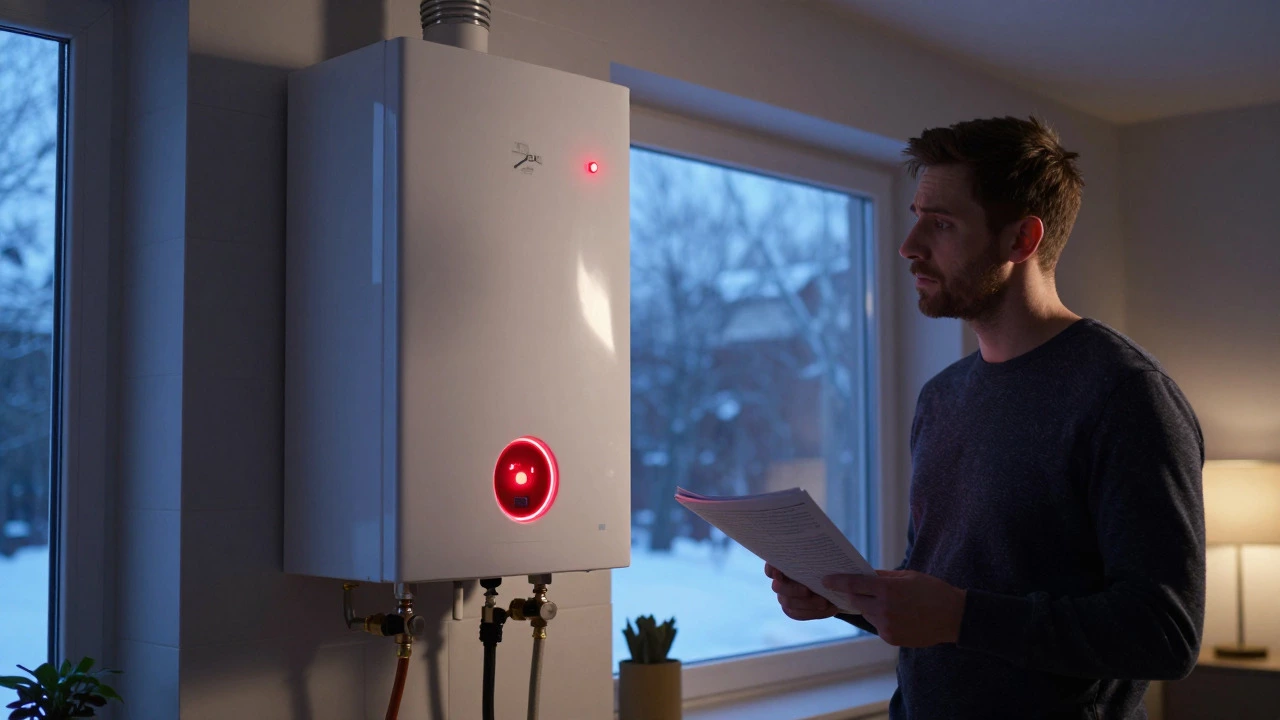
Your house is freezing, the radiators are cold as ice, and you’re staring at a blinking red light on your boiler. It’s the worst feeling in winter. You don’t know if it’s a quick fix or a call for an emergency plumber. Panic sets in, but here’s the truth: most boiler issues aren’t catastrophic failures. They are simple glitches that you can often diagnose yourself before calling a professional.
Diagnosing a boiler problem isn’t about taking it apart with a screwdriver. It’s about observation, checking basic settings, and understanding what those strange noises or lights mean. By following a logical checklist, you can save time, avoid unnecessary service fees, and keep your home warm. Let’s walk through exactly how to figure out what’s wrong with your heating system safely and effectively.
Check the Basics First: Power and Settings
Before you dive into complex diagnostics, rule out the obvious. It sounds silly, but half of all "broken" boilers are just switched off or set incorrectly. Start by looking at the control panel. Is there power? If the display is blank, check your circuit breaker or fuse box. Sometimes a power surge trips the dedicated switch for the heating system.
If the unit has power, look at the thermostat. Is it set high enough? In Auckland, where winters are mild but damp, we sometimes forget to adjust our thermostats from summer mode. Ensure the thermostat is set to at least 18°C (64°F) for heating. Also, check if the boiler is in "holiday mode" or "summer mode," which disables the central heating while keeping hot water running. Flip the switch back to "auto" or "winter" mode. These small oversights are the most common culprits behind a non-responsive system.
Understand Your Boiler Pressure Gauge
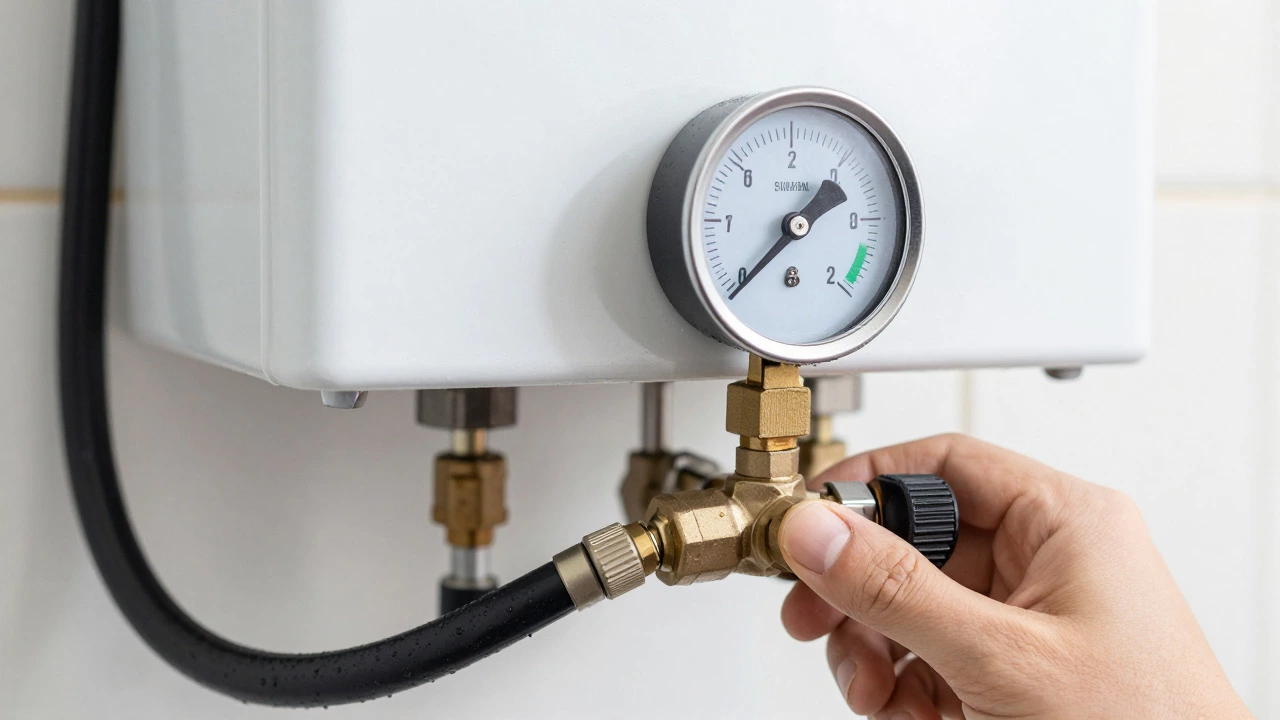
One of the most critical components to check is the pressure gauge. Most modern combi-boilers require a specific water pressure to operate safely. The ideal range is usually between 1 and 1.5 bar when the system is cold. If the needle drops below 0.8 bar, the boiler will likely lock out to prevent damage from overheating or dry firing.
Look at the gauge on the front of your unit. If it’s low, you need to repressurize the system. Here is how you do it:
- Locate the filling loop. This is a flexible black hose connecting the two pipes under the boiler, or a built-in key mechanism on some brands like Vaillant or Worcester Bosch.
- Open the valves slowly. You will hear water rushing in.
- Watch the gauge closely. Stop when it hits 1.2 or 1.3 bar. Do not overfill it, or you may trigger a safety valve release.
- Close the valves tightly.
If the pressure drops again within 24 hours, you have a leak somewhere in your radiators or pipework. This requires a professional inspection because adding water repeatedly won’t solve the underlying issue.
Decoding Error Codes and Flashing Lights
Modern boilers are smart. When something goes wrong, they tell you exactly what it is via error codes. Instead of guessing, grab your manual. Every brand uses different codes. For example, a Baxi boiler might flash code E07 for ignition failure, while a Glow-worm might show F.12 for loss of flame.
If you don’t have the manual, search online for "[Your Brand] [Model Number] error code [Code]." Be specific. Generic searches lead to forums with outdated advice. Pay attention to these common categories:
- Ignition Faults: The boiler tries to fire but fails. This could be a gas supply issue or a faulty spark electrode.
- Flow Rate Errors: The pump isn’t moving water fast enough. This often points to a stuck pump or airlocks in the system.
- Overheat Protection: The boiler detected excessive temperature and shut down. Check for blocked radiators or a failing thermostat.
Note the code down. Even if you can’t fix it, giving this number to a technician speeds up the diagnosis significantly.
Listen to the Noises: What They Mean
Your boiler should hum quietly. If it starts making new sounds, pay attention. Noise is often the first sign of internal wear or blockage.
Gurgling or Kettling: If you hear a rumbling or whistling noise from the radiators or the boiler itself, you likely have air trapped in the system or limescale buildup. In hard water areas, mineral deposits coat the heat exchanger, causing water to boil locally and create steam bubbles. This is called kettling. It reduces efficiency and can damage the heat exchanger over time. Bleeding your radiators might help if it’s air; a chemical flush is needed for limescale.
Banging or Clanking: Loud bangs when the boiler turns on or off suggest thermal expansion. Pipes expand when heated and contract when cooled. If they aren’t secured properly, they bang against walls or joists. While annoying, this is usually a mechanical fix involving pipe clips rather than a boiler repair.
Whining or Buzzing: A high-pitched whine often comes from the circulation pump. If the pump bearings are wearing out, it will squeal. This needs replacement, but it’s a relatively inexpensive part compared to a full boiler swap.
Inspect the Radiators for Cold Spots
If your boiler is firing up but only some radiators are warm, the problem isn’t necessarily the boiler-it’s the distribution. Walk around your house. Are all radiators hot? If one is cold at the top but warm at the bottom, it has an airlock. You need to bleed it.
To bleed a radiator:
- Turn off the heating and let the system cool slightly.
- Place a towel under the bleed valve (usually at the top corner).
- Use a radiator key or flathead screwdriver to turn the valve counter-clockwise slightly.
- You’ll hear hissing air. Once water squirts out steadily, close the valve.
- Repeat for other cold radiators.
After bleeding, check your boiler pressure again. Releasing air lowers system pressure, so you may need to top it up using the steps mentioned earlier.
When to Call a Professional: Safety Red Flags
There are limits to DIY diagnosis. Gas appliances are dangerous if mishandled. Never attempt to open the casing of a gas boiler unless you are a certified engineer. If you smell gas, evacuate immediately and call your gas provider. Do not touch switches or create sparks.
Other signs that require a pro include:
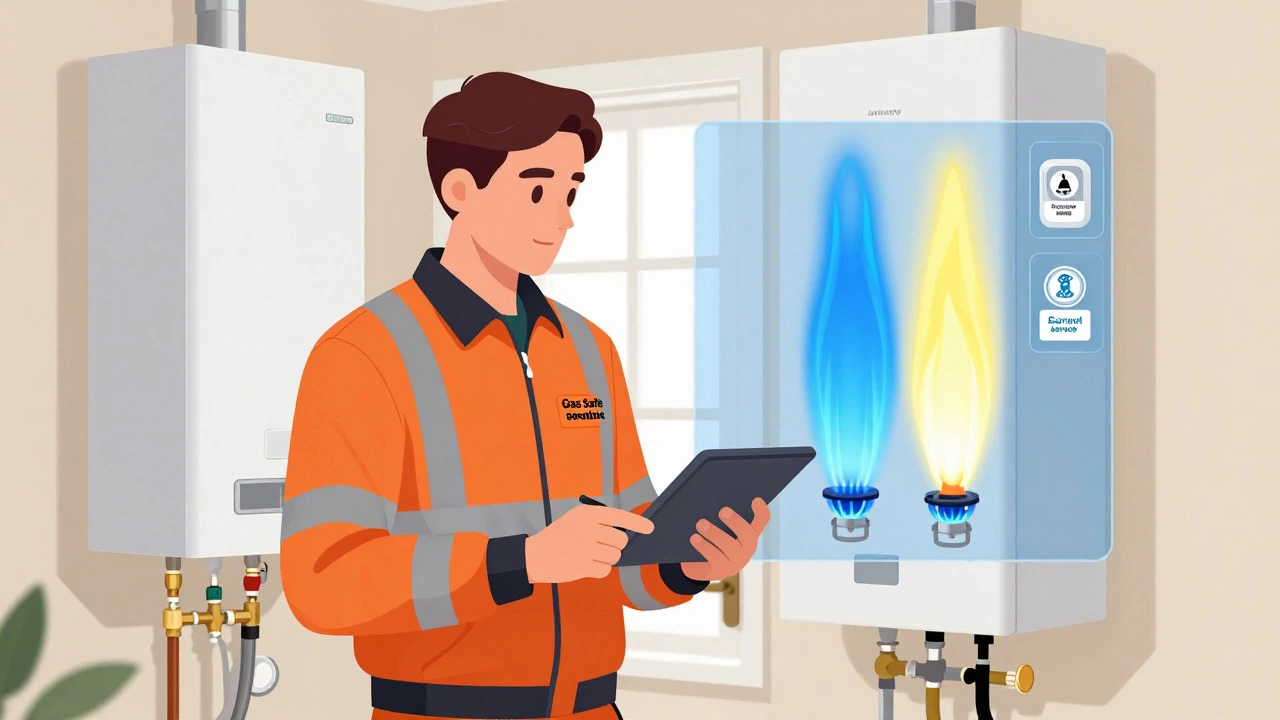
- Yellow Flame: A healthy gas flame should be blue. A yellow or orange flame indicates incomplete combustion, which can produce carbon monoxide. Install a CO detector if you haven’t already.
- Water Leaks: If water is pooling under the boiler, it could be a cracked heat exchanger or a failed seal. This is not a DIY fix.
- Frequent Lockouts: If the boiler keeps shutting down despite resetting, there is a persistent fault that needs diagnostic tools to identify.
In New Zealand, only GasSafe registered engineers (or equivalent local certification) should work on gas fittings. Attempting repairs without certification voids insurance and poses severe health risks.
Maintenance Tips to Prevent Future Problems
Prevention is cheaper than cure. Most boiler breakdowns happen due to lack of maintenance. Schedule an annual service with a qualified technician. They will clean the heat exchanger, check gas pressure, test safety devices, and ensure efficient operation.
You can also help by:
- Keeping the area around the boiler clear of clutter for ventilation.
- Checking the condensate pipe in winter. If it freezes, the boiler locks out. Pouring warm water over it can thaw it temporarily.
- Ensuring your filters (if present) are clean.
A well-maintained boiler lasts longer, uses less energy, and keeps you warmer. By knowing how to diagnose basic issues, you take control of your home’s comfort and avoid being held hostage by unexpected breakdowns.
Can I reset my boiler myself?
Yes, most boilers have a reset button. Press and hold it for 3-5 seconds. However, if the boiler resets and then faults again within an hour, stop trying. Repeated resets can mask serious issues like gas leaks or component failure. Only reset once to see if it was a temporary glitch.
Why is my boiler making a kettling noise?
Kettling is caused by limescale buildup inside the heat exchanger or air trapped in the system. As water heats up, it creates steam bubbles that collapse loudly. Bleeding radiators removes air. If the noise persists, you likely need a chemical power flush to remove scale, which should be done by a professional.
What does it mean if my boiler pressure is too high?
Pressure above 2 bar is too high and can cause the pressure relief valve to open, leaking water. This often happens if you overfilled the system during repressurization. To lower it, bleed a radiator slightly until the pressure drops to 1.2-1.5 bar, then top up if necessary.
Is it safe to use a boiler that is 15 years old?
It can be safe if serviced annually, but efficiency drops significantly after 10-12 years. Older boilers consume more gas and are more prone to breakdowns. Consider replacing it if repair costs exceed 50% of the price of a new unit, or if it lacks modern safety features like condensing technology.
How often should I service my boiler?
You should service your boiler once a year. Annual servicing ensures safe operation, maintains warranty validity, and keeps efficiency high. Technicians check for gas leaks, clean burners, and test safety controls. Skipping this can lead to costly repairs and potential carbon monoxide risks.