Freezer Repair vs. Replacement Cost Calculator
Freezer Repair vs. Replacement Calculator
How much does it really cost to fix a broken freezer versus buying a new one? Most people assume replacing is the obvious answer - but that’s not always true. You might be spending hundreds more than you need to if you jump straight to a new unit. The truth is, whether to repair or replace your freezer depends on three things: how old it is, what’s broken, and how much you’re willing to spend upfront versus over time.
When Repairing a Freezer Makes Sense
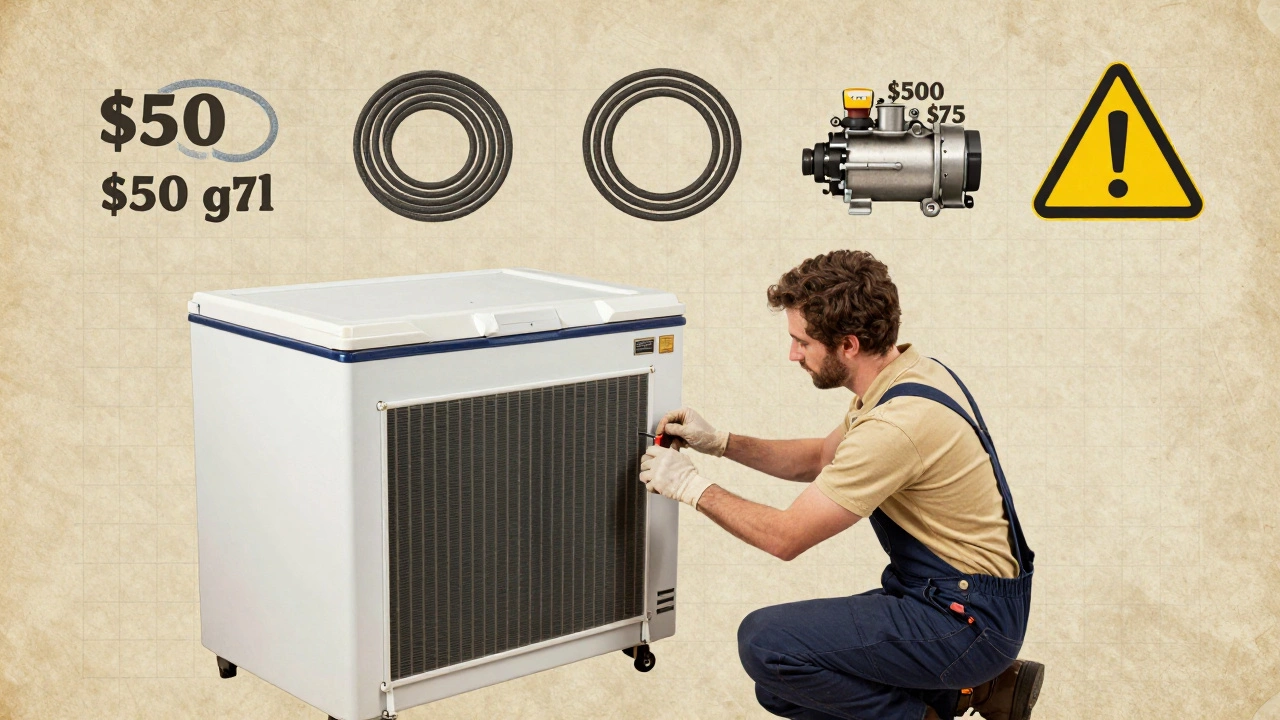
If your freezer is less than 8 years old and the issue is something simple - like a faulty door seal, a clogged condenser coil, or a broken thermostat - repair is almost always the smarter move. These fixes cost between $100 and $250, including labor. A new door gasket? Around $50. Cleaning out dust from the coils? $75. Replacing a thermostat? About $150. All of these are minor fixes that can add another 5 to 10 years to your freezer’s life.
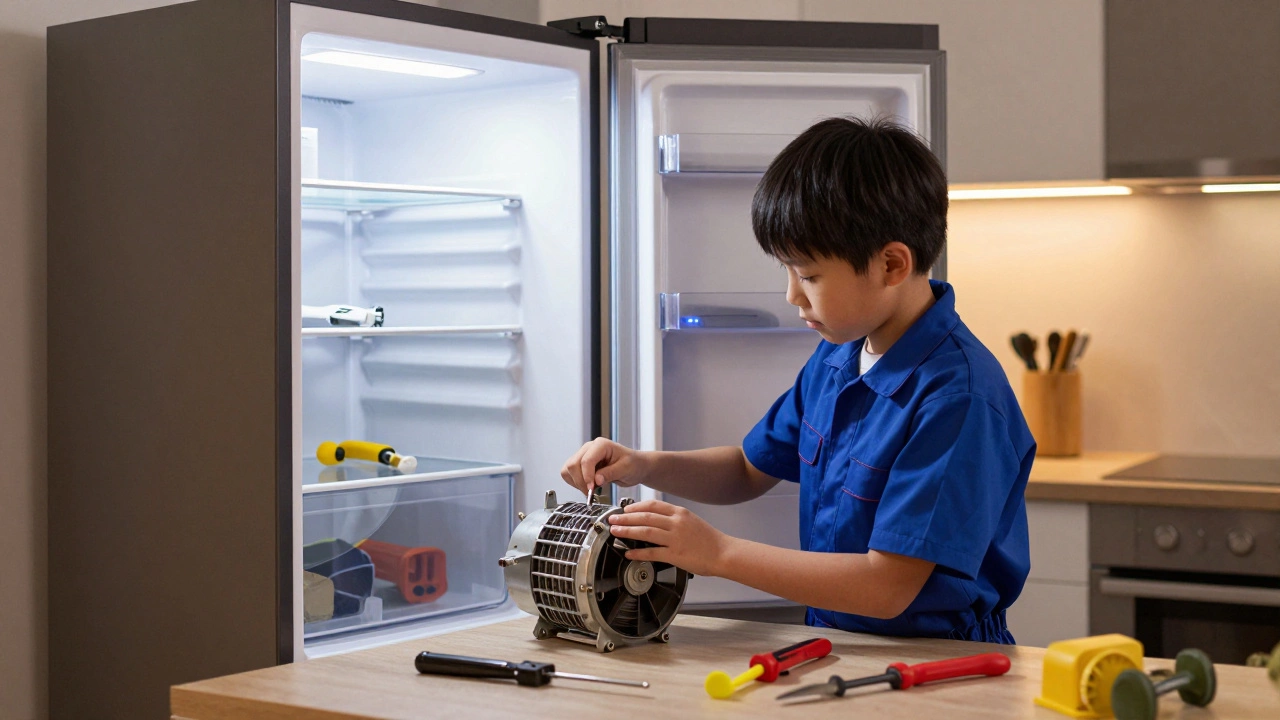
One real-life example: A homeowner in Ohio had their 6-year-old upright freezer stop cooling. The technician found the evaporator fan motor had burned out. Replacing it cost $180. The same freezer, new, would’ve run $700. That’s a 74% savings. And the repaired unit still ran efficiently for another 7 years.
Older freezers, especially those made before 2015, often use less energy-efficient refrigerants. But even if yours is a little outdated, a simple repair can still pay off. The key is not to wait until everything breaks down at once. Catching problems early keeps costs low.
When Replacement Is the Only Smart Choice
There are clear signs it’s time to walk away from repair. If your freezer is 12 years or older, it’s likely approaching the end of its usable life. Most freezers last between 10 and 15 years. Pushing beyond that means you’re gambling on parts that are harder to find and more expensive to replace.
Here’s the big one: if the compressor is failing, you’re looking at a repair cost of $500 to $800. That’s nearly half the price of a brand-new, energy-efficient freezer. And even if you fix it, you’re stuck with a unit that uses 30% to 50% more electricity than modern models. Over five years, that adds up to $200-$400 extra in utility bills.
Another red flag: if your freezer is leaking refrigerant. Fixing a leak means finding the source, patching it, and recharging the system. That’s $300-$600 - and there’s no guarantee it won’t leak again in a year. New freezers use R600a refrigerant, which is cheaper, safer, and more efficient than the old R134a. You’re not just replacing a part - you’re upgrading to a system designed for today’s standards.
Energy Costs: The Hidden Factor
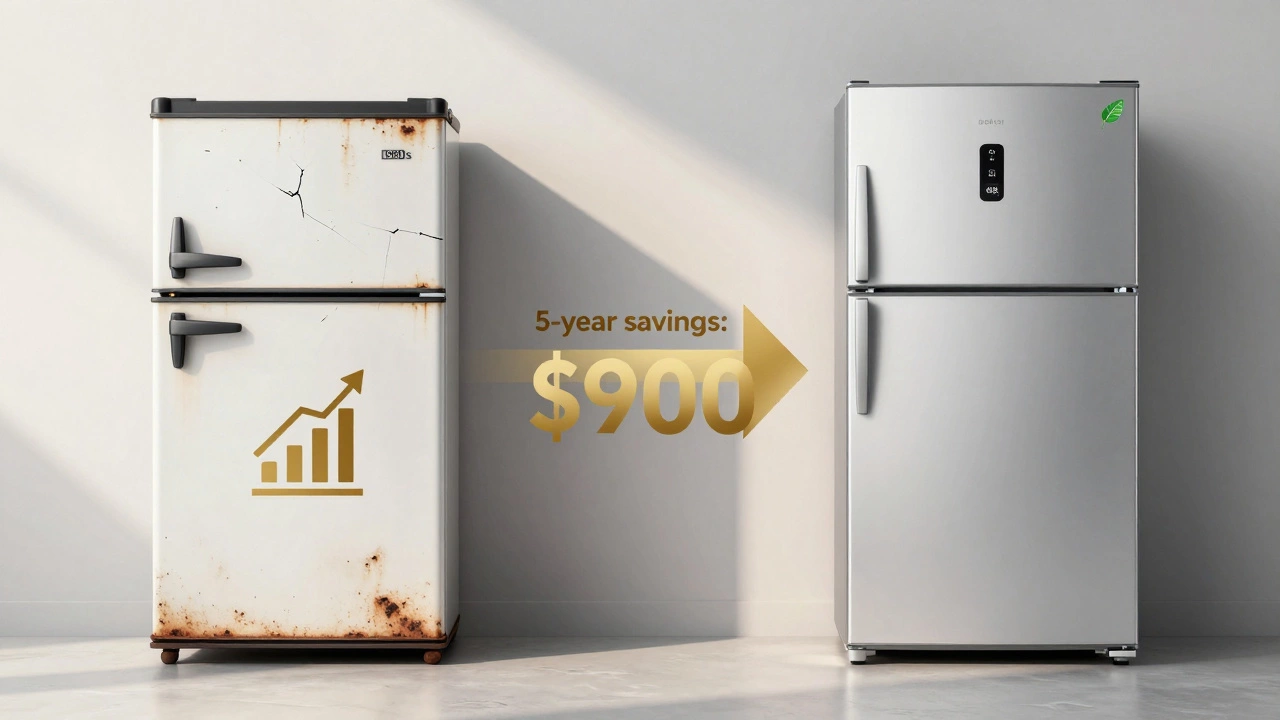
Most people don’t think about electricity until their bill spikes. But your freezer runs 24/7. A 1990s model might use 1,200 kWh per year. A new Energy Star-rated freezer uses about 450 kWh. At $0.15 per kWh, that’s $180 saved annually. Over five years, that’s $900 - more than enough to cover the cost of a new freezer.
Look at the EnergyGuide label on any new freezer. It shows estimated yearly electricity use and cost. Compare that to your current freezer’s usage. If you don’t know how much yours uses, plug it into a kill-a-watt meter for a week. Multiply the daily usage by 365. If your old freezer uses more than 800 kWh per year, replacing it with a modern one pays for itself in under 3 years.
Repair Costs vs. New Freezer Prices (2026)
Here’s what you’re actually looking at right now:
| Issue | Typical Repair Cost | New Freezer Cost (Entry-Level) | Is Repair Worth It? |
|---|---|---|---|
| Door seal replacement | $50-$100 | $400-$600 | Yes - easy fix |
| Thermostat replacement | $120-$180 | $400-$600 | Yes - if freezer is under 8 years |
| Condenser coil cleaning | $75-$150 | $400-$600 | Yes - improves efficiency |
| Evaporator fan motor | $150-$250 | $400-$600 | Yes - if freezer is under 10 years |
| Compressor failure | $500-$800 | $400-$600 | No - replace instead |
| Refrigerant leak | $300-$600 | $400-$600 | No - leak likely to return |
Notice something? For every repair under $300, you’re better off fixing it - unless your freezer is already past 10 years. Once you hit $400+ in repair costs, you’re better off replacing it. And if you’re spending $500 or more, you’re basically paying to keep an old machine running while paying more in electricity.
What About Extended Warranties and Service Plans?
Most stores push service plans when you buy a new freezer. They sound good - “Only $100 a year for coverage!” But here’s the catch: most freezers don’t break in the first 3 years. By year 5, if something major fails, the warranty is long gone. And if your freezer is already 8 years old, a service plan won’t cover it anyway.
Instead of paying for a plan, set aside $50 a year in a jar. After 5 years, you’ll have $250 - enough to cover a major repair or put toward a new unit. It’s cheaper, more flexible, and you’re not locked into a company’s service schedule.
What to Do If You’re Not Sure
If you’re stuck, ask yourself these three questions:
- How old is the freezer? (Under 8? Repair. Over 12? Replace.)
- What’s the repair cost compared to a new one? (If repair is over 50% of a new unit’s price, replace.)
- How much are you paying in electricity? (If it’s over $150/year, a new model will save you money fast.)
Also, check the condition of the interior. Are there rust spots? Are the shelves cracked? Is the insulation crumbling? These aren’t just cosmetic - they mean the freezer’s efficiency is already dropping. A unit with physical damage won’t hold up long, even after a repair.
What You Lose When You Replace
Some people don’t realize how much usable space they’re giving up. A 15-cubic-foot freezer from 2010 might have better internal layout than a 14-cubic-foot model today. Modern freezers often sacrifice depth for slim profiles to fit in small kitchens. You might end up with less storage even after paying more.
Also, if you’re replacing a chest freezer with an upright, you’re losing energy efficiency. Chest freezers keep cold air locked in when opened - uprights lose 20% more cold air. If you’re using your freezer for bulk food storage, sticking with a chest model and repairing it might be smarter than switching.
Final Decision Checklist
Before you decide, run through this quick checklist:
- Freezer is under 8 years old? → Repair
- Repair cost under $300? → Repair
- Repair cost over 50% of new unit price? → Replace
- Compressor or refrigerant issue? → Replace
- Electricity bill over $150/year? → Replace
- Visible rust, cracks, or poor seals? → Replace
- Want better features (temperature alarms, frost-free, smart controls)? → Replace
If you answered yes to any of the last three, it’s time to shop for a new one. If you said yes to the first two and no to the rest, call a technician. Don’t rush. A small repair now can save you hundreds later.
Is it worth repairing a 10-year-old freezer?
It depends on the problem. If it’s a simple fix like a thermostat or fan motor, yes - especially if it’s still cooling well and your electricity bill is high. But if the compressor is failing or there’s a refrigerant leak, it’s better to replace it. A 10-year-old freezer is near the end of its life, and repairs at this age rarely pay off long-term.
How long should a freezer last before needing replacement?
Most freezers last between 10 and 15 years. Chest freezers often last longer - up to 18 years - because they have fewer moving parts and better insulation. Upright models tend to wear out faster due to more complex cooling systems and frequent door openings. If yours is over 12 years old and breaking down, replacement is usually the better investment.
Can I save money by repairing a freezer myself?
Some fixes are DIY-friendly, like replacing a door gasket or cleaning condenser coils. These tasks require no special tools and can be done in under an hour. But anything involving refrigerant, electrical components, or the compressor should be left to a licensed technician. Messing with refrigerant is illegal without certification and can cause serious damage or safety hazards.
Do new freezers really save that much on electricity?
Yes. A modern Energy Star-rated freezer uses about 450 kWh per year. An older model from the 2000s uses 800-1,200 kWh. That’s a savings of $50 to $100 per year on your electric bill. Over 5 years, that’s $250-$500 - enough to cover the cost of a new freezer. Plus, new models are quieter and more reliable.
What’s the most common reason freezers break down?
The top three causes are: 1) Dirty condenser coils (reduces cooling efficiency), 2) Failed evaporator fan motor (stops air circulation), and 3) Worn door seals (lets cold air escape). All three are fixable early on. Waiting too long leads to compressor strain - and that’s when repair costs spike.
If you’re unsure, get a free diagnostic from a local appliance repair shop. Most offer it for free - and you’ll walk away with a clear answer, not guesswork. Don’t let fear of cost push you into a bad decision. Sometimes, a $150 repair saves you $600 - and keeps your food safe for years longer.