Fridge Freezer Repair vs. Replace Calculator
Is your 7-year-old fridge freezer showing signs of wear? This tool helps you determine if repair is financially and environmentally worth it compared to replacement.
Based on article data: Repair is recommended if cost is less than 50% of a new unit's price and the issue is isolated.
Is your 7-year-old fridge freezer making strange noises, leaking water, or just not cooling like it used to? You’re not alone. Millions of households face this exact dilemma every year: fix it or toss it. But here’s the truth most repair shops won’t tell you - repairing a 7-year-old fridge freezer isn’t always a bad idea. In fact, it might be the smarter, cheaper, and greener choice - if you know what to look for.
How long should a fridge freezer last?
Most manufacturers claim their fridge freezers last 10 to 15 years. That’s the ideal. But real-world use? It’s different. If you open the door 10 times a day, keep it packed full, live in a hot garage, or never clean the coils, you’re cutting that lifespan in half. A 7-year-old unit is still in its prime. It’s not old. It’s not broken. It’s just showing wear.Think of it like a car. A 7-year-old Honda Civic with 100,000 miles isn’t junk. It’s still reliable if it’s been maintained. Same with your fridge freezer. Many units hit their stride after year 5 and run smoothly until year 12. So before you start measuring space for a new one, ask: what’s actually wrong?
Common problems in 7-year-old fridge freezers
Not every issue means it’s time to replace. Here are the top 5 problems you’re likely seeing, and whether they’re fixable:- Temperature fluctuations - Often just a faulty thermostat or dirty condenser coils. Cleaning coils costs $20 and a few hours. Replacing the thermostat? $70-$120.
- Loud noises - A rattling compressor or worn fan motor. Compressors rarely fail this early. Fans? Easy fix. You can replace the fan for under $50.
- Water pooling at the bottom - Clogged drain tube. This happens in 80% of cases. A wire hanger and warm water clear it in 10 minutes.
- Freezer not freezing - Could be a failed evaporator fan, defrost heater, or sealed system leak. Sealed system leaks are serious. But if it’s just the heater or fan, repair is cheap.
- High electricity bills - Old units use more power, yes. But a 7-year-old fridge isn’t ancient. A 2019 model still meets 2020 energy standards. Newer models aren’t dramatically more efficient.
Here’s the thing: 85% of repairs on units under 8 years old are simple, low-cost fixes. The expensive stuff - like compressor failure or refrigerant leaks - is rare at this age.
Repair cost vs. replacement cost
Let’s break down the numbers. A typical fridge freezer repair costs between $150 and $400. Labor is $75-$120/hour. Parts like thermostats, fans, or door seals run $30-$100.A new mid-range fridge freezer? $800-$1,500. Even a budget model starts at $600. That’s a huge jump. And if you factor in delivery, removal, and installation? You’re easily at $1,000.
But here’s the hidden math: if your fridge freezer is still cooling 90% of the time, and the repair fixes the issue for another 3-5 years, you’re saving $500-$1,000. That’s not just money. That’s landfill waste avoided.
When repair makes sense
Repair is worth it if:- The problem is isolated (one part, not systemic)
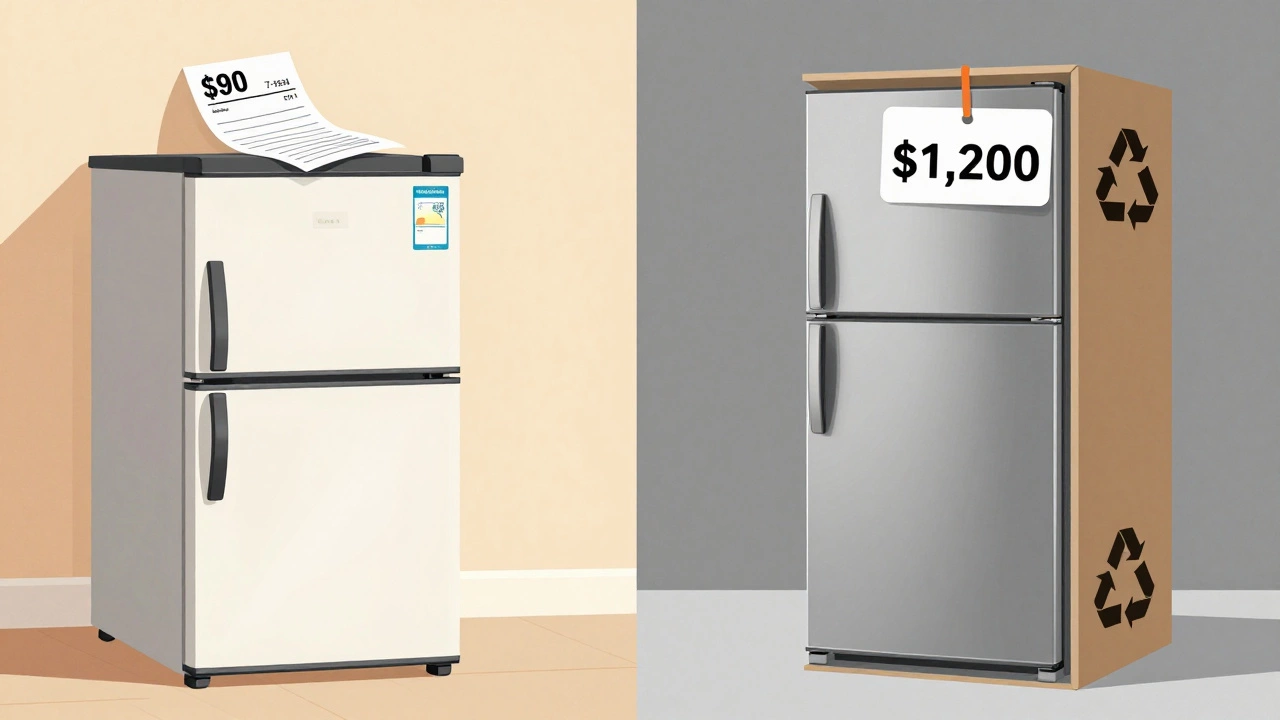
- The repair cost is less than 50% of a new unit
- The unit is still energy efficient (check the label - if it’s Energy Star certified, it’s still competitive)
- You like the size, layout, or features (built-in, French doors, ice maker)
- You’ve had no major repairs in the past 3 years
For example: a fridge freezer with a $90 defrost heater replacement that’s been running fine since 2019? That’s a no-brainer. You’re buying 4 more years of service for 10% of the cost of a new one.
When to walk away
There are red flags. If any of these apply, replace it:- The compressor is making grinding noises or won’t start - that’s the heart of the unit. Replacing it costs $500-$800, almost as much as a new fridge.
- There’s a refrigerant leak. Sealing it is temporary. Recharging it is illegal in many places without certification. And it’ll leak again.
- The door seals are crumbling, and the unit won’t seal shut. Cold air escapes. Energy use spikes. No fix lasts.
- You’ve had 2+ major repairs in the last 2 years. That’s a pattern. It’s not luck - it’s decline.
- The fridge is older than 8 years and uses R12 or R22 refrigerant. Those are banned. No one services them anymore.
If you’re seeing multiple issues at once - cooling problems + noise + leaks - that’s a sign the unit is failing from the inside out. That’s not repairable. That’s retirement time.
What about energy savings?
People say new fridges are 40% more efficient. That’s true - but only compared to models from 2005. A 2019 fridge? It’s already 20-25% more efficient than a 2010 model. So if your 7-year-old unit is from 2019, you’re not saving much by upgrading.Here’s the real number: if your fridge uses 600 kWh/year and a new one uses 400 kWh/year, you save $30-$40 annually on electricity. At that rate, it takes 15-20 years to make up the cost difference. You’ll probably replace the new one before you break even.
Environmental impact matters
Every fridge freezer thrown away adds 50-70 pounds of metal, plastic, and insulation to landfills. The refrigerant, if not properly removed, leaks into the atmosphere. That’s a climate problem.Repairing extends the life of your appliance. It reduces demand for new materials. Mining copper, aluminum, and steel for new fridges uses 10x more energy than keeping an old one running. Repair isn’t just cheap - it’s climate-smart.
What to do next
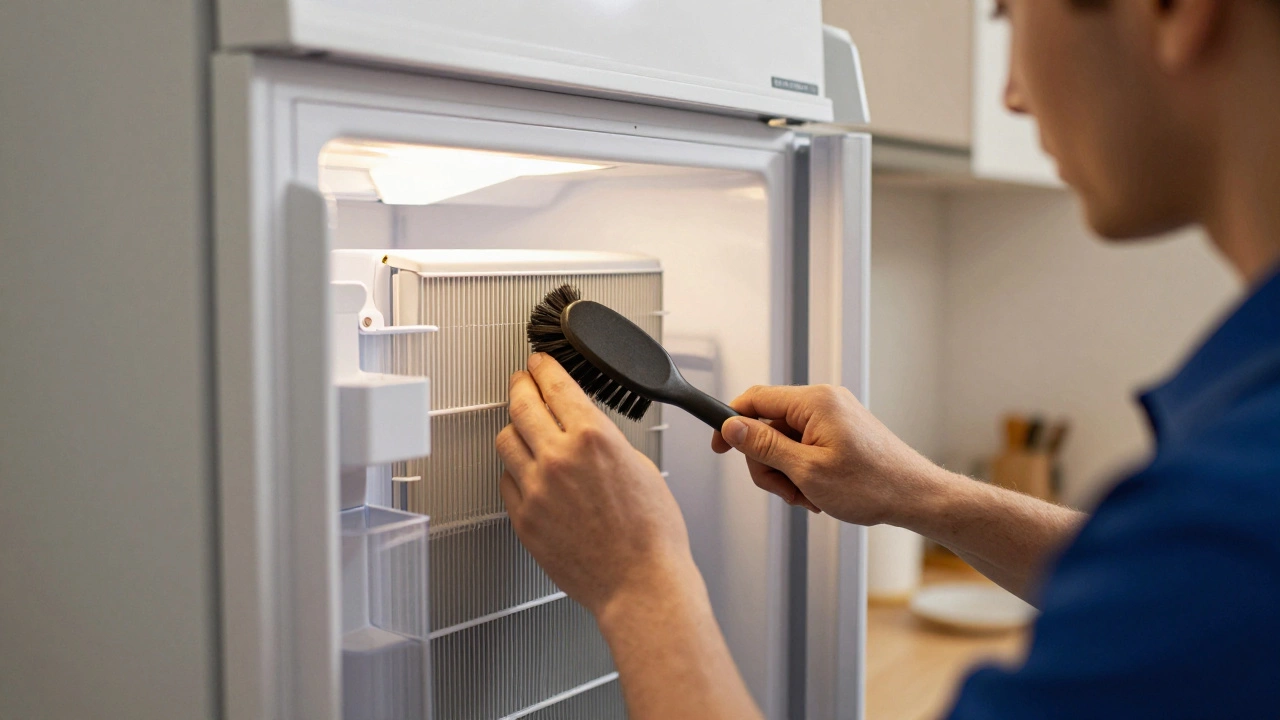
Don’t panic. Don’t buy a new one yet. Do this:- Unplug the fridge and clean the condenser coils (back or bottom). Dust buildup is the #1 cause of overheating.
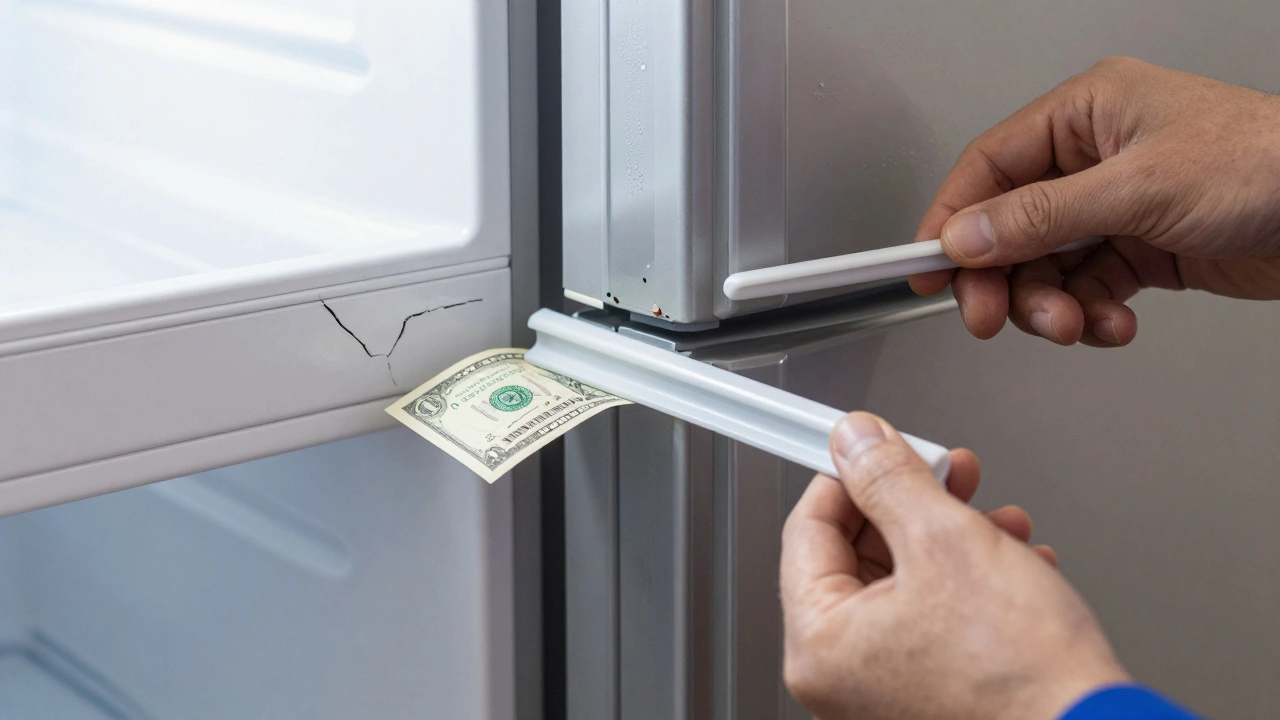
- Check the door seals. Close a dollar bill in the door. If it slips out easily, replace the seal ($25-$50).
- Listen for the compressor. If it runs constantly, the thermostat might be faulty.
- Call a licensed technician. Ask for a diagnostic fee - usually $50-$80. They’ll tell you what’s broken and how much to fix it.
- Get a quote. If it’s under $300 and the unit has no history of repeated issues, go ahead.
Most repair techs will tell you if it’s worth it. They’ve seen hundreds of these. If they hesitate, that’s a sign. If they say, “This is a solid unit - we can fix it,” then listen.
Final verdict
A 7-year-old fridge freezer? It’s not too old to fix. In fact, it’s probably in its best years. Unless it’s a total mess - compressor gone, refrigerant leaking, multiple failures - repair is almost always the smarter move. You save money. You save the planet. And you keep using something that still works.Don’t let fear of age make you replace prematurely. Be smart. Be curious. Get a diagnosis. Then decide.
Is it worth repairing a fridge freezer that’s 7 years old?
Yes, if the repair cost is under 50% of a new unit and the issue is isolated - like a faulty thermostat, fan, or drain tube. Most 7-year-old fridge freezers are still in good condition and can easily last 3-5 more years with a simple fix.
What’s the average cost to repair a fridge freezer?
Most repairs cost between $150 and $400. Common fixes like replacing a door seal ($40), cleaning coils ($0-$50), or swapping a thermostat ($80-$120) are affordable. Compressor replacement or refrigerant leaks can cost $500+, which often isn’t worth it.
How do I know if my fridge freezer is too old to repair?
If it’s over 8 years old and you’ve had two or more major repairs in the last 2 years, it’s likely failing. Also, if the compressor is noisy or won’t start, or if there’s a refrigerant leak, replacement is usually better. But a single issue at 7 years? That’s repairable.
Can I save money by repairing instead of replacing?
Absolutely. A $300 repair that gives you 4 more years of use saves you $700-$1,200 compared to buying a new unit. Plus, you avoid disposal fees and reduce environmental waste. The break-even point for energy savings is over 15 years - so repair is almost always cheaper.
Do newer fridge freezers save enough energy to justify replacement?
Not really - at least not for a 7-year-old unit. Modern fridges are 20-25% more efficient than models from 2010, but your 2019 fridge is already close to today’s standards. You’d need to run the new one for 15-20 years to make up the cost difference through energy savings alone.