Oven Repair vs. Replacement Calculator
Enter Your Details
Enter your details to see if it makes financial sense to fix your oven.
- Repair Ratio:
- Potential Energy Savings:
There is nothing quite as frustrating as opening your kitchen door to find the temperature gauge stuck on 'Off' while dinner is still raw in the middle. You check the timer, reset the breaker, and wait. Nothing happens. Now you are staring at a seven-year-old oven that has decided to quit on you. The immediate question isn't just about getting it back online; it is about whether throwing money at this specific machine makes sense or if you should cut your losses and buy new.
Seven years is a tricky age for an Oven is a kitchen appliance used for cooking food by heating it in an enclosed space. It is past its warranty period, likely showing signs of wear, but not yet ancient enough to be completely obsolete. To decide if fixing it is worth it, you need to look beyond the emotional attachment to the brand name on the front panel. You have to weigh the repair bill against the price of a replacement, factor in energy efficiency gains, and consider how long the new unit might last you.
The Half-Life Rule of Appliance Repair
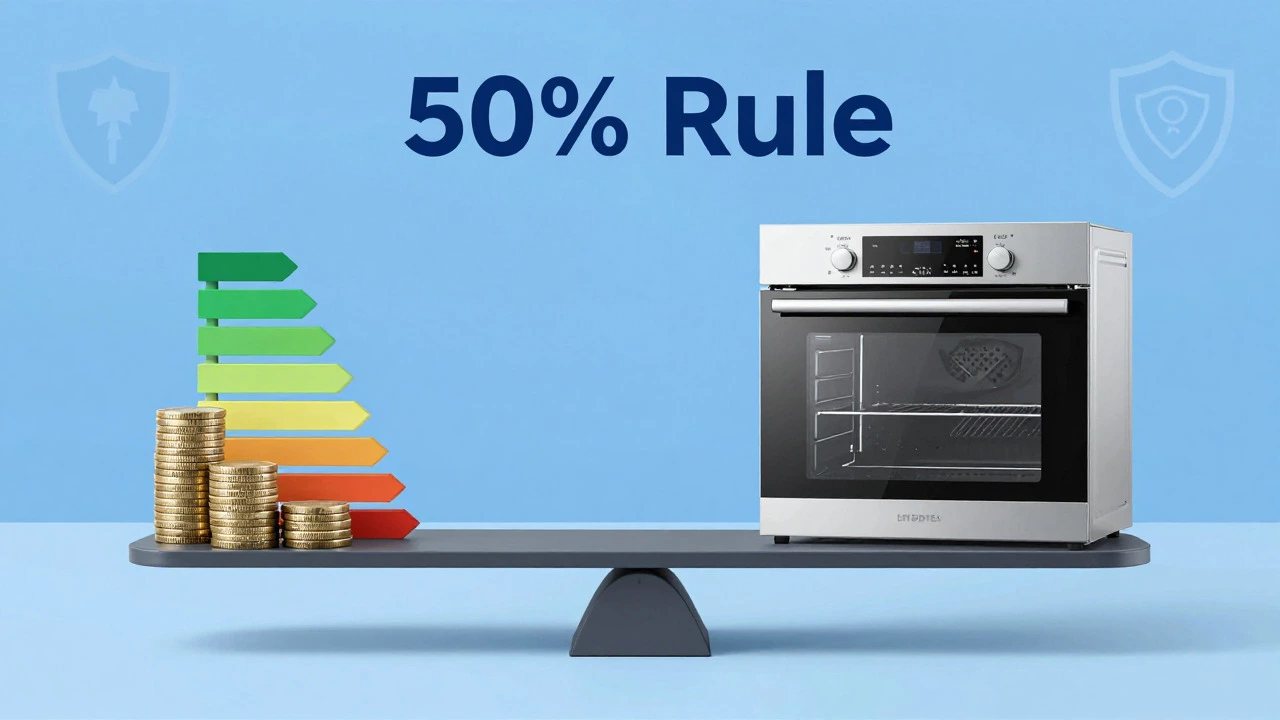
In the world of home appliances, there is a widely accepted heuristic known as the "50% rule." If the cost of repairing your appliance exceeds 50% of the price of replacing it with a comparable new model, you should generally replace it. This rule exists because older units often carry hidden costs. A seven-year-old oven might need a new heating element today, but the control board could fail next year, followed by the door seal the year after that.
Let’s break down the numbers realistically. In New Zealand, a mid-range built-in electric oven typically costs between NZD $800 and $1,500. A professional repair call-out fee plus parts usually lands between NZD $150 and $400 for minor issues like a faulty thermostat or heating element. If the problem is the main control board or the electronic touchpad, repairs can easily spike to NZD $600 or more.
- Minor Repair (Under NZD $300): Usually worth fixing if the rest of the oven functions well.
- Moderate Repair ($300 - $600): The grey area. Consider the age and frequency of past repairs.
- Major Repair (Over NZD $600): Almost always better to replace, especially at seven years old.
If your quote comes in at NZD $500, you are spending half the price of a brand-new oven to keep a seven-year-old one running. That new oven will come with a three-to-five-year warranty, better insulation, and modern safety features. The math rarely favors keeping the old unit once you cross that moderate repair threshold.
Energy Efficiency: The Hidden Monthly Cost
We often forget that ovens are significant energy consumers. An oven manufactured in 2019 operates under different energy standards than one released in 2026. Over the last seven years, manufacturers have improved insulation materials, introduced more precise digital thermostats, and optimized fan circulation systems. These changes aren't just marketing fluff; they reduce electricity usage.
An older electric oven can consume up to 20-30% more power than a modern Energy Star-rated equivalent. If you bake frequently-say, twice a week-the extra kilowatt-hours add up over time. While the monthly difference might seem small on your electricity bill, compounded over another five years, it represents a substantial amount of wasted money. Replacing an inefficient oven pays for itself slowly through lower utility bills, making the investment in a new unit more attractive than patching up an energy hog.
Gas ovens present a slightly different picture. Gas is often cheaper per unit of energy than electricity in many regions, including parts of New Zealand. However, older gas ovens may have less efficient burners or compromised seals, leading to gas leaks or uneven heating. Safety becomes a bigger factor here. If your seven-year-old gas oven requires a major repair involving the gas line or burner assembly, the risk profile increases significantly compared to an electric counterpart.
Common Failures in Seven-Year-Old Ovens
Not all breakdowns are created equal. Understanding what actually broke helps determine if the fix is a band-aid or a genuine solution. Here are the most common failure points for ovens hitting the seven-year mark:
| Component | Typical Symptom | Avg. Repair Cost (NZD) | Worth Fixing? |
|---|---|---|---|
| Heating Element | Oven won't heat or heats unevenly | $150 - $250 | Yes, if isolated issue |
| Thermostat/Sensor | Temperature inaccurate | $200 - $350 | Maybe, depends on other issues |
| Door Seal/Gasket | Heat escapes, higher bills | $100 - $200 | Yes, improves efficiency |
| Control Board | Display dead, erratic behavior | $500 - $800+ | No, replace oven |
| Convection Fan Motor | No air circulation, noisy | $300 - $500 | Borderline, lean towards replace |
If your oven has a broken heating element, that is a straightforward swap. Parts are cheap, and labor is minimal. But if the control board has failed, you are looking at a complex electronic component that is prone to moisture damage and voltage spikes. Once the brain of the oven dies, other components often follow suit due to lack of regulation or subsequent user error from confusing error codes.
Safety Concerns with Aging Appliances
Safety is non-negotiable when dealing with high-voltage electrical components or open flames. A seven-year-old oven has undergone thousands of thermal cycles-heating up and cooling down repeatedly. This expansion and contraction can weaken wiring connections, crack ceramic coatings, and degrade insulation.
Loose wire connections inside the back panel of an oven can create arcing, which is a fire hazard. Older models may also lack modern safety features like automatic shut-off timers, child locks, or cool-touch handles. If your current oven has ever tripped a circuit breaker unexpectedly or smelled like burning plastic before the current breakdown, these are red flags. They suggest underlying electrical degradation that a single part replacement won't fully resolve.
For gas ovens, carbon monoxide leaks are a silent danger. Even if the flame looks blue, aging burners or cracked manifolds can allow unburned gas to escape. If you are considering repairing a gas oven that is seven years old, insist on a comprehensive safety inspection, not just a fix for the immediate symptom. If the technician recommends multiple safety-related replacements, walk away and buy new.
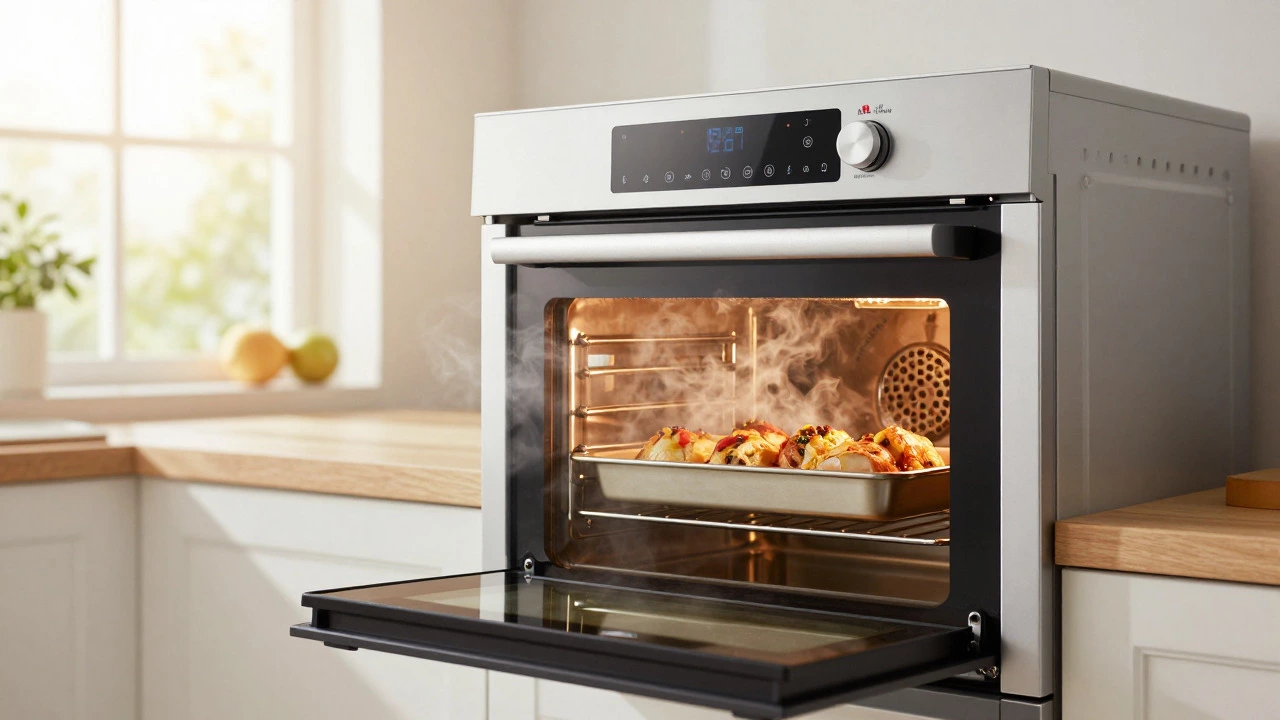
When Keeping the Old Oven Makes Sense
Despite the general advice to replace, there are scenarios where repairing a seven-year-old oven is the smarter financial move. First, consider the installation complexity. Built-in ovens require precise cabinetry cuts and potentially new electrical circuits. If your kitchen cabinets are custom-built for your current oven's dimensions, swapping it out might require expensive carpentry work to fit a new model. In this case, repairing the existing unit avoids structural modifications.
Second, if you use the oven infrequently-perhaps only for holiday roasts or occasional baking-the upfront cost of a new oven is hard to justify. If the repair is minor, such as replacing a door hinge or a light bulb socket, the longevity of the remaining components matters less because they are under low stress. Low usage extends the functional life of aging parts significantly.
Finally, budget constraints play a role. If you cannot afford a NZD $1,200 oven right now, a NZD $200 repair buys you another six to twelve months of functionality. Just be prepared for the possibility that further issues may arise sooner rather than later. Treat the repair as a temporary bridge, not a permanent solution.
Choosing the Right Replacement
If you decide to replace your oven, take advantage of the technological advancements available in 2026. Modern ovens offer features that make cooking easier and more consistent. Look for models with self-cleaning cycles that use high heat to incinerate grease, saving you hours of scrubbing. Steam injection functions help keep meats moist and bread crusty without manual intervention.
Consider the type of fuel source available in your home. Electric induction-compatible hobs paired with electric ovens are becoming the standard for new builds due to their precision and ease of cleaning. However, if you prefer the responsiveness of gas, ensure your new gas oven has sealed burners for easy wipe-down cleaning. Check the energy rating labels carefully; a higher initial cost for a top-tier energy-efficient model often pays off through reduced electricity bills and government rebates, which are occasionally available in New Zealand for green appliance upgrades.
Don't overlook the importance of professional installation. Whether you repair or replace, having a certified technician handle the connection ensures compliance with local electrical codes and voids no warranties. A DIY installation mistake can lead to insurance claim denials if a fire occurs later.
How long do ovens typically last?
Most conventional electric ovens last between 10 to 15 years with regular use. Gas ovens may have a slightly shorter lifespan due to the combustion process affecting internal components. Frequent heavy use, such as daily baking, can shorten this timeline to 7-10 years.
Is it dangerous to use a 7-year-old oven?
Not inherently. Seven years is within the normal operational lifespan. However, if the oven shows signs of electrical arcing, frayed wires, or gas leaks, it becomes dangerous. Regular maintenance and prompt repair of minor issues keep older ovens safe.
What is the average cost to replace an oven in New Zealand?
The total cost including the appliance and professional installation ranges from NZD $1,000 to $2,500 depending on the brand, features, and whether any cabinetry modifications are needed. Basic models start around NZD $800, while premium smart ovens can exceed NZD $3,000.
Can I repair my oven myself to save money?
Simple tasks like replacing a light bulb or cleaning the door seal can be DIY. However, anything involving electrical components, gas lines, or internal heating elements should be handled by a licensed technician due to shock and fire risks. Incorrect repairs can also void any remaining manufacturer protections.
Are newer ovens significantly more energy efficient?
Yes. Modern ovens feature better insulation, more accurate thermostats, and faster preheat times. These improvements can reduce energy consumption by 20-30% compared to models from ten years ago, leading to lower electricity bills over time.