Appliance Maintenance Scheduler
Create a personalized maintenance plan to extend your appliances' lifespan and save money.
Add Reminder
Your Maintenance Schedule
Choose your appliances and frequency to see your personalized maintenance plan.
Ever wonder why your fridge suddenly starts making weird noises, or why your washing machine stops spinning after just three years? It’s not magic-it’s usually a lack of appliance maintenance. Most people think appliances just break on their own. But the truth? Regular, simple care can double or even triple their lifespan. And it’s not about being a handyman. It’s about knowing what to do-and when.
What Exactly Is Appliance Maintenance?
Appliance maintenance is the routine care you give to your home devices to keep them running smoothly, safely, and efficiently. It’s not the same as repair. You don’t wait for something to break. You act before it does. Think of it like oil changes for your car. Skip it, and you’ll pay later-big time.
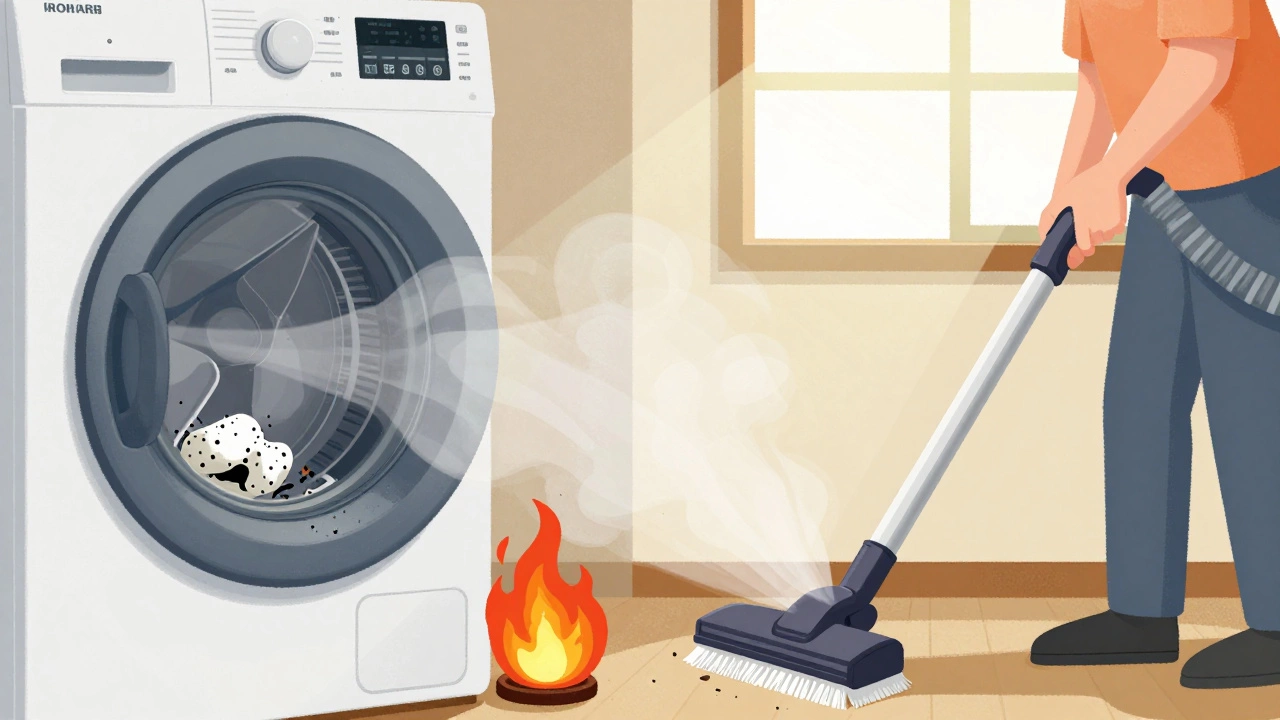
It includes cleaning, inspecting, tightening, lubricating, and replacing small parts. For example, cleaning the lint filter in your dryer isn’t just a good idea-it’s a safety must. The U.S. Fire Administration says clothes dryers cause over 2,900 home fires every year, mostly because of clogged vents. That’s preventable.
Why It Matters More Than You Think
Most appliances are designed to last 10 to 15 years. But without maintenance? Many die in half that time. A 2023 study by the Consumer Technology Association found that households doing basic appliance care saved an average of $320 a year in repairs and energy bills. That’s like getting a free month of groceries.
Here’s the real kicker: poorly maintained appliances use way more electricity. A fridge with dirty coils can use up to 30% more power. A dishwasher with a clogged filter? It runs longer, uses more water, and still doesn’t clean well. You’re not just wasting money-you’re wasting energy.
What Appliances Need Maintenance? (And How)
Not all appliances are the same, but most follow the same basic rules. Here’s what you should do for the most common ones:
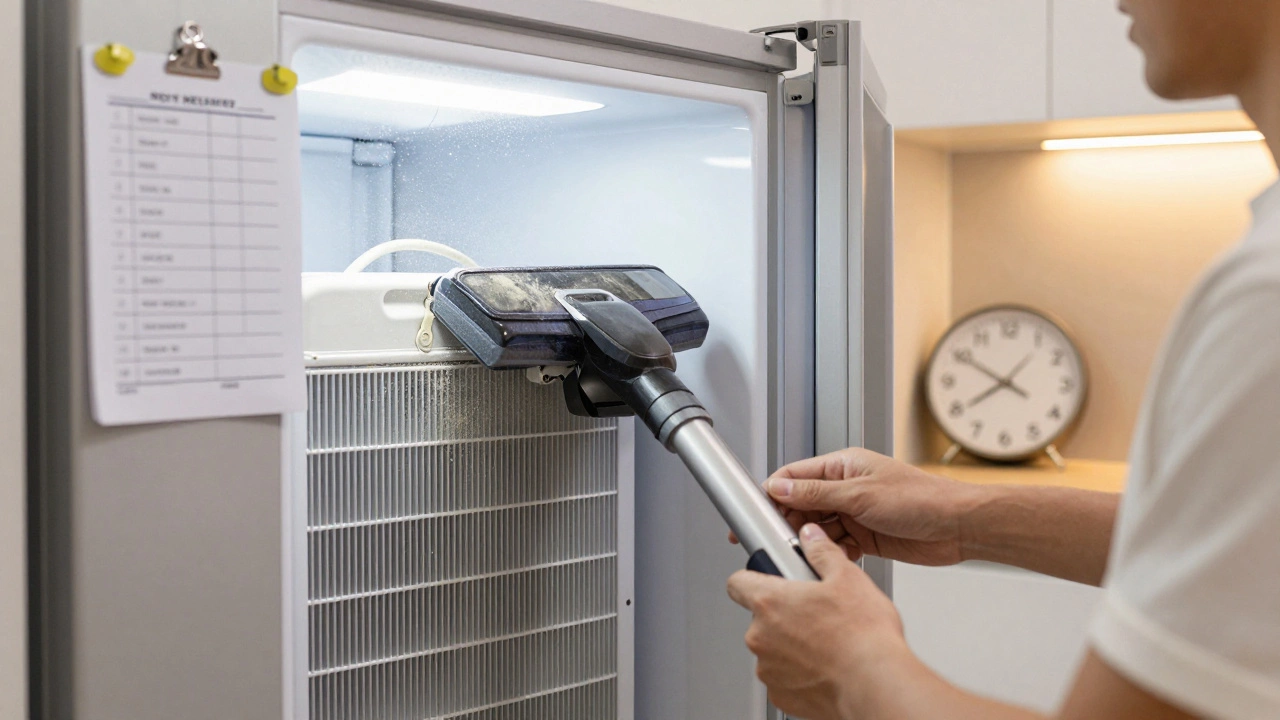
- Refrigerator and Freezer: Clean the condenser coils (usually at the back or bottom) every 6 months. Dust buildup here makes the compressor work harder. Also, check the door seals. If you can slide a piece of paper out easily when the door’s closed, the seal is worn. Replace it.
- Washing Machine: Run a cleaning cycle with vinegar or a dedicated washer cleaner once a month. Leave the door open after use to let moisture dry out. Clean the detergent drawer and filter every 3 months. Built-up gunk here causes odors and poor rinsing.
- Dryer: Clean the lint trap after every load. Every 6 months, pull out the vent hose and vacuum out the inside. If your clothes take more than one cycle to dry, your vent is probably clogged.
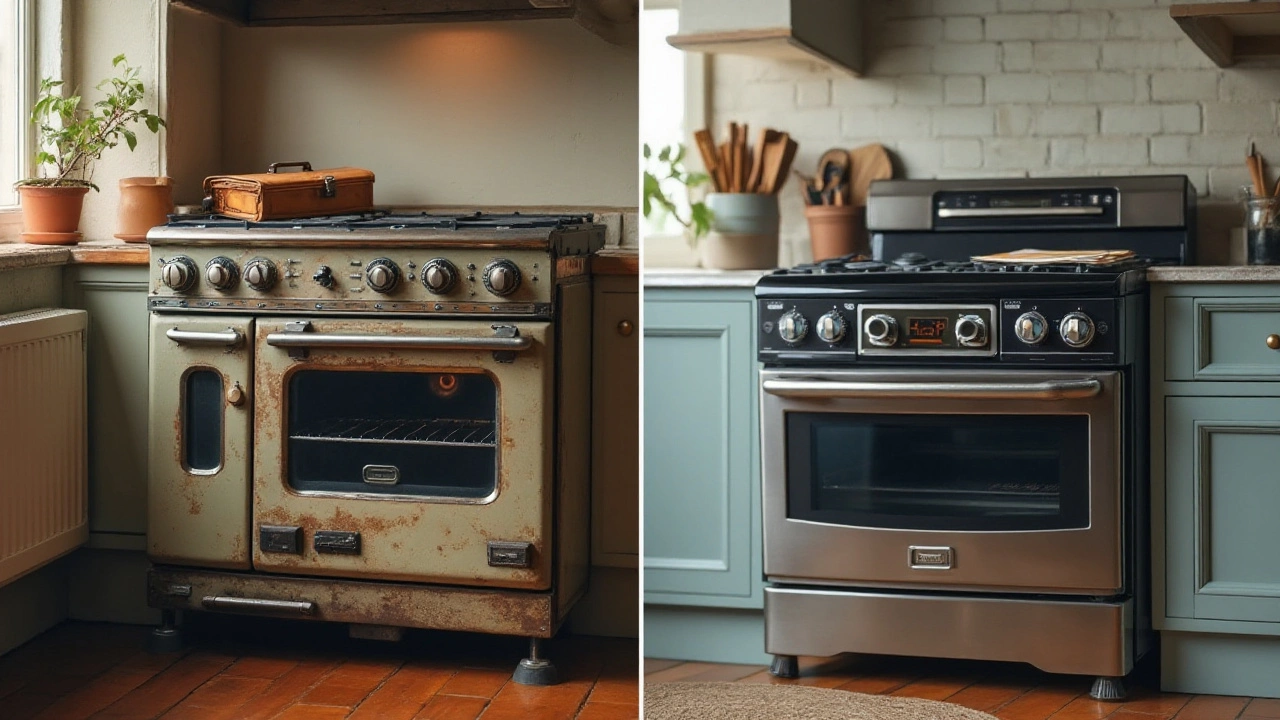
- Oven and Cooktop: Wipe spills right away. Burnt-on food makes heating uneven and can damage surfaces. Clean the oven with a non-abrasive cleaner every 3 months. For gas stoves, check burner holes for clogs. Use a toothpick to clear them.
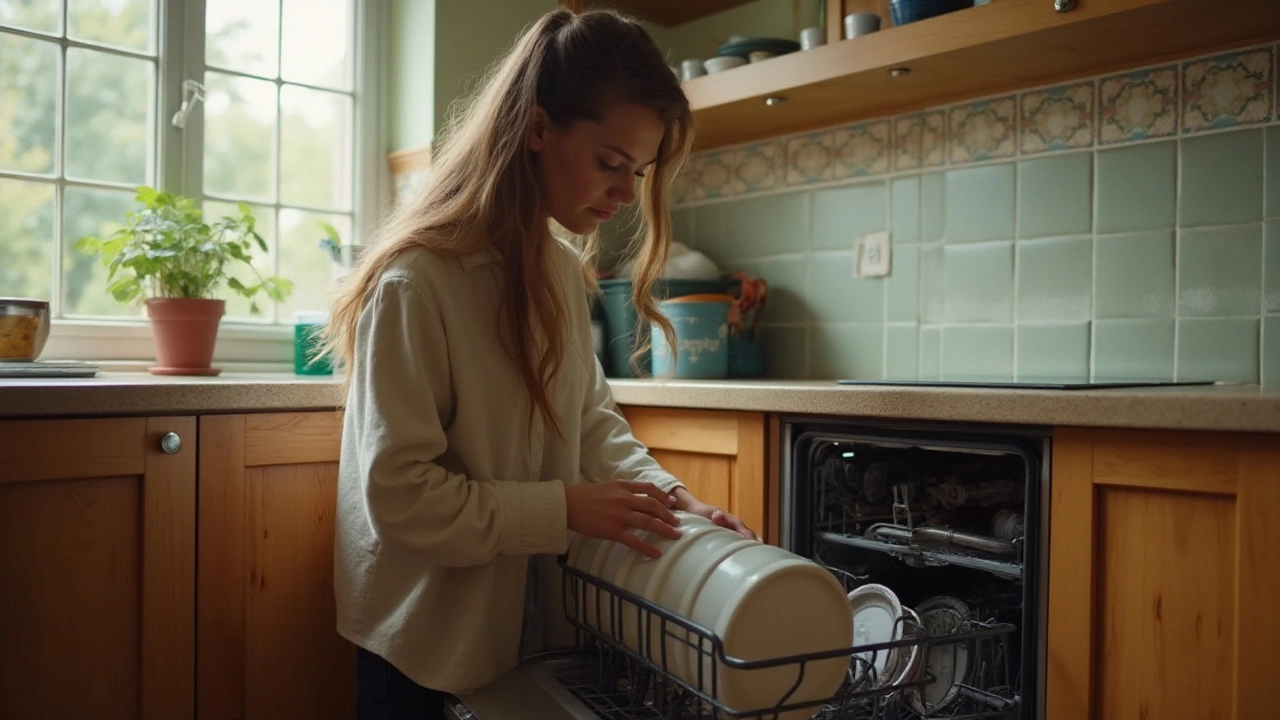
- Dishwasher: Remove and rinse the filter weekly. Run a cleaning cycle with white vinegar or a dishwasher cleaner monthly. Check the spray arms-they can get blocked by food bits.
- Water Heater: Drain 1-2 gallons of water from the bottom valve every 6 months. This removes sediment that builds up and reduces efficiency. If you hear popping or rumbling, it’s a sign you’ve waited too long.
What Happens If You Ignore It?
Ignoring maintenance doesn’t just lead to breakdowns. It creates hidden dangers.
Dirty coils on a fridge? That means more strain on the motor. Eventually, it burns out. Replacing a compressor costs $600-$1,200. A new fridge? $1,000-$2,500. Cleaning the coils? Five minutes with a vacuum.
Gas appliances like ovens and boilers? If vents are blocked or burners are dirty, they can leak carbon monoxide. That’s silent, odorless, and deadly. The CDC reports over 400 deaths in the U.S. each year from CO poisoning-many from faulty or neglected appliances.
And let’s not forget warranty voids. Most manufacturers require proof of regular maintenance to honor warranties. If your washing machine breaks after 18 months and you never cleaned the filter? Good luck getting a free replacement.
Simple Maintenance Checklist (Do This Monthly)
You don’t need a manual for every appliance. Just follow this quick list:
- Check and clean filters (washer, dishwasher, dryer, HVAC vents).
- Wipe down exterior surfaces with a damp cloth.
- Inspect power cords and plugs for fraying or damage.
- Listen for unusual noises-grinding, knocking, buzzing.
- Make sure doors and lids seal tightly.
- Run a cleaning cycle on machines that use water (washer, dishwasher, coffee maker).
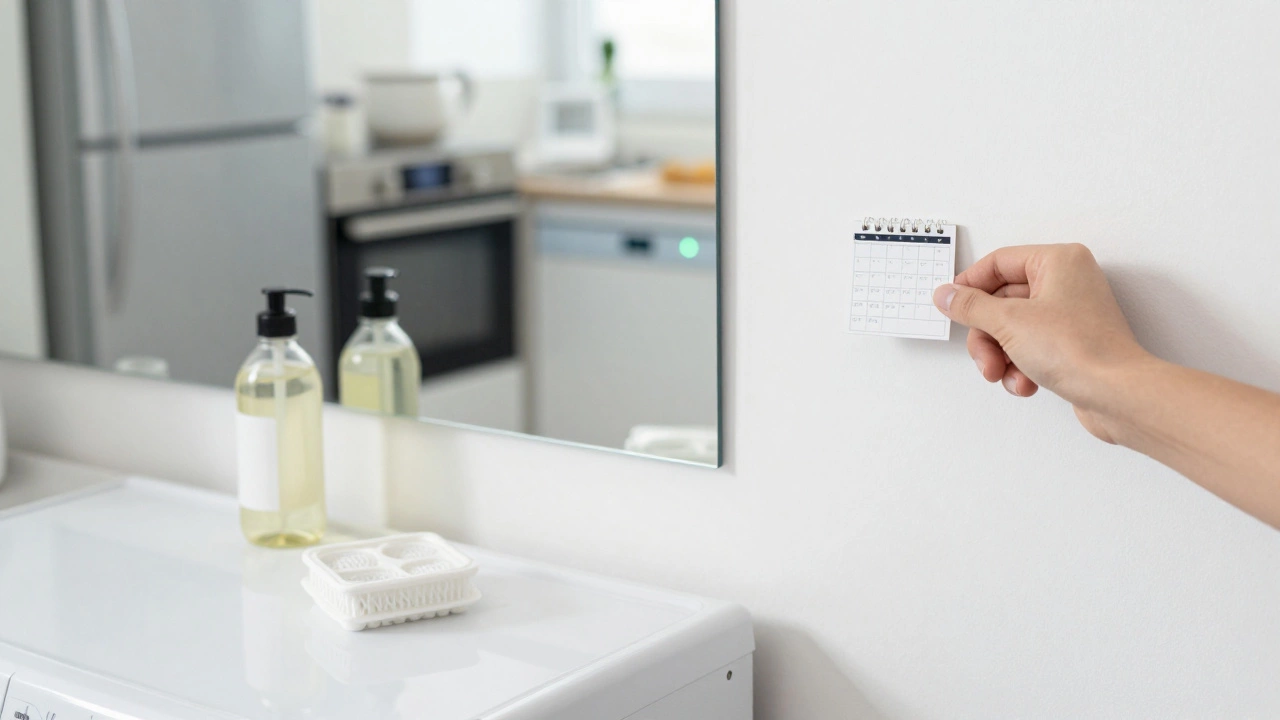
Set a calendar reminder. Once a month. Five minutes. That’s all it takes.
When to Call a Professional
You can do a lot yourself. But some things need a pro.
Call a technician if:
- Your appliance smells like burning plastic or metal.
- Water is leaking from places it shouldn’t be.
- It won’t turn on at all, and you’ve checked the outlet and breaker.
- Gas lines or connections look damaged or corroded.
- It’s making loud, erratic noises-like a jackhammer inside.
Don’t try to fix electrical wiring, gas valves, or internal motors unless you’re trained. One wrong move can be dangerous-or expensive.
Smart Habits That Save Money
Here are three habits that make maintenance effortless:
- Keep a log. Write down when you cleaned each appliance. You’ll know what’s due next.
- Buy quality filters. Cheap ones clog faster. Invest in good ones for your washer, dryer, and HVAC.
- Unplug when not in use. Especially for things like microwaves and toasters. It cuts standby power and reduces wear.
One homeowner in Ohio kept her 2010 washing machine running until 2025 by cleaning the filter every month and replacing the belt once. She spent $45 on the belt. A new machine would’ve cost $900.
Final Thought: It’s Not About Being Perfect
You don’t need to be a maintenance ninja. Just be consistent. Even doing 30% of the recommended care can cut your repair bills in half. The goal isn’t perfection-it’s prevention.
Appliances are built to last. But they need you to help them. A little attention now saves a lot of stress later.
How often should I clean my refrigerator coils?
Clean refrigerator coils at least twice a year-once in spring and once in fall. If you have pets or live in a dusty area, do it every 3 months. Dust buildup forces the compressor to work harder, which increases energy use and shortens the fridge’s life.
Can I use vinegar to clean my washing machine?
Yes. Pour two cups of white vinegar into the drum and run a hot water cycle without laundry. This removes soap scum, mold, and odors. Do it once a month. For extra cleaning, wipe down the rubber door seal with vinegar and water.
Is appliance maintenance covered by warranties?
Most manufacturer warranties require you to perform basic maintenance, like cleaning filters and vents. If you don’t, and something breaks, the warranty may be voided. Always check your manual. Keeping receipts or a log of your cleaning can help if you need to file a claim.
Do smart appliances need less maintenance?
No. Smart features don’t replace mechanical parts. A smart oven still has heating elements. A smart washer still has pumps and belts. In fact, some smart appliances have more complex parts that can fail. Regular cleaning and inspection are still essential.
What’s the biggest mistake people make with appliance maintenance?
Waiting until something breaks. Most people think maintenance is only for when things go wrong. But the best maintenance happens before problems start. Cleaning a dryer vent before it catches fire is way cheaper than replacing your house.