Water Heater Troubleshooter
Water Heater Cold Water Troubleshooter
Need to find out why your water heater is only giving cold water? Answer a few simple questions to identify the cause and potential solution.
Important: This tool helps you identify potential issues. Always follow safety precautions when working with electrical or gas appliances. If you're uncomfortable, contact a professional.
If your water heater is only giving you cold water, you’re not alone. It’s one of the most common complaints during Auckland winters, especially when the mornings are chilly and you’re expecting a warm shower. The problem can happen overnight-last night it worked fine, now it’s just a stream of icy water. Before you panic or call a plumber, there are several simple things to check. Most of the time, it’s not a full system failure. It’s something you can fix yourself in under an hour.
Check the power supply first
If you have an electric water heater, the most likely culprit is a power issue. Water heaters don’t just stop working for no reason-they need electricity to heat the water. Start at the circuit breaker. Go to your switchboard and look for the breaker labeled "Water Heater," "Hot Water," or something similar. If it’s tripped, flip it back on. If it trips again right away, there’s a short circuit or a failing heating element. Don’t keep resetting it. That’s a fire risk.Some older homes in Auckland have two separate breakers for water heaters-one for the top element, one for the bottom. If only the bottom element is dead, you might get a little warm water at first, then it turns cold as soon as the small amount of heated water runs out. Test both breakers.
For gas water heaters, the issue isn’t power-it’s the pilot light. Check if the flame is still burning. If it’s out, follow the instructions on the side of the unit to relight it. If you can’t get it to stay lit, the thermocouple might be faulty. It’s a small safety sensor that shuts off the gas if the flame goes out. Replacing it costs under $30 and takes 20 minutes.
Test the heating elements (electric units)
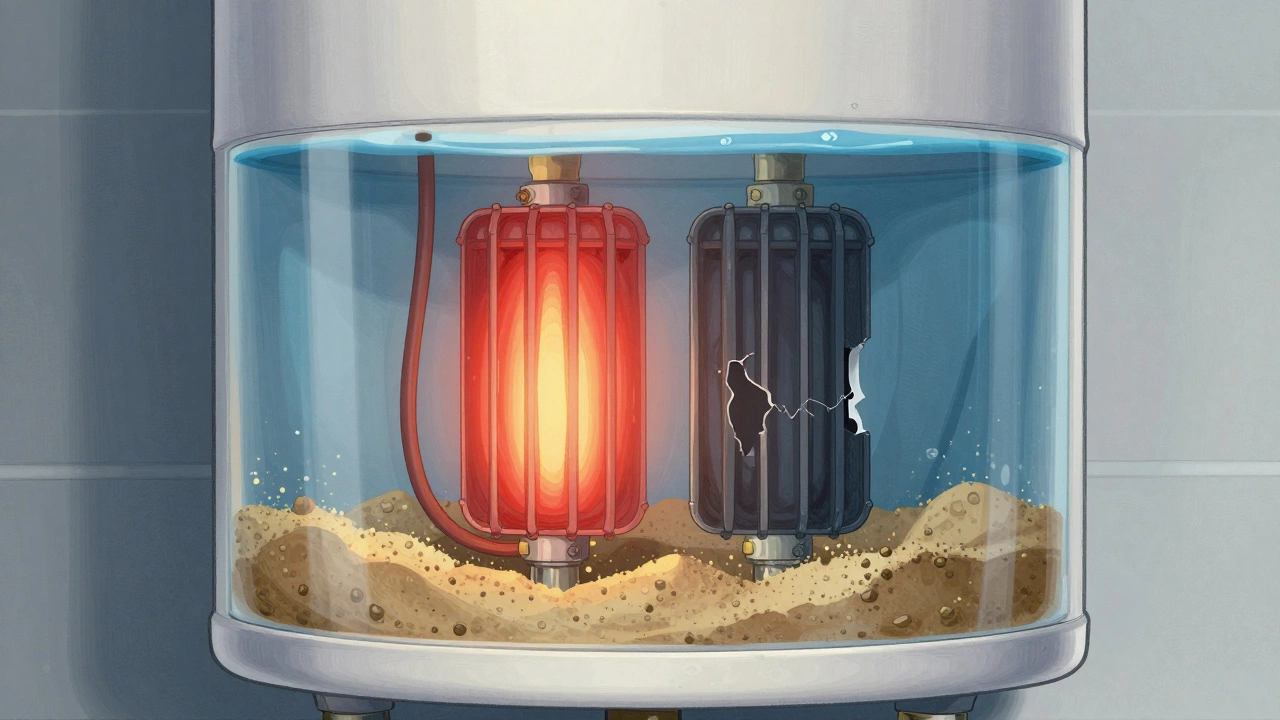
Electric water heaters have one or two heating elements inside the tank. If one fails, you get lukewarm or cold water. If both go, you get nothing but cold. You can test them yourself with a multimeter, but only if you know how to safely disconnect power.First, turn off the breaker. Then drain a few liters of water from the tank to lower the water level below the elements. Remove the access panels on the side of the tank. You’ll see two metal covers-each hides a heating element. Take off the insulation and the plastic cover. Now, disconnect the two wires from the element.
Set your multimeter to ohms (Ω). Touch the probes to the two terminals on the element. If you get a reading between 10 and 30 ohms, the element is good. If you get no reading or infinite resistance (OL), the element is dead. Replace it. You can buy replacement elements at any hardware store in New Zealand. Make sure you get the right wattage and voltage for your model.
It’s common for one element to fail after 8-12 years. If you’ve had the same heater since 2014, it’s nearing the end of its life. Replacing one element might buy you a couple more years, but don’t be surprised if the other one goes soon after.
Look for sediment buildup
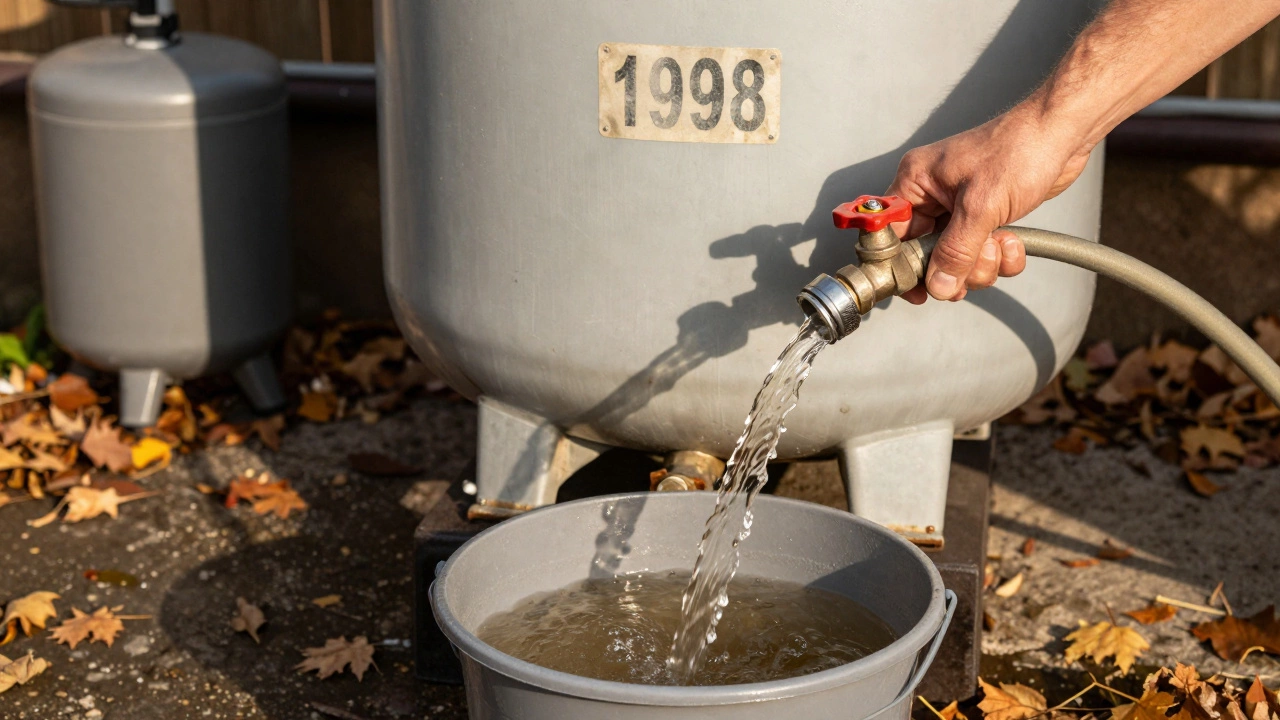
In areas with hard water-like parts of Auckland-minerals like calcium and magnesium build up at the bottom of the tank. Over time, this sediment acts like insulation. The heating element can’t transfer heat to the water. The water stays cold, even though the element is working.Flushing the tank solves this. Turn off the power or gas. Close the cold water inlet valve. Connect a garden hose to the drain valve at the bottom of the tank. Open the valve and let the water drain into a bucket or outside. Let it run for 10-15 minutes. You’ll see cloudy, gritty water come out. That’s the sediment. Keep draining until the water runs clear.
Do this once a year. It extends the life of your heater and keeps it efficient. If you’ve never flushed your tank, this might be the fix you’ve been waiting for.
Check the thermostat
The thermostat controls the temperature. If it’s set too low-or broken-you won’t get hot water. Most electric water heaters have two thermostats: one for the top element, one for the bottom. They’re usually preset to 60°C, which is the legal minimum in New Zealand for safety (to kill legionella bacteria).Turn off the power. Remove the access panel. You’ll see a dial or a digital display. If it’s set below 50°C, turn it up. If it’s already at 60°C but the water is still cold, the thermostat might be faulty. You can test it with a multimeter too. If there’s no continuity when it should be calling for heat, replace it. Thermostats are cheap-around $40-and easy to swap.
Gas water heaters have a single thermostat on the control valve. If it’s not responding, the whole gas control unit might need replacing. That’s more complex. If you’re not comfortable doing it, call a licensed gas fitter.
Is the tank too small for your household?
If you’ve recently added a person to your home, or started doing more laundry or dishwashing, your tank might be undersized. A standard 135-liter tank works fine for one or two people. For three or more, you need at least 180 liters. If you’re running out of hot water after one shower, it’s not a broken heater-it’s a sizing issue.Check the label on your tank. It will say the capacity in liters. If it’s under 150 liters and you have a family of four, you’re asking too much from it. Consider upgrading. Newer models are more efficient and come with better insulation. Some even have heat pump options that cut energy bills by half.
Leaks or pressure problems
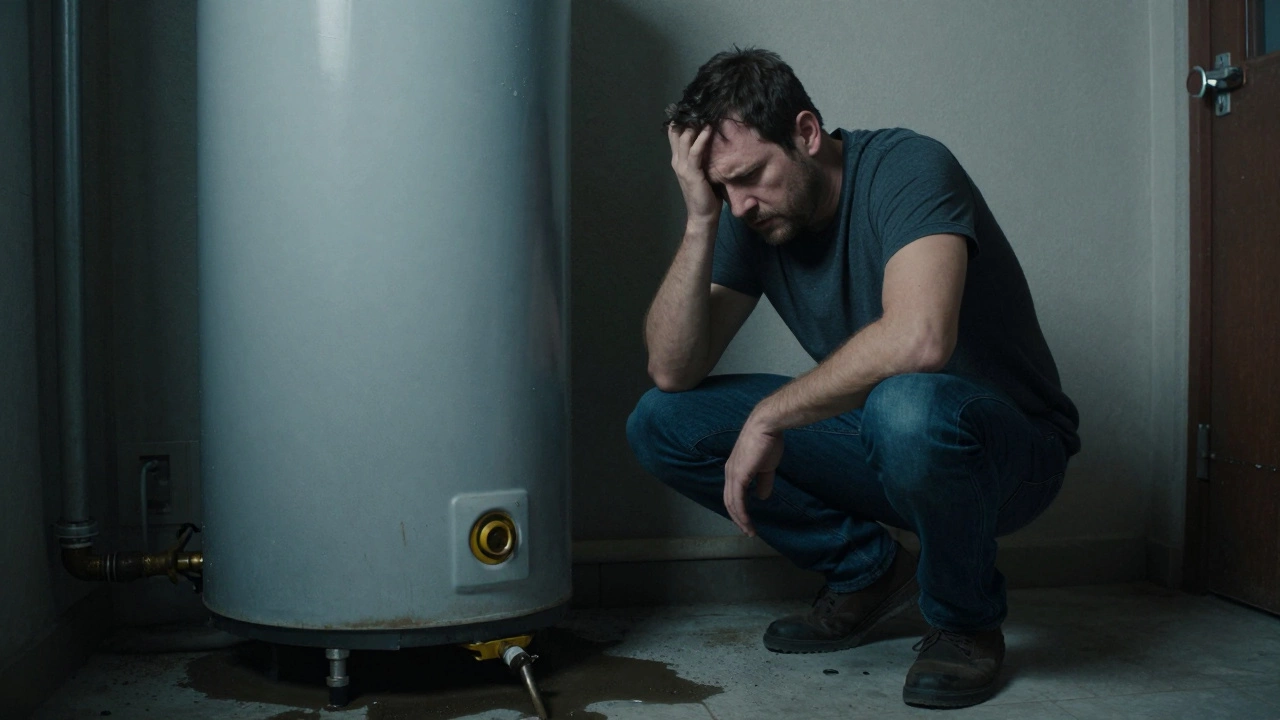
A leaking tank won’t always drip visibly. Sometimes, the pressure relief valve is leaking slowly, or there’s a crack in the tank lining. If water is draining out faster than it’s refilling, the heater can’t build up enough volume to heat properly. Check the pipe under the tank. Is it wet? Is there a puddle? Even a small drip over days can cause big problems.If the tank itself is leaking, it’s done. No repair will fix it. You need a new unit. Steel tanks corrode from the inside out. Once the lining breaks, rust spreads. It’s not worth repairing. Most modern tanks come with a 10-year warranty. If yours is older than that, replacement is smarter than repair.
When to call a professional
You can fix most cold water issues yourself. But call a licensed plumber or electrician if:- The breaker keeps tripping after resetting
- You smell gas or hear hissing near a gas heater
- You’re not comfortable working with electricity or gas
- The tank is leaking from the body, not the fittings
- You’ve tried all the above and still have no hot water
Many Auckland plumbers offer same-day service for water heater issues. Don’t wait until you’re shivering in the shower. A quick call can get you hot water again before dinner.
Prevent it from happening again
Once you fix the problem, make sure it doesn’t come back:- Flush the tank every 6-12 months
- Set the thermostat to 60°C (not higher-it wastes energy and risks scalding)
- Install a water softener if you live in a hard water area like Manukau or North Shore
- Replace the anode rod every 3-5 years (it protects the tank from rust)
- Upgrade to a heat pump or solar water heater if you’re due for a replacement
Water heaters last 8-12 years on average. If yours is older than 10, start budgeting for a replacement. Newer models are quieter, more efficient, and come with smart features like remote temperature control.
Why is my electric water heater only giving cold water after a power outage?
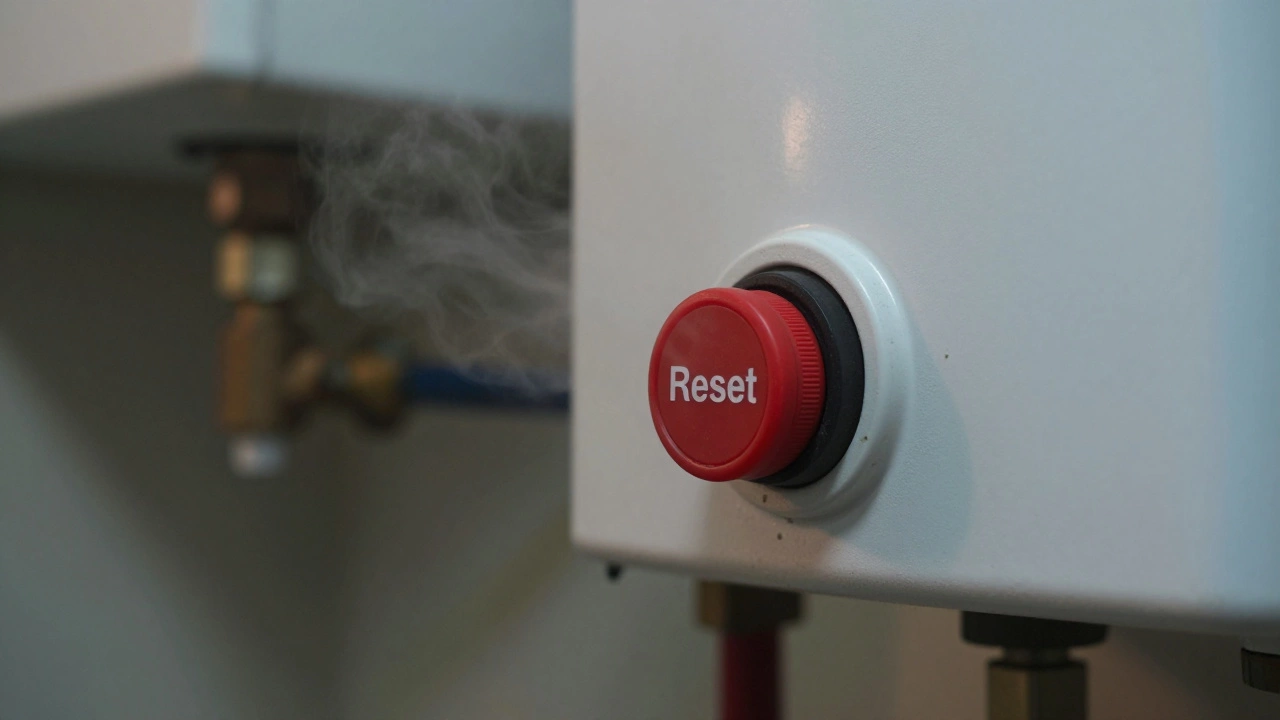
After a power outage, some electric water heaters need to be manually reset. Check the circuit breaker first. If it’s on, look for a reset button on the thermostat-usually red and located behind the access panel. Press it. If it clicks and the water heats up, the outage caused the thermostat to trip. If it doesn’t reset, the thermostat or heating element may be damaged.
Can a broken dip tube cause cold water?
Yes. The dip tube is the pipe that sends cold water to the bottom of the tank. If it breaks, cold water mixes directly with the hot water at the top. You’ll get a burst of warm water, then cold. This is more common in older units. If you notice white plastic pieces in your faucet screens, the dip tube has likely disintegrated. Replacing it requires draining the tank and is best done by a professional.
Why does my water heater work fine at night but not in the morning?
This usually points to a faulty lower heating element or thermostat. At night, the tank holds heat. In the morning, after hours of use, the stored hot water runs out. If the lower element isn’t working, the tank can’t reheat the incoming cold water. The top element only heats the top third of the tank. Once that’s gone, you’re left with cold water.
Is it safe to keep using a water heater that gives cold water?
Yes, as long as there’s no gas leak, electrical sparking, or tank rupture. Cold water isn’t dangerous-it’s just inconvenient. But if you’re ignoring the issue, you risk a full failure. A dead heating element can overheat and damage the tank. A leaking tank can cause water damage to your ceiling or floor. Don’t delay repairs.
How much does it cost to replace a water heater in Auckland?
A standard 180-liter electric water heater costs between $900 and $1,500 installed. Heat pump models range from $2,500 to $4,000, but they cut electricity use by up to 70%. Gas heaters are cheaper upfront ($700-$1,200) but need a gas line and venting. Solar systems are the most expensive ($3,500-$6,000) but have the lowest running costs. Many local councils offer rebates for energy-efficient upgrades.
If you’ve tried everything and still have no hot water, don’t guess anymore. A professional can diagnose the problem in under 30 minutes. Most repairs cost less than $200. Waiting too long could mean replacing the whole tank-twice the price.