Boiler Lifespan Calculator
How long will your boiler last?
Calculate your boiler's expected remaining lifespan based on real-world factors from Auckland heating experts.
Your Boiler's Estimated Remaining Lifespan
years remaining
Key Factors Affecting Your Boiler
Recommended Actions
Most people don’t think about their boiler until it stops working. But if you’re wondering how long yours will last, you’re already ahead of the game. The average boiler lasts between 10 and 15 years. That’s the number you’ll hear from most plumbers and heating engineers in Auckland, and it’s backed by real-world data from household surveys and manufacturer warranties. But that number isn’t set in stone. Some boilers cough their last breath at 8 years. Others, with good care, keep going past 20.
What actually determines how long a boiler lasts?
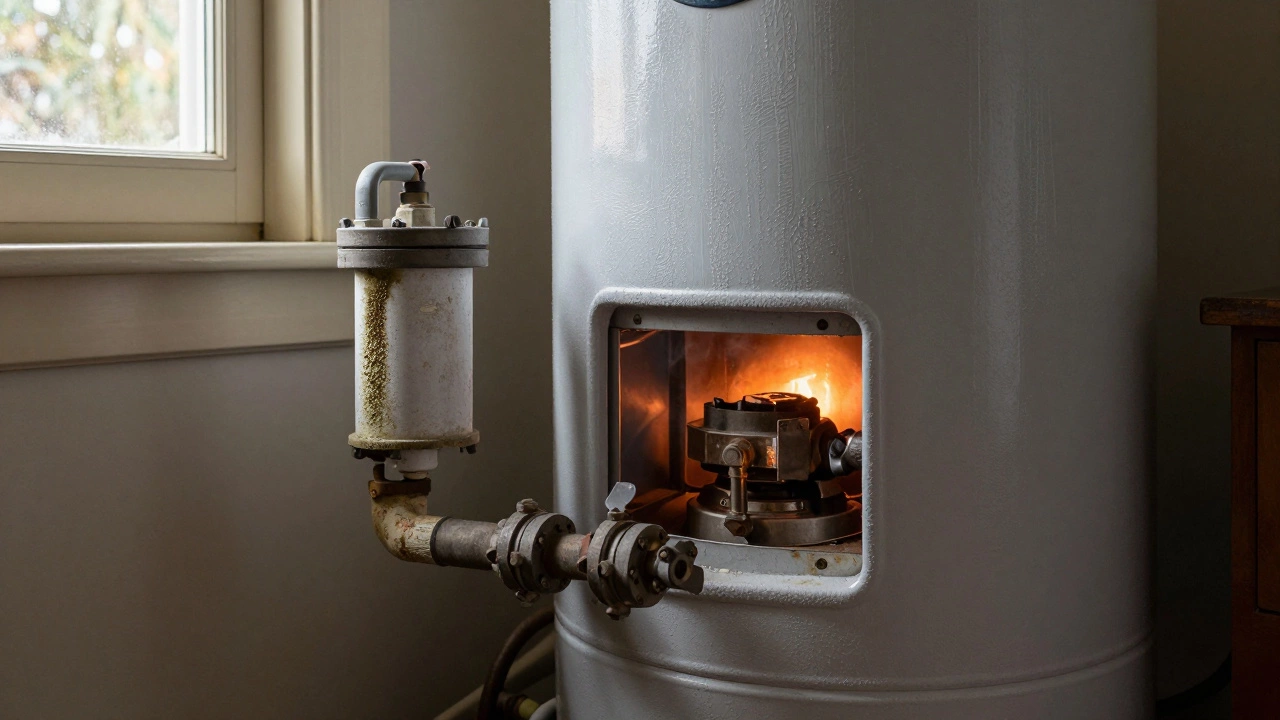
It’s not just about how old it is. It’s about how it was installed, how often it’s been serviced, and what kind of water flows through it. In places like Auckland, where hard water is common, limescale builds up inside the heat exchanger. That’s like putting a blanket over a heater-it traps heat, makes the boiler work harder, and eventually cracks the metal. A boiler in a home with a water softener can easily outlive one without by five years or more.
Installation matters too. A boiler jammed into a cramped cupboard with poor airflow? That’s a recipe for overheating. A unit that was correctly sized for the house? It cycles on and off smoothly, reducing stress on the parts. I’ve seen boilers installed in 2010 that are still running fine because they were put in right. And I’ve seen brand-new ones fail by 2017 because the plumber rushed the venting.
Signs your boiler is nearing the end
You don’t need to wait for it to break down completely to know it’s time. Here are the red flags that show up in real homes, not just manuals:
- It takes longer to heat up than it used to-even on the highest setting.
- You’re topping up the pressure more than once a month. That usually means there’s a slow leak somewhere inside.
- The pilot light goes out often, or you need to reset it after every power cut.
- You hear banging or gurgling noises when it turns on. That’s not normal-it’s air trapped or scale buildup causing the water to boil in spots.
- Your energy bills have crept up 15-20% over two years with no change in usage.
- The manufacturer stopped making parts for your model. If your boiler is over 12 years old and the company doesn’t sell a replacement pump or control board, you’re one breakdown away from a full replacement.
If you’re seeing two or more of these, it’s not a matter of "maybe." It’s a matter of "when."
Why older boilers are more expensive to run
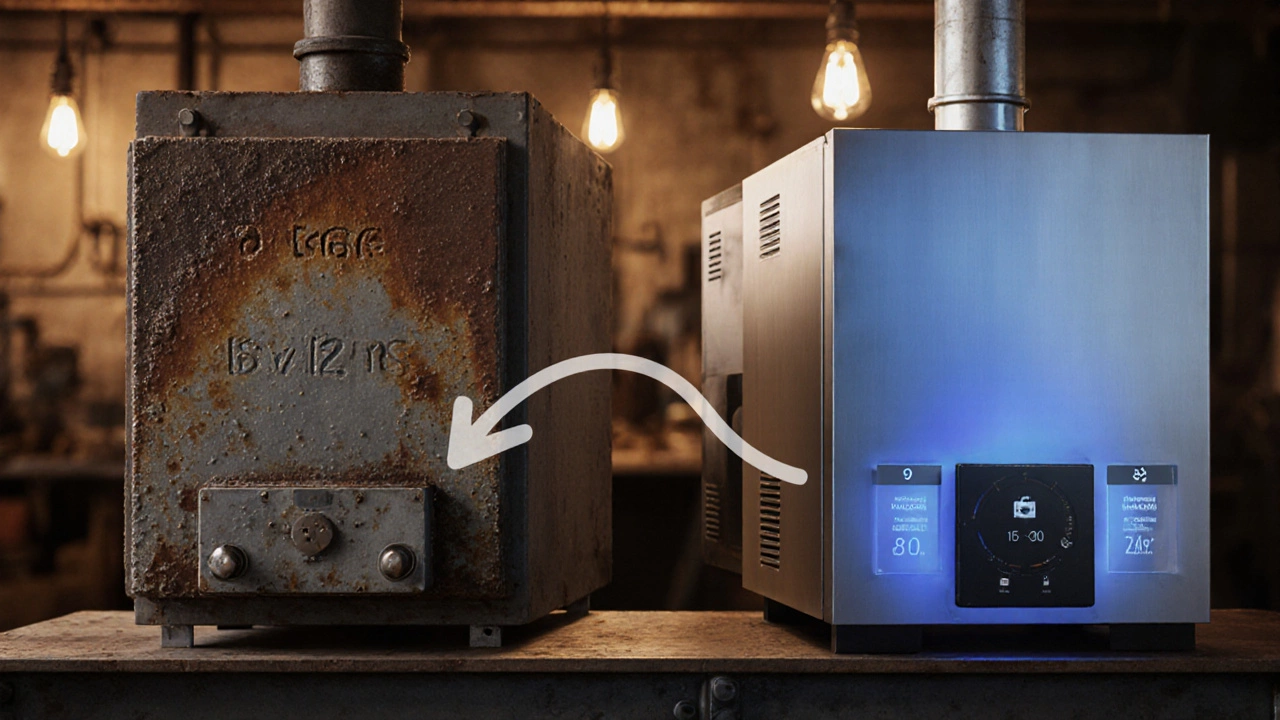
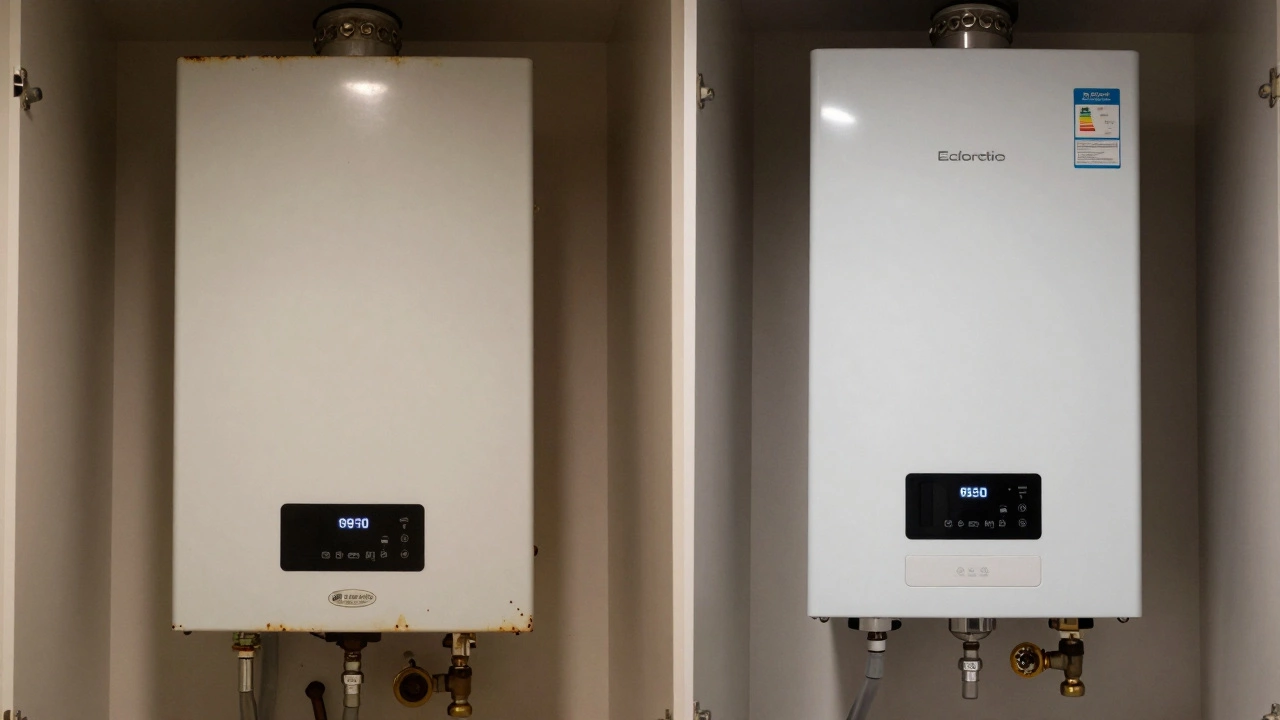
A boiler from the 1990s might be 70% efficient. A modern condensing boiler? It’s 90-95% efficient. That difference adds up fast. In a typical New Zealand home, switching from an old boiler to a new A-rated one can cut heating bills by 30%. Over five years, that’s easily $1,500-$2,500 saved. That’s more than enough to cover the cost of a new unit.
Old boilers also use more gas because they’re not designed to capture waste heat. Modern ones have a secondary heat exchanger that recycles exhaust gases. That’s why condensing boilers need a condensate pipe-it’s draining the leftover moisture from that process. If your boiler doesn’t have one, you’re losing money every time it fires up.
How maintenance affects lifespan
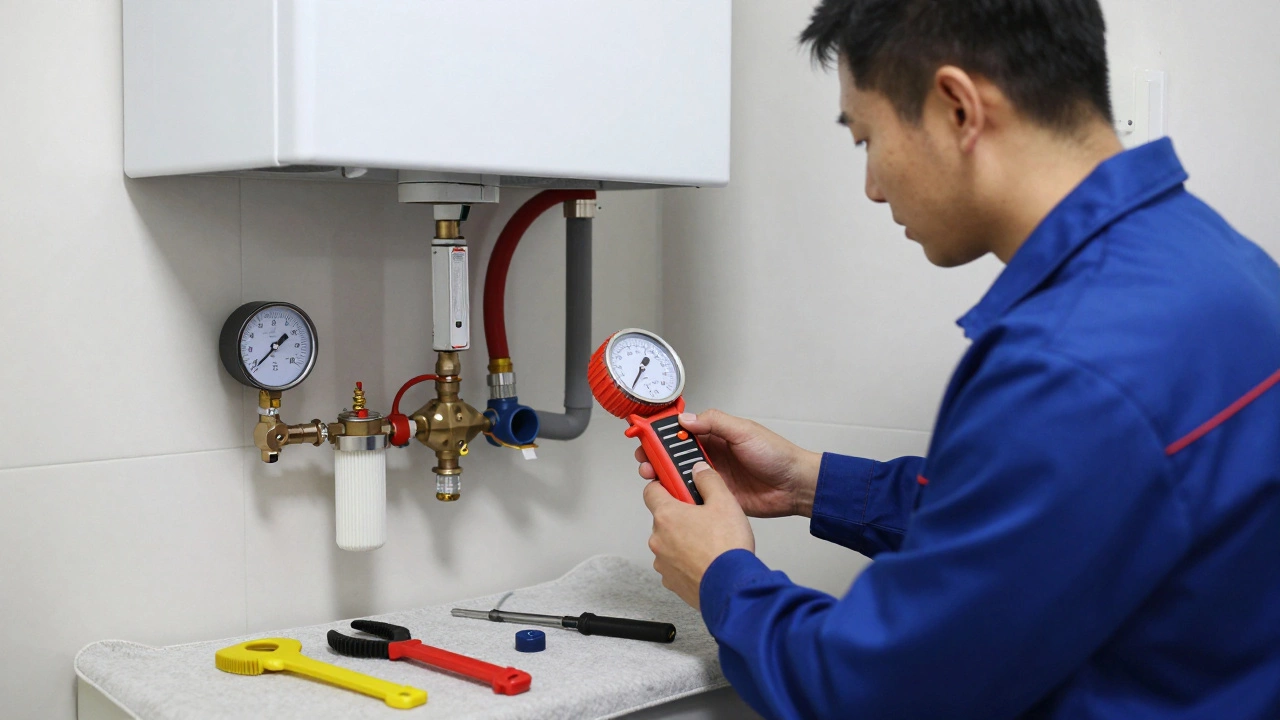
A boiler serviced once a year by a qualified technician can add 3-5 years to its life. That’s not a sales pitch-it’s what the New Zealand Gas Association reports. The service isn’t just a quick clean. A proper check includes:
- Inspecting the heat exchanger for cracks or corrosion
- Testing the pressure relief valve
- Checking the flue for blockages or leaks
- Measuring combustion efficiency with a gas analyzer
- Flushing the system if there’s sludge buildup
Most homeowners skip this because they think, "It’s still working." But that’s like waiting to change your car oil until the engine seizes. A service costs $120-$180 in Auckland. A new boiler costs $4,000-$7,000. The math is simple.
What happens when a boiler dies?
When a boiler fails, it usually does it at the worst time-winter, late at night, or during a holiday. Most failures are caused by one of three things:
- Heat exchanger failure-the most common. The metal cracks from thermal stress and limescale. Water leaks into the burner, and the boiler shuts down for safety.
- Pump failure-the circulating pump wears out after 8-10 years. You’ll hear a hum but no heat.
- Control board failure-electronics get fried by voltage spikes or moisture. The display goes blank, or it shows error codes you can’t fix.
Repairing these can cost $500-$1,200. But if your boiler is over 12 years old, spending that much is like putting a new tire on a car with worn-out suspension. You’ll likely need another repair in six months.
When to replace, not repair
Here’s a rule of thumb: if the repair cost is more than half the price of a new boiler, walk away. For most people, that means if you’re being quoted $2,000 to fix a 14-year-old boiler, it’s time to replace it. The new unit will come with a 5-10 year warranty, better efficiency, and modern safety features like leak detection and remote monitoring.
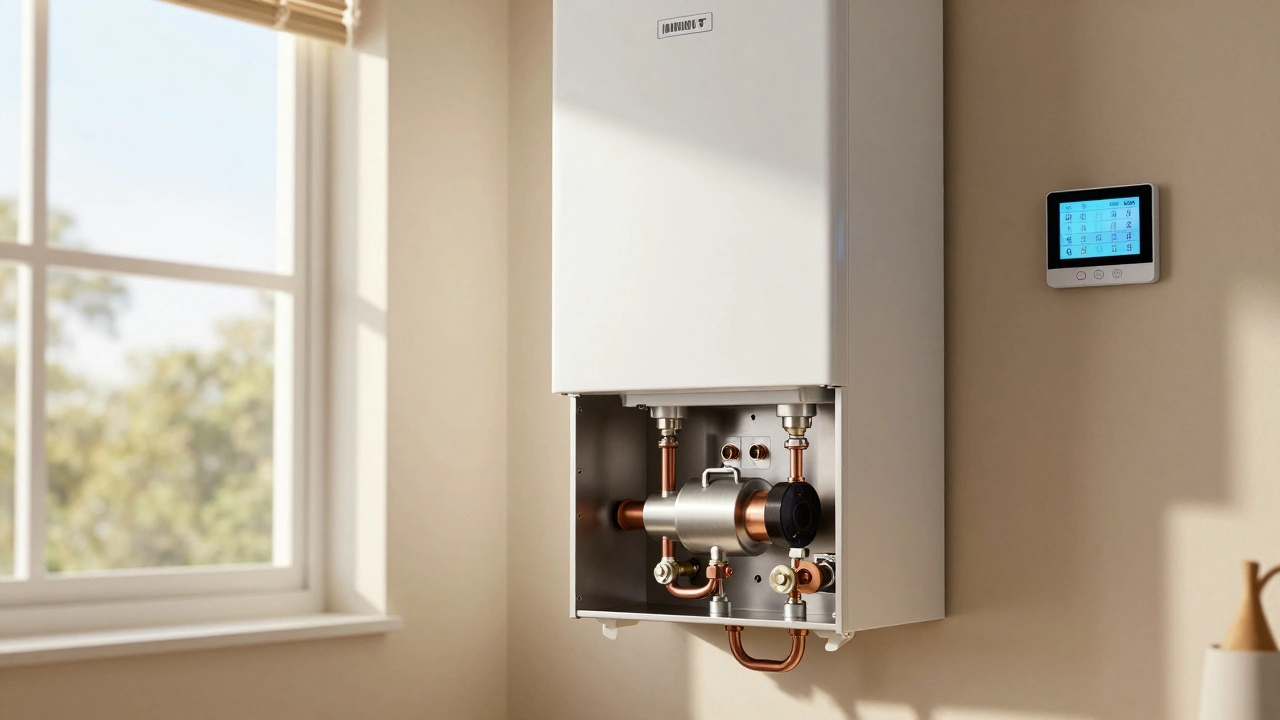
Modern boilers are also smaller. A combi boiler from 2025 fits where an old system boiler used to take up a whole cupboard. You’ll gain space and get hot water on demand-no tank needed.
What to look for in a new boiler
If you’re replacing, here’s what actually matters:
- Type: Combi boilers are the standard in New Zealand homes. They’re compact and deliver hot water instantly.
- Output: 24-30 kW is enough for most 2-4 bedroom houses. Bigger isn’t better-oversized boilers cycle too often and wear out faster.
- Brand: Worcester Bosch, Vaillant, and Ideal are the top three in reliability, based on 2025 customer surveys from NZ Home Heating Association.
- Warranty: Go for at least 7 years. Some brands offer 10-year warranties if you register online and get annual servicing.
Don’t be fooled by the cheapest option. A boiler that costs $3,500 installed might save you $100 upfront but cost you $500 more in energy bills each year. Pay a little more now, save more later.
How to extend your boiler’s life right now
Even if you’re not replacing it yet, you can make it last longer:
- Get it serviced every year-don’t wait for problems.
- Install a magnetic filter (like a MagnaClean) on the return pipe. It catches sludge before it clogs the heat exchanger.
- Keep the system pressure between 1 and 1.5 bar. Too low, and it struggles. Too high, and you risk leaks.
- Flush the system every 5-7 years. A power flush removes years of buildup in one day.
- Use a programmable thermostat. Running the boiler constantly wears it out faster than timed heating cycles.
These steps don’t cost much, but they make a huge difference. I’ve seen boilers from 2008 still running because the owners did these simple things.
Final thought: Don’t wait for the cold
Boilers don’t die suddenly-they fade. If yours is 10 years old, start thinking about replacement now. That way, you can shop around, get quotes, and avoid the panic of a freezing winter night. The best time to replace a boiler is before it breaks. Not after.
How long should a boiler last in New Zealand?
Most boilers in New Zealand last between 10 and 15 years. Hard water, poor maintenance, and incorrect installation can shorten that. With regular servicing and a water softener, some last over 20 years.
Is it worth repairing a 12-year-old boiler?
Generally, no. If the repair cost is more than half the price of a new unit, it’s better to replace it. Older boilers are less efficient, harder to service, and likely to break again soon. A new A-rated boiler can cut your heating bills by 30% or more.
Can I extend my boiler’s life without replacing it?
Yes. Get it serviced annually, install a magnetic filter to trap sludge, flush the system every 5-7 years, and keep the pressure at 1-1.5 bar. These steps can add 3-5 years to its life and prevent costly breakdowns.
What’s the most common cause of boiler failure?
Heat exchanger failure due to limescale buildup and thermal stress. Hard water causes scale to form inside the metal tubes, which cracks over time. Once it cracks, water leaks into the burner, and the boiler shuts down for safety.
Do I need a combi boiler for my home?
For most New Zealand homes, yes. Combi boilers are compact, deliver hot water on demand, and don’t need a tank. They’re ideal for 2-4 bedroom houses. If you have more than 3 bathrooms or very high hot water demand, a system boiler with a tank might be better.