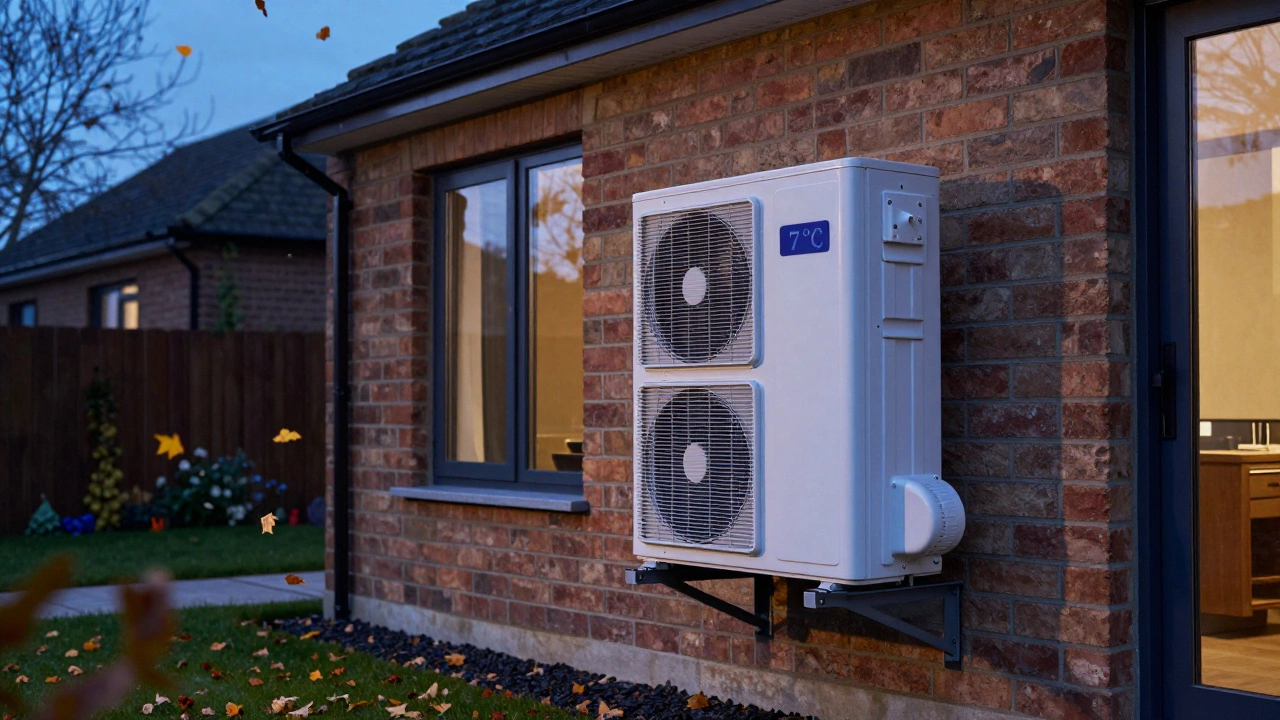
Heat Pump Efficiency & Cost Calculator
System Parameters
Performance Analysis
Cost Comparison (per kWh of heat)
Efficiency Insight
At this temperature, your heat pump is operating efficiently. The lower the outdoor temperature, the harder the compressor works, reducing the COP.
The Cold Truth About Heat Pump Efficiency
You’ve probably heard the myth: "Heat pumps don’t work in winter." It’s a persistent rumor that keeps many homeowners clinging to their old, inefficient gas boilers. But here is the reality check-your heat pump is a device that moves thermal energy from one place to another rather than generating it directly through combustion will continue to operate even when temperatures plummet. The real question isn’t whether it stops working; it’s at what point it becomes economically or energetically inefficient.
If you are living in a place like Auckland, New Zealand, where winters rarely dip below freezing, this might feel like a non-issue. But for those of us who experience colder climates, or for anyone planning to upgrade their heating system, understanding the relationship between outdoor temperature and Coefficient of Performance (COP) is critical. Let’s break down exactly when your heat pump starts struggling and what you can do about it.
Understanding the Coefficient of Performance (COP)
To understand efficiency, we need to talk about COP. Think of COP as the return on investment for every unit of electricity you plug into the machine. A COP of 3 means that for every 1 kilowatt-hour (kWh) of electricity you use, you get 3 kWh of heat energy out of your radiators or underfloor heating. That’s three times more energy than you paid for.
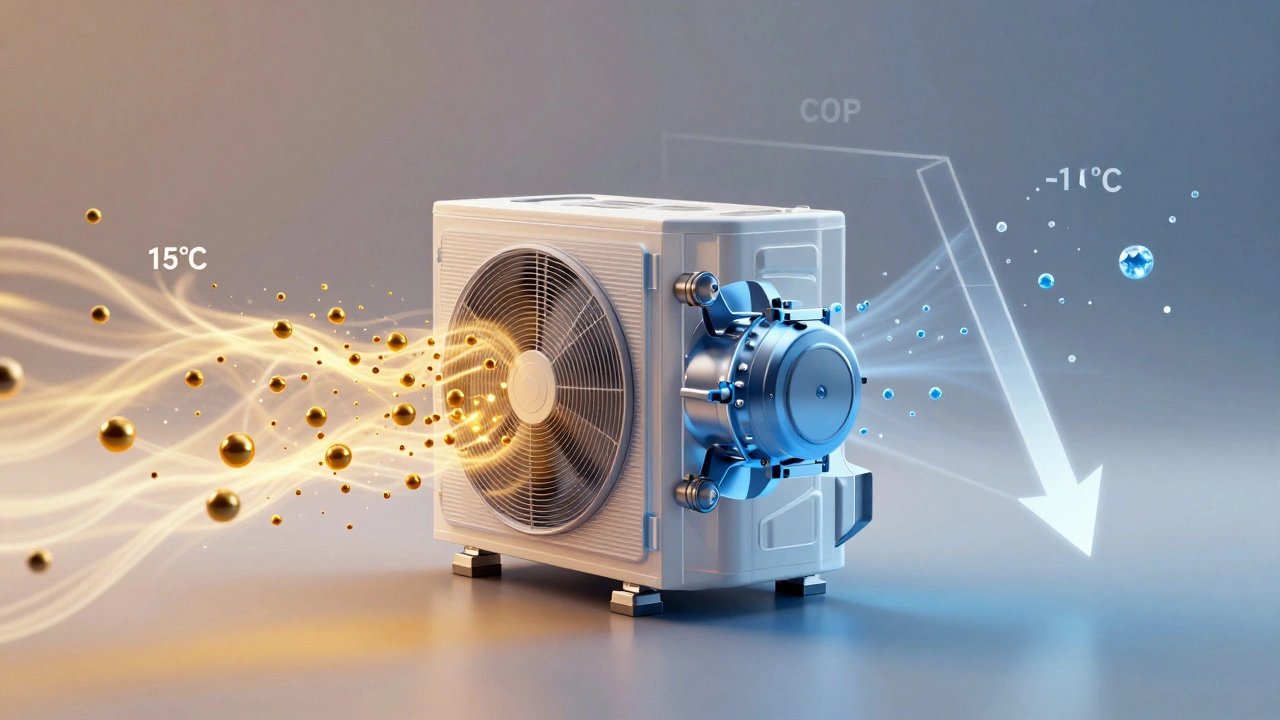
Most modern air-source heat pumps have a nominal COP of around 3.0 to 4.0 at mild temperatures (around 7°C to 15°C). This is where they shine. They are incredibly efficient because there is plenty of ambient heat in the air to harvest. However, as the outside temperature drops, the amount of available heat decreases. Your compressor has to work harder to extract that same amount of warmth. This causes the COP to slide downward.
- At 15°C: COP is often 4.0+ (Extremely efficient)
- At 7°C: COP is typically 3.0-3.5 (Standard efficiency)
- At -5°C: COP drops to roughly 2.0-2.5 (Still better than electric resistance)
- At -15°C: COP may fall to 1.5-1.8 (Approaching break-even with gas)
The key takeaway? Even at -15°C, your heat pump is still producing more heat energy than the electrical energy it consumes. It hasn’t become "inefficient" in the sense of wasting power-it just isn’t *as* efficient as it was in spring.
The Tipping Point: When Gas Might Win
So, if the heat pump is always technically efficient (COP > 1), why do people switch back to gas boilers in deep winter? It comes down to cost per unit of heat, not just raw physics. In many regions, natural gas is significantly cheaper per kilowatt-hour than electricity.
Let’s look at the math. If electricity costs $0.30/kWh and gas costs $0.10/kWh, your heat pump needs a COP of at least 3.0 to match the running cost of a condensing gas boiler (which operates at about 90% efficiency). If the COP drops to 2.0 because it’s -10°C outside, your heat pump is now effectively twice as expensive to run as the gas boiler, despite being cleaner.
This creates a "tipping point" temperature. For most standard systems, this tipping point hovers around **-5°C to -10°C**. Below this range, the financial advantage of the heat pump erodes rapidly unless you have very cheap renewable electricity or expensive gas tariffs. This is why hybrid systems are gaining popularity-they let the heat pump handle the mild days and switch to gas only during the coldest snaps.
Air Source vs. Ground Source: The Big Difference
Not all heat pumps are created equal. The type of system you have drastically changes how it performs in the cold. Most homes use Air Source Heat Pumps (ASHP), which extract heat from the outside air using a fan and evaporator coil. These are affordable to install but sensitive to weather.
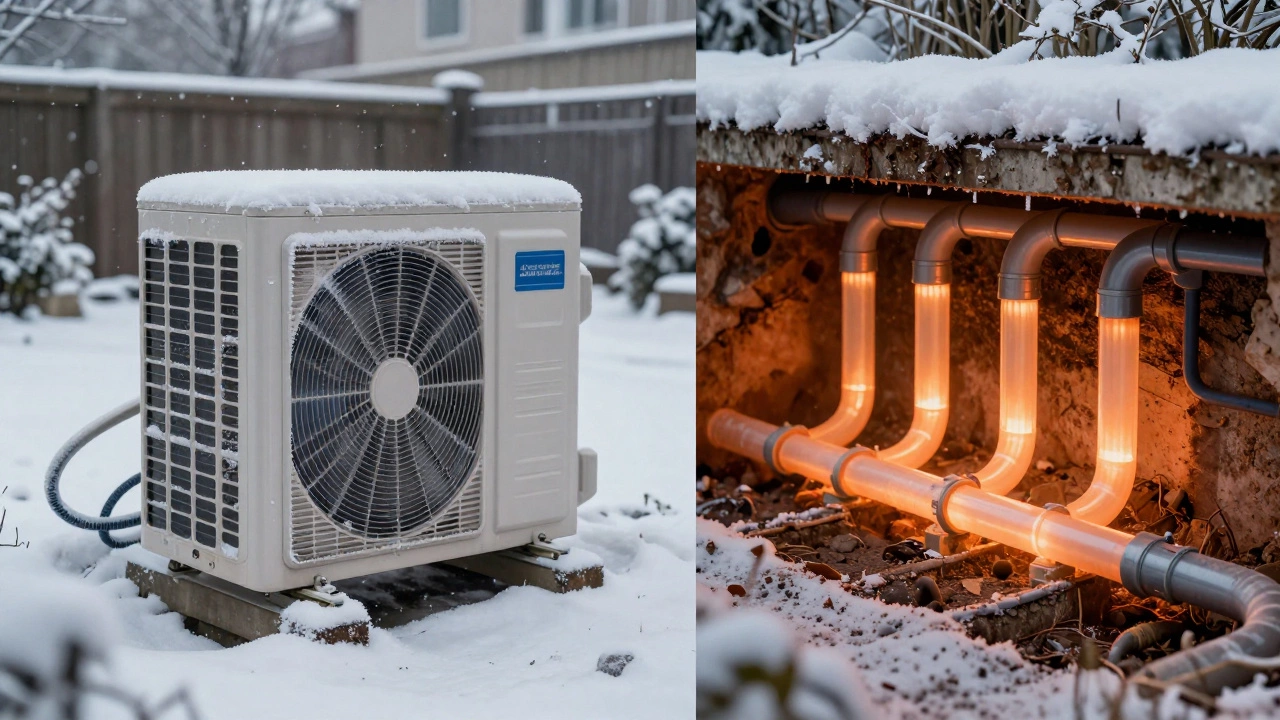
Then there are Ground Source Heat Pumps (GSHP), which use underground pipes to tap into the stable temperature of the earth. The ground stays relatively constant year-round (often around 10°C-12°C deep underground), regardless of whether it’s snowing above. Because the source temperature doesn’t fluctuate wildly, GSHPs maintain a much higher COP even in severe winters. They rarely suffer the same efficiency drop-off as their air-source cousins.
| Outdoor/Ground Temp | Air Source COP | Ground Source COP | Defrost Cycle Needed? |
|---|---|---|---|
| 10°C | 3.5 | 4.0 | No |
| 0°C | 2.8 | 3.8 | Occasional |
| -10°C | 2.0 | 3.6 | Frequent |
| -20°C | 1.5 | 3.4 | Continuous |
The Defrost Cycle: The Hidden Efficiency Killer
Here is a practical issue that affects efficiency more than raw temperature alone: moisture. When your air source heat pump runs in cold, damp conditions, frost builds up on the outdoor unit’s coils. To keep working, the system must periodically reverse itself to melt that frost-a process called defrosting.
During defrost, the heat pump temporarily stops heating your home and uses energy to warm the outdoor unit. In humid climates or near coastlines (like Auckland), this can happen frequently. Each defrost cycle reduces the overall seasonal efficiency. If your unit is poorly sited-for example, tucked behind a fence where airflow is restricted-frost buildup worsens, forcing more frequent defrosts and dropping your effective COP further.
To mitigate this, ensure your outdoor unit has at least 50cm of clearance on all sides and is not shaded by trees or buildings. Proper installation matters just as much as the technology inside the box.
Low-Temperature Heating Systems Are Key
Your heat pump’s efficiency also depends heavily on what it’s trying to heat. Heat pumps love low-temperature output. If you have traditional high-pressure radiators designed for a gas boiler (which outputs water at 80°C+), your heat pump will struggle. It has to work overtime to reach those high temperatures, killing its COP.
The sweet spot for heat pumps is delivering water at 35°C to 45°C. This makes them perfect partners for:
- Underfloor heating: Large surface areas mean you can achieve comfort with lower water temperatures.
- Oversized radiators: If you’re retrofitting, swapping small radiators for larger panels allows the heat pump to operate efficiently.
When Should You Worry About Repairs?
Sometimes, poor performance isn’t about the weather-it’s about maintenance. If your heat pump seems inefficient even at moderate temperatures (above 5°C), you might have a problem. Common issues include:
- Low refrigerant charge: Leaks reduce the system’s ability to transfer heat, causing the compressor to run longer and harder.
- Dirt-clogged filters: Restricted airflow forces the unit to work harder, increasing electricity consumption.
- Faulty sensors: If the outdoor temperature sensor is inaccurate, the control board may not optimize the compression ratio correctly.
Summary: The Bottom Line
A heat pump does not stop being efficient at a specific temperature threshold. Instead, its efficiency gradually declines as it gets colder. For air-source models, the economic tipping point against gas usually occurs between -5°C and -10°C. Below that, you pay more for heat, though you still produce net positive energy. Ground-source systems remain highly efficient well below zero. By pairing your heat pump with low-temperature emitters like underfloor heating and ensuring proper maintenance, you maximize its performance across all seasons.