Fridge Compressor Failure Checker
Check Your Symptoms
Select all symptoms you're experiencing. This tool will assess your fridge's compressor condition based on real-world diagnostic signs from the article.
Compressor Health Assessment
If your fridge isn’t cooling like it used to, and your food is starting to spoil faster than usual, you might be wondering: is my fridge compressor gone? It’s a common fear-and for good reason. The compressor is the heart of your refrigerator. Without it, your fridge is just a cold box with a light. And unlike a broken light bulb, you can’t just swap it out yourself. But you don’t need to guess. There are clear, real-world signs that tell you the compressor has given up.
Your Fridge Runs Constantly
If your fridge is running non-stop, even when it’s already cold inside, that’s a red flag. A healthy compressor cycles on and off. It kicks in when the temperature rises, cools things down, then shuts off until it’s needed again. But if it’s running 24/7, it’s probably struggling to reach the right temperature. This doesn’t always mean the compressor is dead-but it’s working harder than it should. And if it’s been doing this for days, it’s likely overheating and wearing out.
The Back of the Fridge Is Warm, But the Inside Is Not Cold
It’s normal for the back or bottom of your fridge to feel warm. That’s where the compressor and condenser coils release heat. But if the back is hot to the touch and the inside is lukewarm? That’s a mismatch. The compressor is running, but it’s not moving refrigerant properly. The heat is being dumped, but no cooling is happening inside. This usually means the compressor is either seized, leaking refrigerant, or has lost its ability to build pressure. No pressure = no cooling.
You Hear a Hum, But No Click
Most fridges make a quiet hum when the compressor is running. But if you hear that hum and nothing else, you might be in trouble. A healthy compressor has a distinct click when it turns on and off. That’s the relay switch doing its job. If you hear the hum but no click, the relay might be faulty. But if you hear nothing at all-not even a hum-then the compressor isn’t getting power. That could be a wiring issue… or it could mean the compressor itself is dead. Try unplugging the fridge for 10 minutes, then plug it back in. If you still hear nothing, it’s not the plug. It’s the compressor.
Old Fridge? Age Is the Silent Killer
Most refrigerators last between 10 and 15 years. If yours is 12 years old and suddenly stopped cooling, the compressor is probably the culprit. Compressors don’t just break-they wear out. The internal motor bearings degrade. The seals crack. The valves stick. It’s not a sudden failure like a blown fuse. It’s a slow decline. You might have noticed your fridge getting louder over the years, or needing more frequent defrosts. Those are warning signs you ignored. Now, it’s done.
Ice Build-Up in the Freezer? That’s a Clue
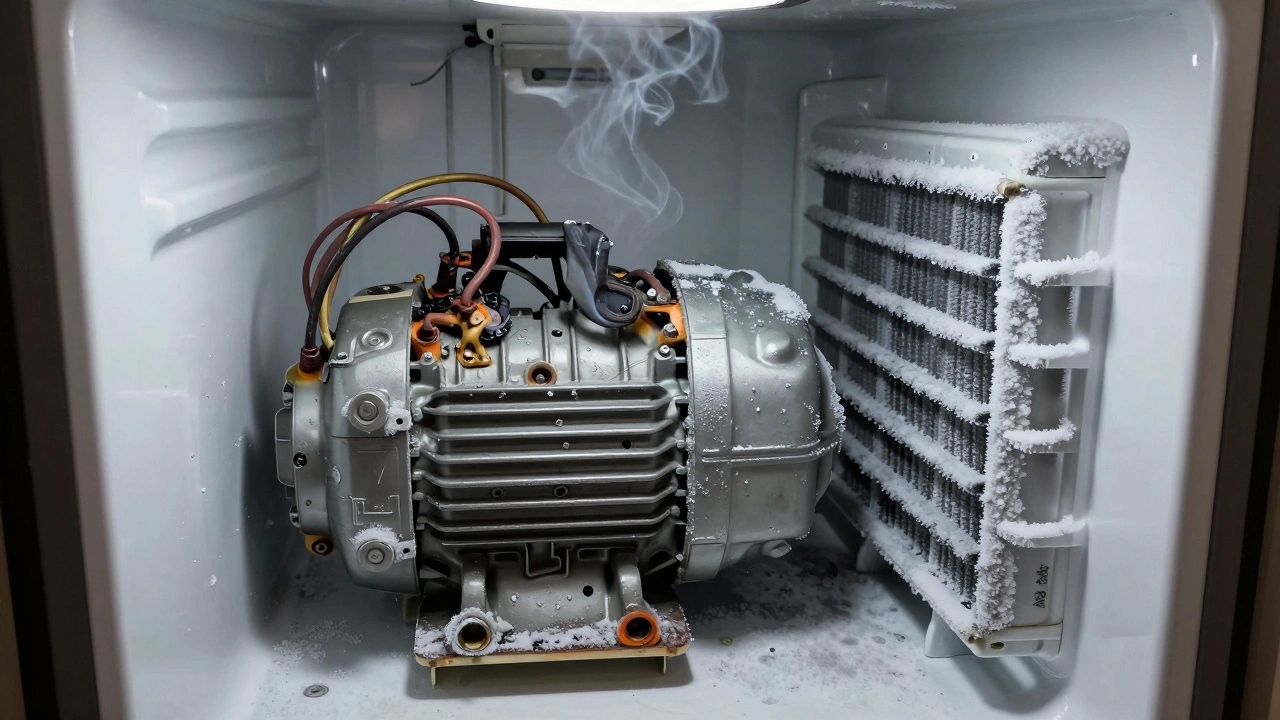
Ice building up in the freezer isn’t always a defrost timer issue. If the compressor isn’t circulating refrigerant properly, the evaporator coils can freeze over. This blocks airflow, so the fridge side stays warm while the freezer looks fine. You might even notice frost on the back wall of the freezer. If you’ve defrosted it twice and it’s back in a week, the problem isn’t the timer. It’s the compressor not delivering enough cold to keep the coils from icing up.
Smell? That’s Bad News
If you smell something like burnt plastic or electrical insulation coming from the back of the fridge, that’s not normal. It means the compressor’s motor is overheating and its internal windings are burning out. This is a classic sign of total failure. Once the motor windings burn, the compressor is dead. No amount of tinkering will fix it. You can’t rewind a compressor. You replace it. And that’s expensive.
Is It Worth Fixing?
Here’s the hard truth: replacing a compressor costs between $500 and $900 in New Zealand, depending on the model and labor. That’s 60-80% of the price of a new fridge. Most people don’t realize this until they get a quote. If your fridge is older than 8 years, and the compressor is gone, it’s almost never worth repairing. You’re throwing good money after bad. A new energy-efficient fridge will save you $100-$150 a year on electricity. That pays for itself in under 3 years.
What to Do Next
If you suspect the compressor is gone, don’t panic. Start with simple checks:
- Unplug the fridge for 10 minutes. Plug it back in. Listen for a click. If there’s none, the compressor isn’t starting.
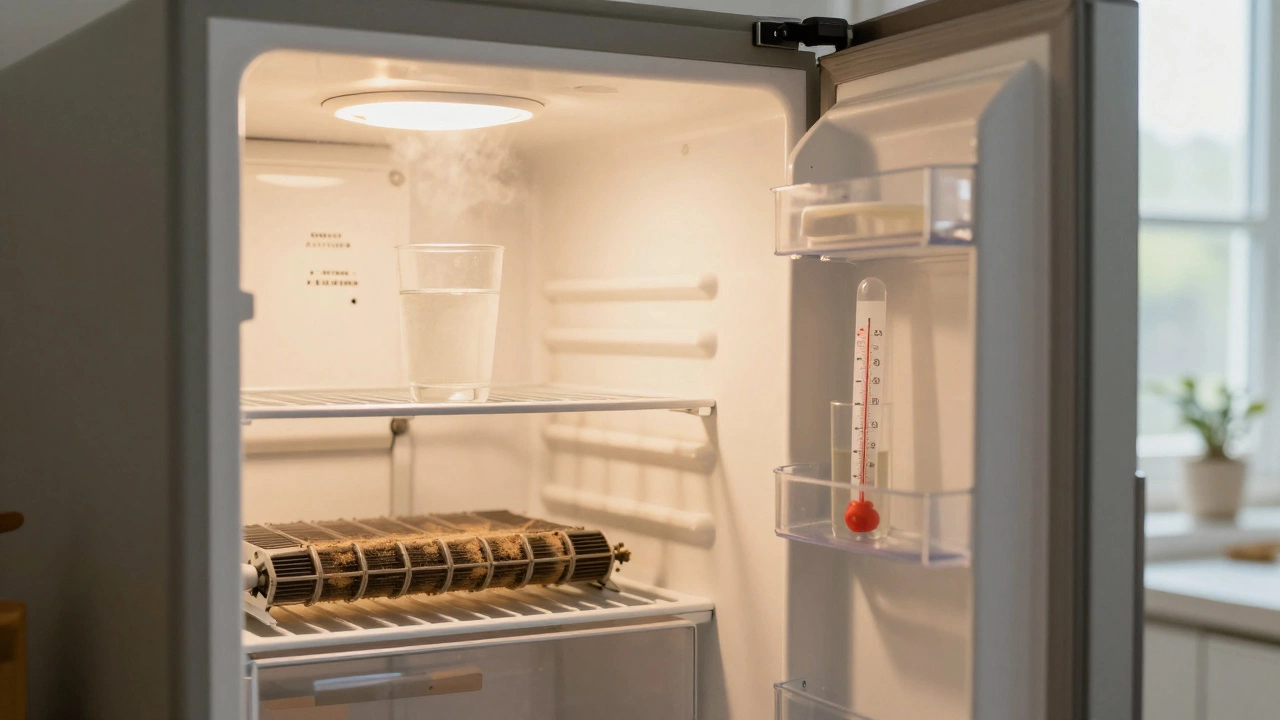
- Check the condenser coils at the back or bottom. Are they dusty? Clean them with a brush. A clogged coil can make the compressor work too hard.
- Test the temperature. Put a thermometer in a glass of water in the fridge. Wait 24 hours. If it’s above 5°C, the cooling system isn’t working.
- Listen for unusual noises. Loud buzzing, rattling, or grinding? That’s the compressor trying to turn but stuck.
If all those checks point to failure, call a technician. They can test the compressor’s pressure and electrical draw. A pro can tell you in 15 minutes if it’s dead or just struggling. Don’t waste time guessing.
What Happens When the Compressor Dies?
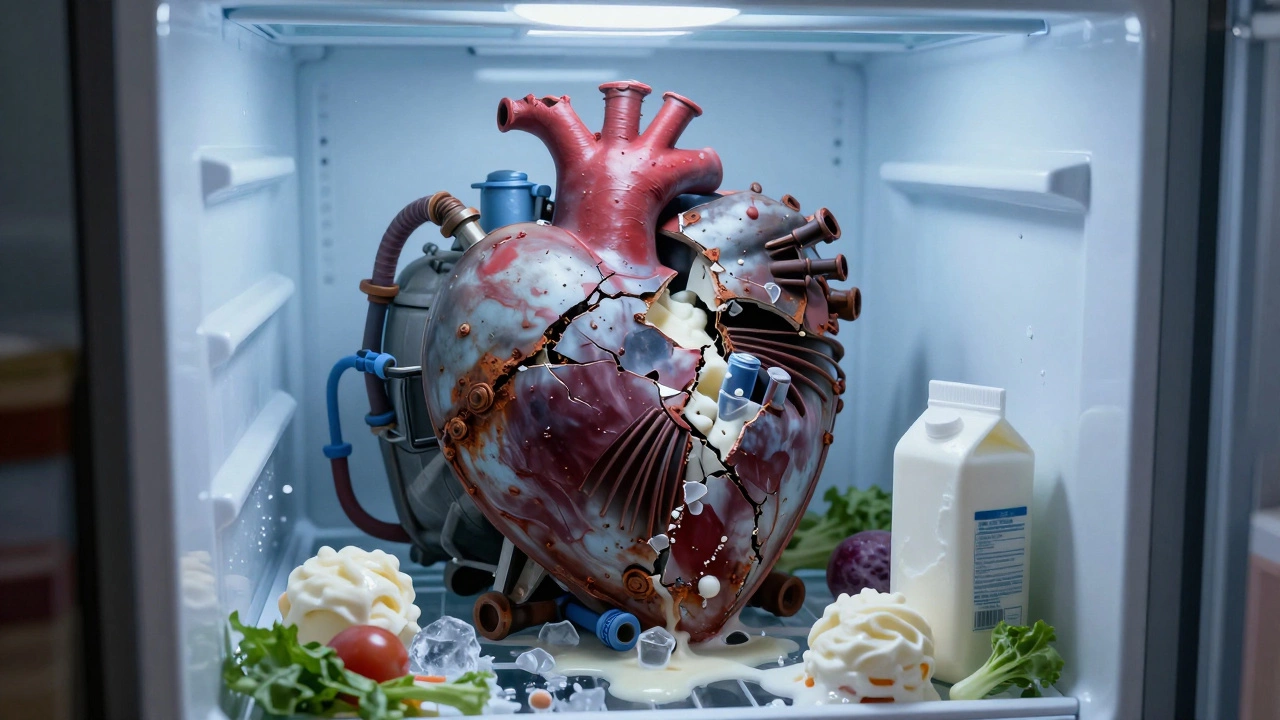
When the compressor fails, your fridge doesn’t just stop cooling. It starts to rot from the inside. Milk spoils. Meat turns sour. Frozen food thaws and refreezes-creating ice crystals and bacteria. You might not notice until you open the door and smell it. That’s not just a mess. It’s a health risk. And if the compressor leaked refrigerant (which it often does), that’s toxic gas in your kitchen. Ventilate the room. Don’t touch anything. Call a professional.
How to Avoid This Next Time
Prevention is cheaper than repair. Clean your condenser coils every 6 months. Keep the fridge at least 5 cm away from the wall so air can flow. Don’t overload it. Don’t leave the door open. And if you hear your fridge getting louder, don’t ignore it. That’s your last warning.
Most people wait until their food goes bad. By then, it’s too late. Pay attention to the small signs. A fridge that runs too long. A back that’s hotter than usual. A quiet hum with no click. Those aren’t quirks. They’re signals.