Oven Control Board Diagnostic Tool
Diagnostic Assessment
Answer the questions below to determine if your oven control board is likely failing. This tool helps identify symptoms described in the article.
If your electric oven won’t heat up, the display is blank, or buttons don’t respond - it’s easy to blame the power supply or a broken element. But more often than not, the real culprit is the control board. It’s the brain of your oven, and when it fails, everything else stops working properly. You don’t need to be a technician to spot the signs. Here’s how to know for sure if your control board is bad - without spending money on parts you don’t need.
It doesn’t turn on at all
If you press the power button and nothing happens - no lights, no beeps, no display - start by checking the outlet. Plug in a lamp or phone charger to make sure there’s power. If the outlet works, and your oven still does nothing, the control board is the most likely cause. A blown fuse or tripped breaker can cause this too, but if you’ve reset the circuit and it still won’t power on, the control board isn’t getting the signal it needs to wake up.
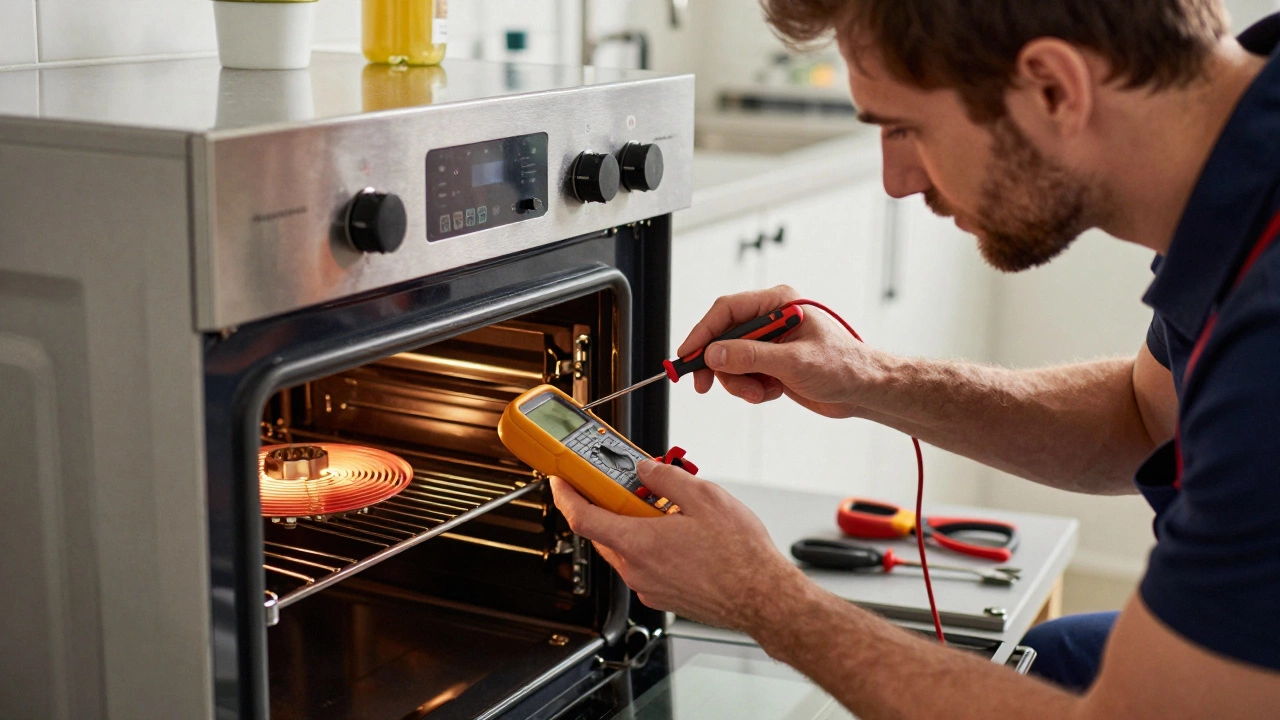
Some older ovens have a thermal fuse near the heating element that can blow if the oven overheats. But if the fuse is fine and the control board still won’t light up, it’s dead. You can test the fuse with a multimeter, but if you don’t have one, skip to the next signs.
The display is blank or flickering
A blank display doesn’t always mean the whole board is dead. Sometimes it’s just the display panel itself. But if the display is flickering, showing random symbols, or only lighting up in parts - like half the numbers - that’s a classic sign of a failing control board. The board sends voltage to the display, and when the circuitry inside starts to degrade, it can’t maintain a steady signal.
I’ve seen ovens where the temperature number shows up but the clock doesn’t. Or the ‘Bake’ button lights up, but ‘Broil’ stays dark. That’s not a bad button - it’s the control board losing its ability to route signals correctly. These are subtle, but they’re telling you the board is on its way out.
Buttons don’t respond - or they respond randomly
Press ‘Bake’ and nothing happens. Press ‘Timer’ and the oven turns on. Press ‘Broil’ and the light flashes but nothing heats up. This kind of erratic behavior is almost always the control board. The membrane keypad might look fine, but the board underneath is misreading inputs. Over time, moisture, heat, or electrical surges can damage the tiny traces on the board. That’s why sometimes the oven works after you unplug it for 10 minutes - the board resets temporarily. But it’ll fail again, and faster each time.
Try this: press and hold the ‘Cancel’ button for 5 seconds. If the oven beeps or resets, the keypad is still talking to the board. But if nothing happens, even after unplugging and waiting 15 minutes, the board isn’t responding at all.
The oven heats unevenly or won’t reach the right temperature
Yes, this can be a thermostat or sensor issue - but if your oven heats up at all, and the temperature is way off, check the sensor first. A faulty sensor will usually throw an error code like ‘F1’ or ‘E2’ on the display. If there’s no error code, and the oven heats but slowly or unevenly - say, the bottom burns but the top stays cold - the control board might not be sending the right power levels to the elements.
Control boards manage the timing and wattage of each heating element. If it’s glitching, it might turn the broil element on during bake mode, or only send half the power needed. This isn’t a calibration issue. It’s a hardware failure inside the board.
You hear clicking but nothing heats up
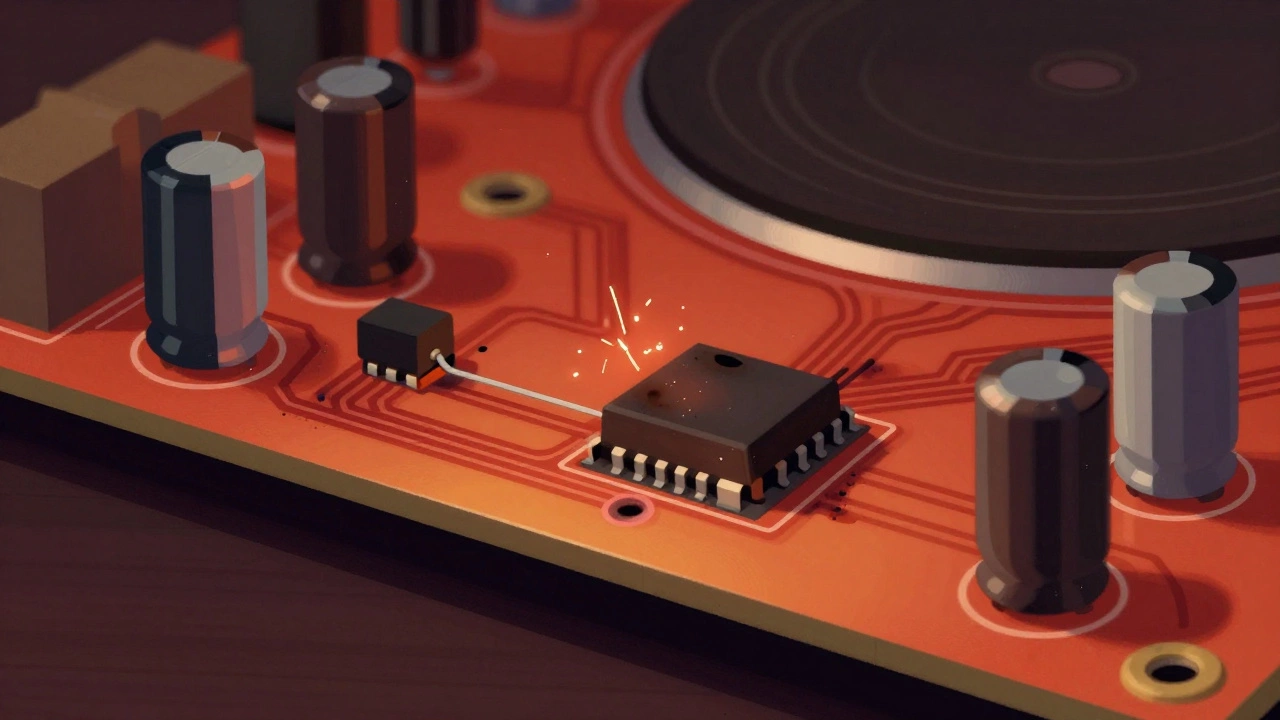
If you hear a loud click when you turn the oven on - like a relay switching - but the elements stay cold, that’s the control board activating the relay but not sending power through. The relay is working, but the circuit that connects it to the heating elements is broken. This is common in ovens that are 8+ years old. The relay contacts wear out, or the board’s output transistors fry from overheating.
Test this: set the oven to bake at 350°F and wait 10 minutes. Open the door and feel the heating elements. If they’re completely cold, but you heard the click, the board isn’t sending power. If they’re hot, the board is working. No click? Then the board isn’t even trying to turn on the elements.
There’s a burning smell or visible damage
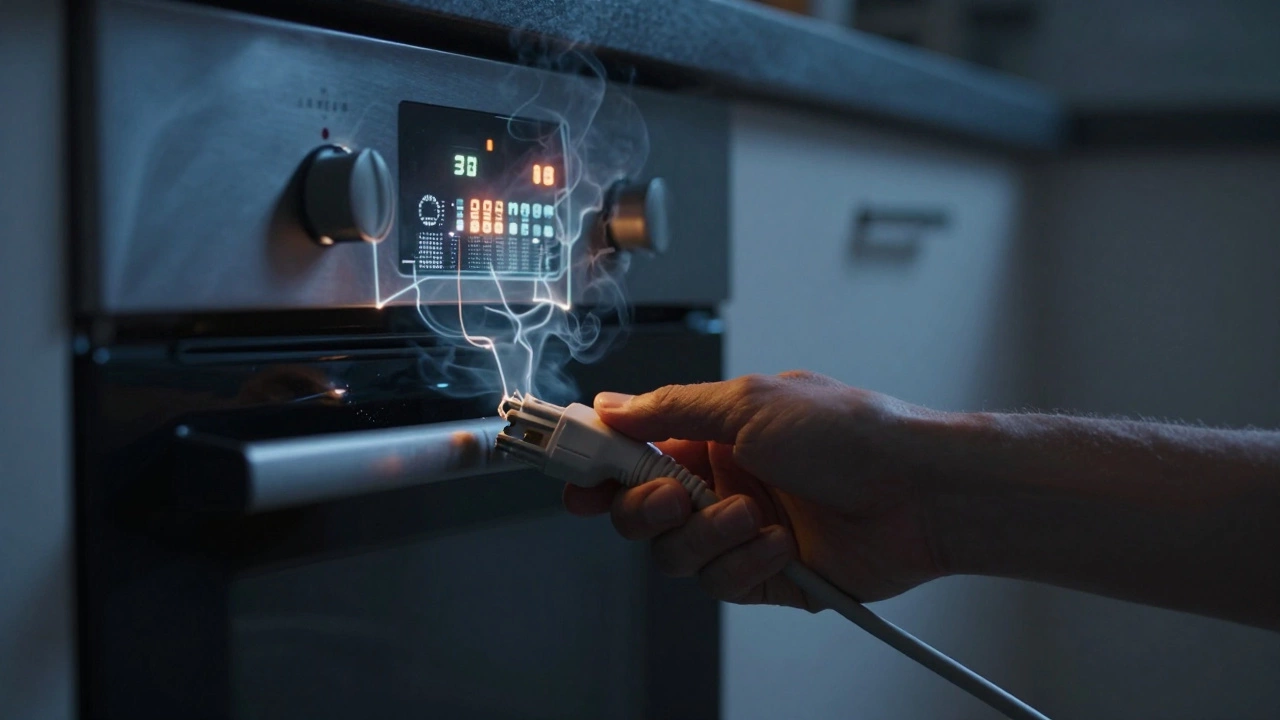
If you smell something like burnt plastic or ozone near the control panel - especially after the oven was running - shut it off immediately. Open the control panel (after unplugging the oven) and look for:
- Brown or black scorch marks on the board
- Bulging or leaking capacitors (small cylindrical parts)
- Cracked or melted plastic around connectors
- Charring on the circuit traces
Any of these mean the board is damaged beyond repair. Even if it still turns on, it’s a fire risk. Replace it.
How to confirm it’s the control board (without a multimeter)
You don’t need tools to make a good guess. Here’s your simple checklist:
- Is the outlet working? (Test with another device)
- Is the circuit breaker reset?
- Is there any display at all? (Even a flicker?)
- Do any buttons respond? Even once?
- Did it work fine yesterday, and now it’s completely dead?
- Is there any smell, smoke, or visible damage?
If you answered ‘no’ to #2 and #3, and ‘yes’ to #5 - it’s the control board. If it died suddenly after a power surge or storm, that’s even more proof. Power spikes fry control boards faster than anything else.
What causes control boards to fail?
Control boards aren’t designed to last forever. Most last 8-12 years. Here’s what kills them:
- Power surges - Lightning strikes, faulty wiring, or even big appliances cycling on/off can send spikes through your kitchen circuit.
- Heat buildup - Ovens get hot. If the control panel isn’t well-ventilated, or if the oven’s cooling fan is broken, heat rises and fries the board over time.
- Moisture - Spills, steam, or cleaning with too much water can seep into the control panel and corrode the circuitry.
- Age - Capacitors dry out. Solder joints crack. Components degrade. It’s just physics.
Some brands are worse than others. Whirlpool, GE, and Frigidaire boards from the early 2010s are known for failing early. If yours is from that era, you’re not alone.
What to do next
If you’re confident the control board is bad, don’t replace it yourself unless you’re experienced. The board is connected to live wires, and one mistake can fry new parts or start a fire.
Find the model number on the oven’s serial plate (usually inside the door or on the back). Search for that exact model + ‘control board replacement’. Buy a new one from a trusted supplier like RepairClinic or AppliancePartsPros. Avoid cheap knockoffs - they fail faster.
Once you have the part, take a photo of the wiring before you disconnect anything. Match the connectors one by one. Most boards plug in the same way, but the order matters.
And if you’re not sure? Call a repair tech. A good one will test the board with a multimeter and confirm the diagnosis before charging you. You’ll save money by knowing what’s wrong - and not paying for a service call to guess.
When to just replace the oven
A new control board costs $100-$250, plus labor. If your oven is over 12 years old, and you’re spending that much to fix it - ask yourself: is this worth it?
Modern ovens have better energy ratings, smart features, and more reliable parts. If you’re already replacing the control board, and the oven’s door seal is cracked, the elements are slow, or the interior is rusted - it’s time to upgrade. A new mid-range oven costs $500-$800. You’ll get 10+ more years of reliable use.
But if your oven is under 8 years old and you love its features - fix it. A new control board is a smart investment.
Can a bad control board cause my oven to overheat?
Yes. If the control board fails in a way that keeps the heating elements powered on continuously, it can cause overheating. This is rare but dangerous. If your oven gets hotter than the set temperature, or doesn’t shut off when it should, turn it off and unplug it immediately. This is a sign of a serious board failure.
Is it safe to use the oven if the control board is bad?
No. A failing control board can cause electrical shorts, overheating, or even fire. Even if the oven seems to work sometimes, it’s unpredictable. Stop using it until it’s repaired or replaced.
Can I test the control board with a multimeter?
Yes, but only if you know how. You can check for voltage at the input terminals (should be 120V or 240V depending on your oven) and test continuity on output circuits. But without experience, you risk damaging the board or yourself. Most people should leave this to a technician.
Why does my oven work sometimes and not others?
This is a classic symptom of a failing control board. Heat causes internal components to expand and contract, breaking connections temporarily. When it cools down, the connection might work again - until it doesn’t. This pattern gets worse over time.
Do all ovens have control boards?
All modern electric ovens with digital displays, timers, or programmable settings have a control board. Older models with dials and mechanical timers don’t. If your oven has buttons, a screen, or an auto-cleaning function, it has a control board.