Oven Repair vs Replacement Calculator
Is Your Oven Worth Repairing?
Calculate if repairing your 8-year-old oven makes financial sense compared to replacing it. Based on New Zealand data and energy efficiency standards.
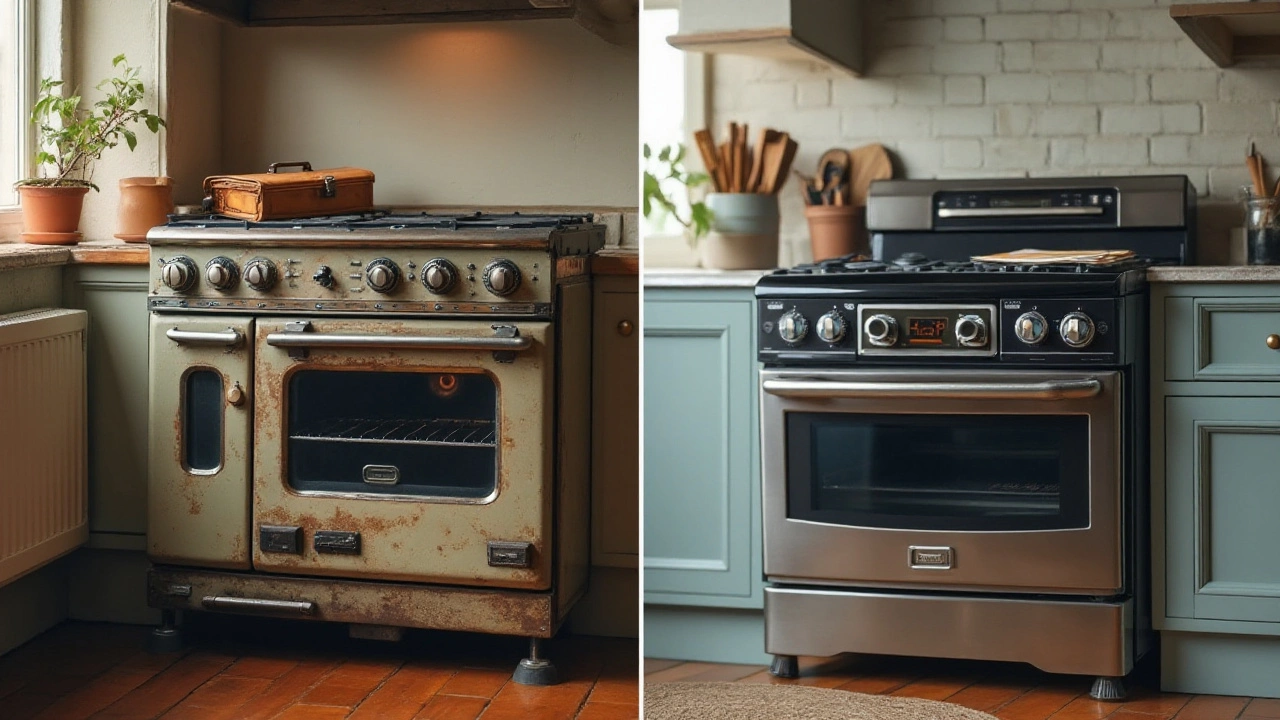
Eight years ago, you bought that oven because it had the right size, the right features, and the right price. Now, it’s acting up-maybe the heating element won’t turn on, or the temperature’s off by 30 degrees. You’re staring at the broken oven and wondering: is it worth repairing an 8-year-old oven? Or should you just bite the bullet and buy a new one?
How long do ovens actually last?
Most electric ovens are built to last between 10 and 15 years. That’s not a guess-it’s what manufacturers design for, and what repair technicians see in the field every day. An 8-year-old oven isn’t ancient. It’s in the middle of its life. If it’s been well-maintained, cleaned regularly, and not abused with heavy spills or slamming doors, it could easily go another 3 to 5 years. But if it’s been neglected, or if you’ve had to fix it twice already in the last two years, that’s a red flag.Think of it like a car. You wouldn’t automatically replace a 5-year-old Honda just because it needed a new battery. But if it’s been in the shop every six months for major repairs, you start thinking about trade-in value. The same logic applies to ovens.
What’s the average repair cost?
In Auckland, a typical oven repair runs between $150 and $400, depending on the issue. Here’s what you’re likely paying for:- Heating element replacement: $180-$250 (parts + labour)
- Thermostat or temperature sensor fix: $150-$220
- Door seal or hinge repair: $80-$150
- Control board failure: $300-$400 (this is where it gets tricky)
Labour usually runs $80-$100 per hour, and most repairs take 1 to 2 hours. Parts are generally inexpensive-except for control boards. Those are the expensive ones. A new control board can cost as much as $200 on its own, and if your oven is a lesser-known brand or discontinued model, finding the right part can take weeks-or it might not be available at all.
When repair doesn’t make financial sense
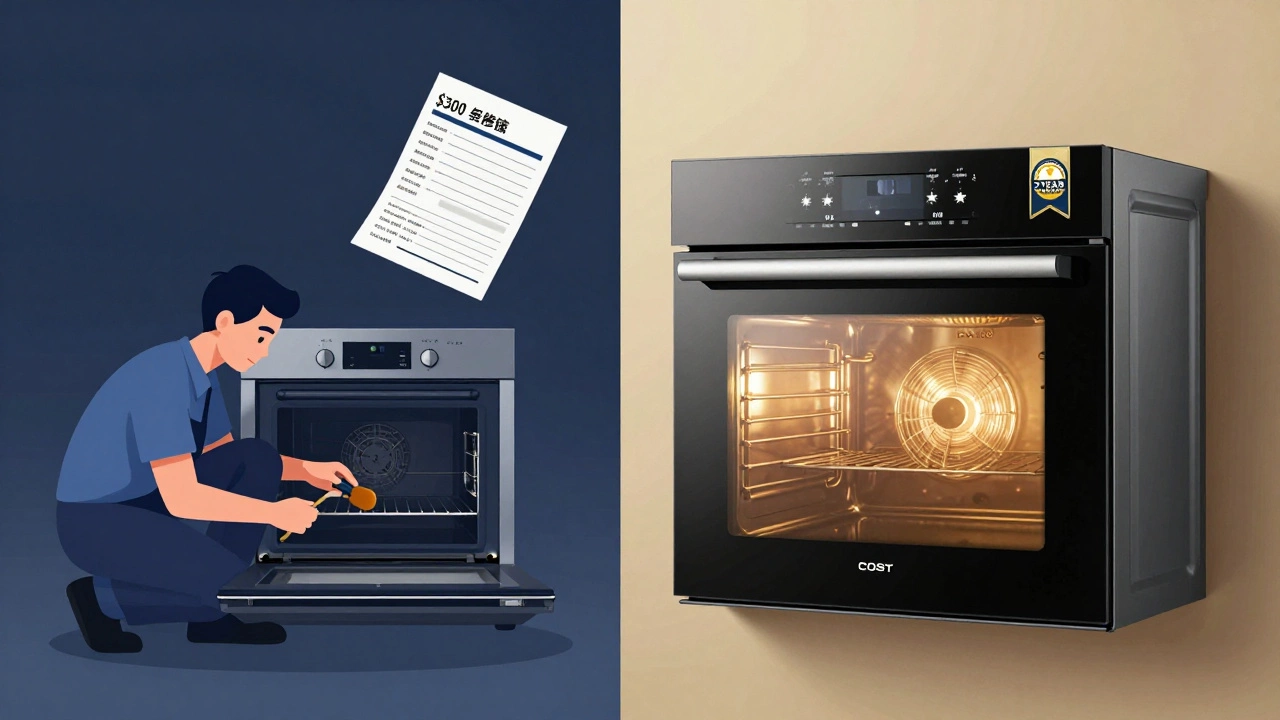
Here’s the hard truth: if the repair cost is more than half the price of a new oven, it’s usually not worth it. Right now, a basic new electric oven in New Zealand costs between $500 and $1,200. So if your repair bill hits $300 or more, you’re getting close to that 50% threshold.But money isn’t the only factor. Think about energy efficiency. An 8-year-old oven likely uses 15-20% more electricity than a new model. Newer ovens have better insulation, smarter thermostats, and energy-saving modes. Over five years, that extra energy use can add up to $200-$400 in extra power bills. That’s like paying for half a repair job every year.
Also, consider convenience. If your oven breaks down during the holidays, you’re stuck with takeaway meals or a slow, uneven bake. A new oven comes with a warranty-usually 12 to 24 months. A repaired oven? You get 30 days, maybe. If it breaks again, you’re back to square one.
What to check before calling a technician
Before you spend $150 on a service call, do a quick DIY check. You might save yourself the cost.- Check the power supply. Is the oven plugged in? Is the circuit breaker tripped? Sometimes it’s as simple as resetting a breaker.
- Test the oven light. If the light works but the heating doesn’t, the issue is likely the element or thermostat-not the whole control system.
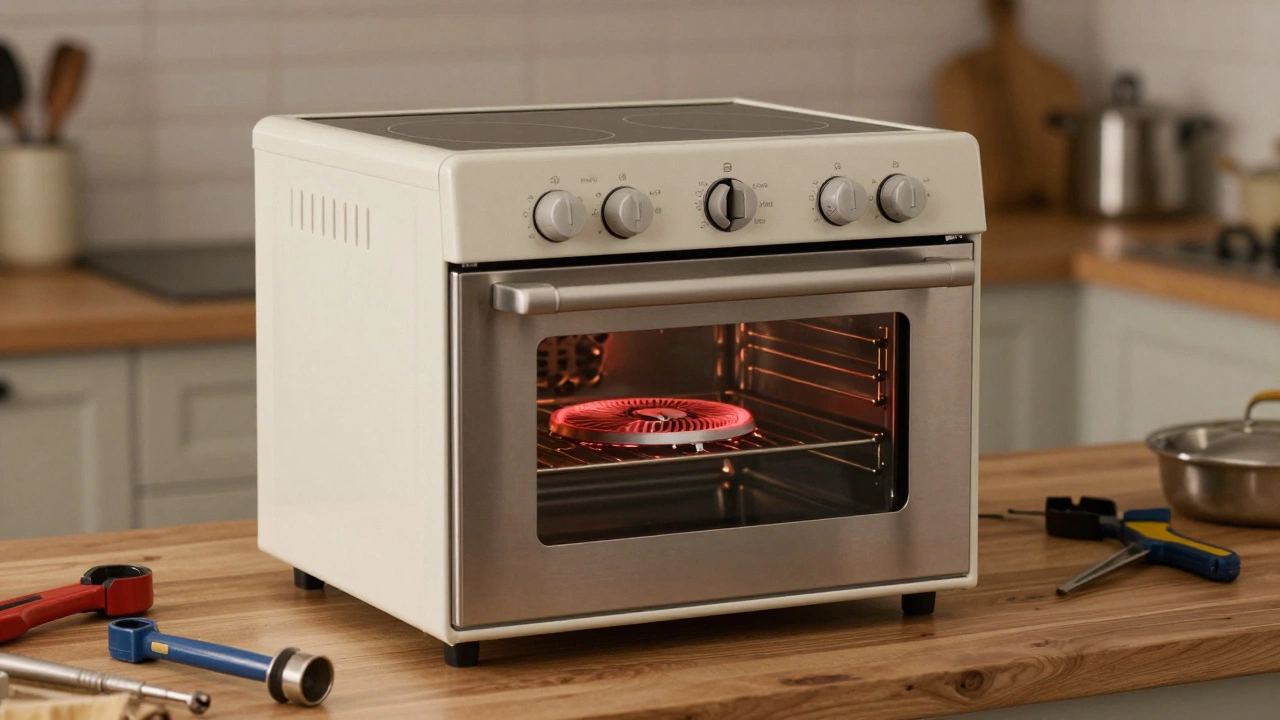
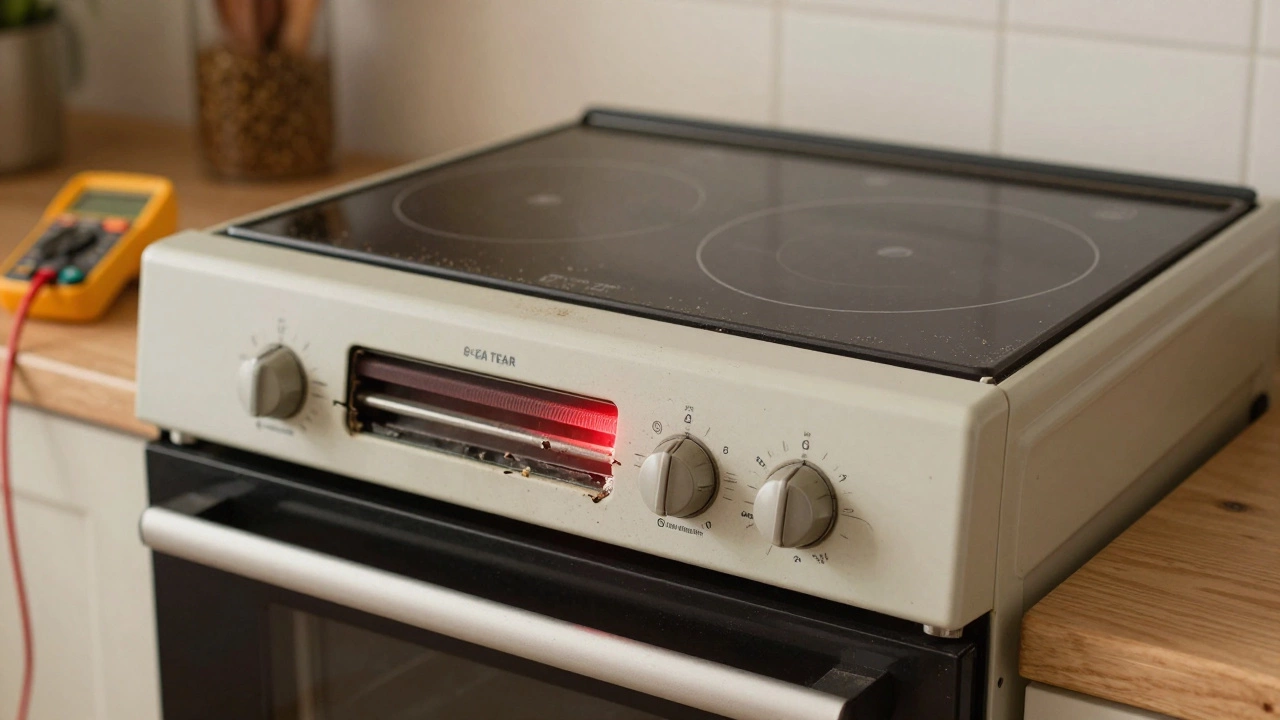
- Look at the heating element. Is it glowing red evenly? If part of it is blackened or broken, it’s probably the element. You can often replace that yourself for under $50.
- Smell anything burning? That could mean a loose wire or overheating component. Turn the oven off and unplug it. Don’t risk a fire.
If you’re comfortable with basic tools and can follow YouTube tutorials (search for your oven model + "repair heating element"), you can fix the most common issues without hiring anyone. Many people save hundreds by doing this.
Signs it’s time to replace, not repair
Here are five clear signs your 8-year-old oven should be retired:- It takes too long to heat up. If it’s taking 30 minutes to reach 180°C when it used to take 15, the insulation or heating system is failing.
- The temperature is inconsistent. Use an oven thermometer. If it’s off by more than 15°C, your food will cook unevenly-and you’ll keep wasting ingredients.
- It’s making strange noises. Loud clicking, buzzing, or grinding sounds often mean internal components are wearing out.
- It’s not heating evenly. One side of your roast is burnt, the other is raw? That’s not your recipe-it’s the oven.
- You’ve had two or more repairs in the last two years. Repeated fixes mean the oven is falling apart. Each repair is a temporary fix, not a solution.
Also, if your oven is a brand you’ve never heard of, or it’s no longer sold in New Zealand, parts will be hard to find. That’s a death sentence for repairability.
What to look for in a new oven
If you decide to replace it, here’s what matters:- Energy rating. Look for a 4.5-star or higher rating. That’s the difference between $80 and $140 a year in electricity.
- Self-cleaning. It’s expensive upfront, but saves hours of scrubbing. Worth it if you bake often.
- Convection fan. Even cooking, faster baking, better results. Not a luxury anymore-it’s standard on mid-range models.
- Warranty. Go for at least 2 years. Some brands offer 5-year coverage on parts.
- Brand reliability. Brands like Smeg, Bosch, LG, and Fisher & Paykel have solid track records in NZ. Avoid no-name brands from discount stores.
Don’t feel pressured to buy the most expensive model. A $700 oven with a good energy rating and a 2-year warranty will outperform a $1,200 model with no features you actually use.
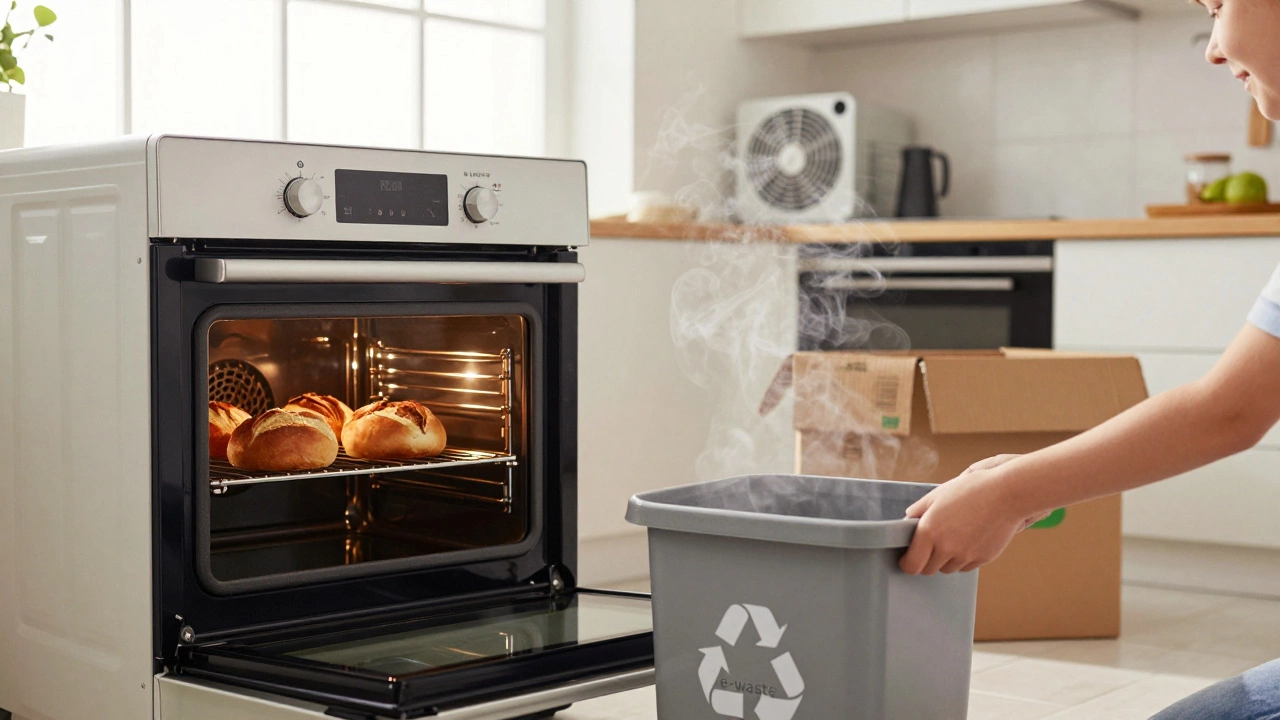
What to do with your old oven
Once you replace it, don’t just leave it on the curb. Auckland City Council offers free e-waste collection for old appliances. You can book a pickup online. Some recycling centres even pay you $20-$50 for old ovens if they’re still intact. Others will take it for free if you drop it off.Alternatively, if it still works (even poorly), consider donating it to a charity like The Salvation Army or Goodwill. They often fix and resell working appliances at low cost.
Final decision checklist
Use this quick guide to make your call:- Repair cost under $200? → Repair it.
- Repair cost over $300? → Think about replacing.
- More than two repairs in two years? → Replace.
- Heating is slow or uneven? → Replace.
- Brand is discontinued or parts are hard to find? → Replace.
- Energy bill has gone up noticeably? → Replace.
- Want better features (convection, smart controls)? → Replace.
If you’re on the fence, ask yourself: "If this was a different appliance-like a fridge or washing machine-would I repair it?" The answer is usually the same.
Bottom line
An 8-year-old oven isn’t automatically due for replacement. But it’s also not a guaranteed 10-year machine. The decision comes down to cost, convenience, and performance. If the repair is cheap and the oven still works well, go ahead and fix it. But if you’re spending big, waiting for parts, or cooking with frustration, it’s time to upgrade. A new oven isn’t just a replacement-it’s an investment in better meals, lower bills, and less stress.Is it cheaper to repair or replace an 8-year-old oven?
It depends. If the repair costs less than half the price of a new oven (around $250-$300), repair is usually cheaper. But if the repair is $300 or more, you’re close to the cost of a new basic model. Factor in energy savings too-new ovens use 15-20% less power, which adds up over time.
How long should an electric oven last?
Most electric ovens last between 10 and 15 years with normal use. If yours is 8 years old and has been well-maintained, it still has several good years left. But frequent repairs, uneven heating, or rising energy bills mean it’s nearing the end of its life.
Can I replace an oven element myself?
Yes, in most cases. Replacing a heating element is one of the easiest oven repairs. You’ll need a screwdriver, a new element (costs $30-$80), and about 30 minutes. Search online for your oven model + "how to replace heating element"-there are clear video guides for most brands.
What should I do with my old oven?
Auckland City Council offers free e-waste pickup for old appliances. You can also drop it off at recycling centres like Sims Lifecycle Services or Enviroserve. Some charities accept working ovens for resale. Never leave it on the street-it’s illegal and harms the environment.
Are new ovens more energy efficient?
Yes. Modern ovens have better insulation, digital thermostats, and convection fans that reduce cooking time and energy use. An older oven from 2017 can use up to 20% more electricity than a new 4.5-star rated model. Over five years, that’s $200-$400 in savings.