Anode Rod Condition Checker
This tool estimates if your anode rod needs replacement based on water hardness, heater age, and observed symptoms. The article explains these factors in detail.
Based on your inputs:
If your hot water smells like rotten eggs, or your water heater is making strange noises, or it’s leaking from the bottom - don’t panic. It might not be the tank itself failing. More often than not, the real culprit is a dead anode rod. This small, cheap part is the reason your water heater lasts 10 to 15 years instead of 3. When it goes, everything else starts to fall apart.
What even is an anode rod?
The anode rod is a long metal stick, usually made of magnesium, aluminum, or zinc, that hangs inside your water heater tank. Its job? To attract corrosive elements in the water - like sulfur and minerals - so they eat away at the rod instead of your steel tank. Think of it like a sacrificial lamb. The rod dies so your tank doesn’t have to.
It’s not something you see unless you take the top off your heater. Most people never check it. But if you live in Auckland, where water tends to be hard and mineral-rich, your anode rod might be dead by year five.
Signs your anode rod is bad
Here’s what to look for if you suspect your anode rod has given up:
- Smelly hot water - The most common sign. A rotten egg smell means sulfur bacteria are feeding on sulfur in the water. When the anode rod is gone, these bacteria thrive and produce hydrogen sulfide gas. Cold water doesn’t smell, but hot water does. That’s your clue.
- Discolored water - Rusty, brown, or yellow water coming out of your hot tap? That’s not just sediment. It’s your tank starting to corrode from the inside.
- Strange noises - Popping, crackling, or rumbling sounds? That’s not the heating element. That’s sediment building up because the tank’s protective layer is gone. Without the anode rod, minerals settle faster and harden on the bottom.
- Leaks at the bottom - If water is pooling under your heater and you’re sure it’s not the pressure valve or pipes, the tank itself may be rusted through. That’s the endgame after the anode rod fails.
- Older than 5 years - If your heater is five years or older and you’ve never checked the rod, assume it’s dead. Even if everything seems fine, it’s just a matter of time.
How to check your anode rod
You don’t need to be a plumber to check this. Here’s how:
- Turn off the power. For electric heaters, flip the breaker. For gas, turn the thermostat to “pilot.”
- Turn off the cold water supply to the tank. Look for the valve on top or near the top of the heater.
- Relieve pressure. Open a hot water tap somewhere in the house - this lets air in and stops the tank from being under pressure.
- Locate the anode rod. It’s usually on top of the heater, under a hex-shaped cap labeled “anode” or “vacuum breaker.” Sometimes it’s under the hot water outlet.
- Use a 1-1/16 inch socket or wrench to loosen the cap. It’s often stuck. Tap the wrench with a hammer if needed.
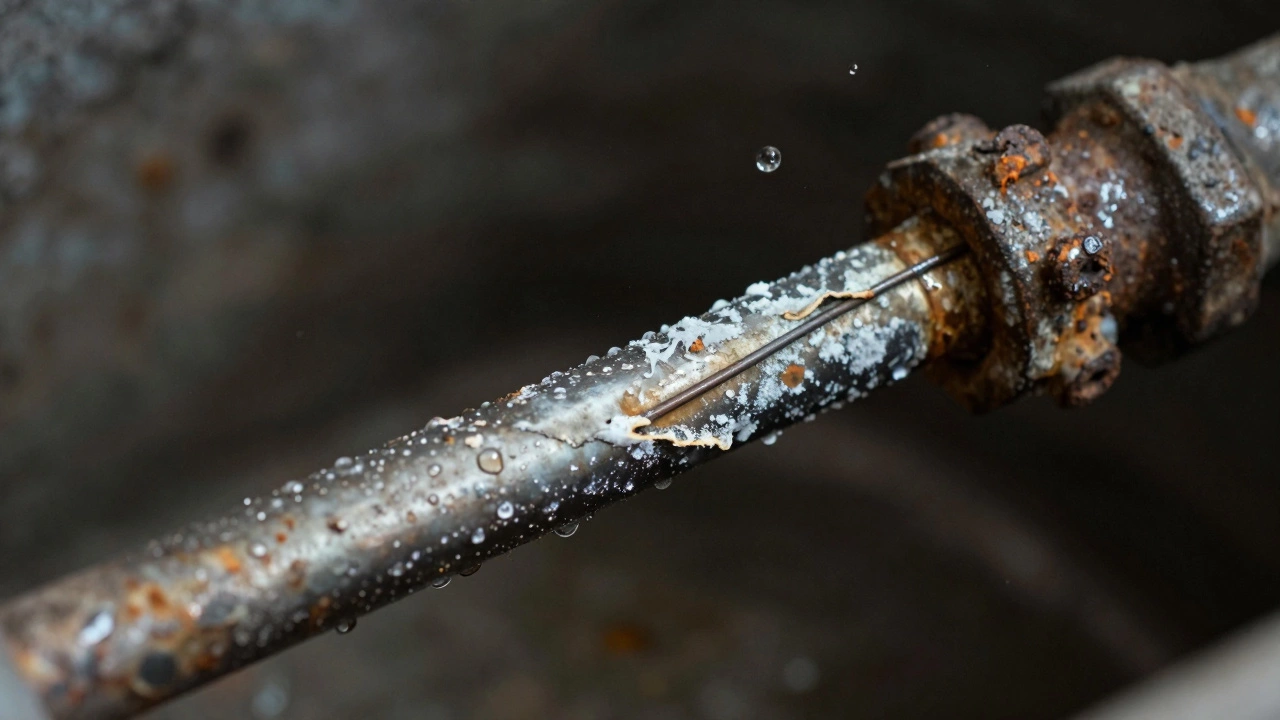
- Pull it out. The rod will come out slowly. If it’s less than half its original thickness, or if you see bare steel wire inside, it’s done.
- Compare it to a new one. A new magnesium rod is about 3/4 inch thick and 40 inches long. If yours is thin, brittle, or covered in chalky white buildup, replace it.
Pro tip: If you can’t find the rod, your heater might have a combo unit - a factory-installed rod that’s built into the hot water outlet. In that case, you’ll need to replace the whole outlet assembly.

What to replace it with
Not all anode rods are the same. Here’s what to pick:
- Magnesium - Best for most homes. It protects better and lasts longer. But if your water is very hard, it can cause more odor.
- Aluminum - Cheaper and lasts longer in hard water. Less likely to cause smell, but not as effective at protecting the tank.
- Zinc-aluminum - A mix designed to fight smelly water. If you’ve got rotten egg smells and you’ve already replaced the rod once, this is your best bet.
In Auckland, where water hardness varies by suburb, magnesium is still the go-to unless you’ve had persistent odor issues. Then switch to zinc-aluminum.
How often should you replace it?
Most manufacturers say every 3 to 5 years. But that’s a guess. The real answer? Check it every 2 years if you have hard water, or every 3 to 4 years if you’re on soft water.
Here’s a rule of thumb: If you’ve lived in the same house for more than five years and never touched the anode rod, it’s probably gone. And if your heater is over 8 years old and the rod is gone, replacing it now might still save your tank. But if the tank’s already leaking? Too late.
What happens if you ignore it?
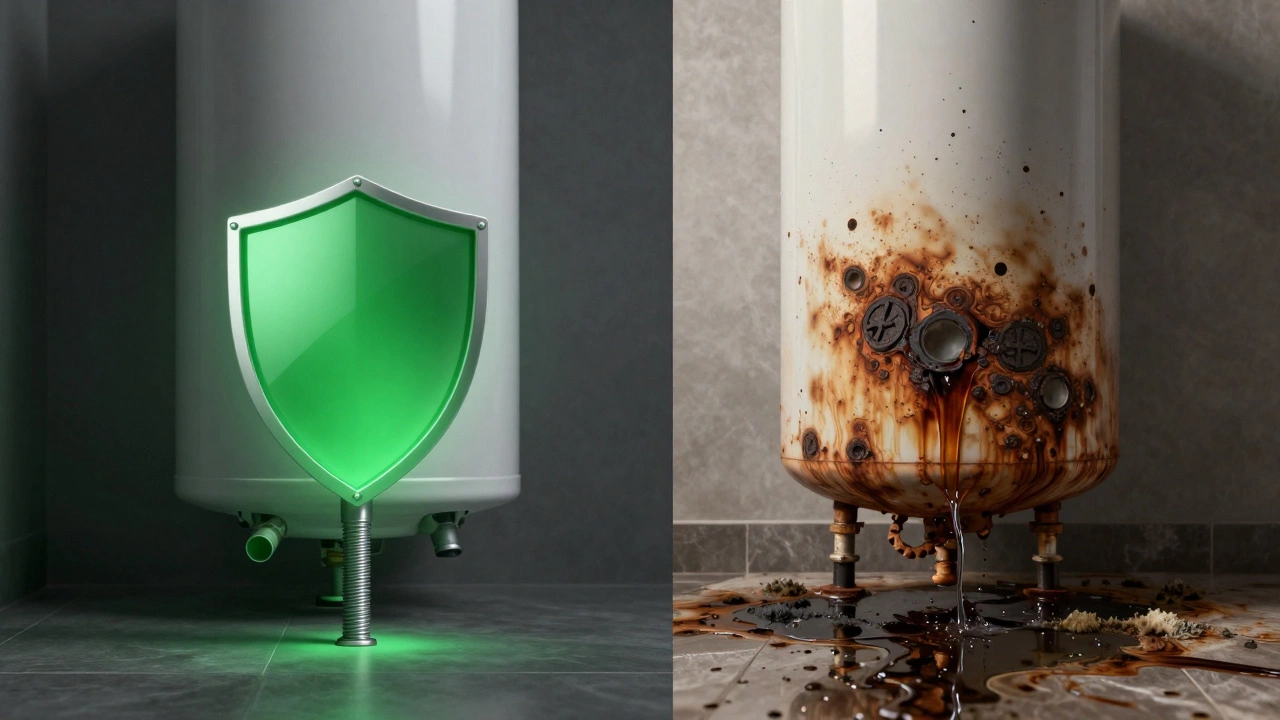
Ignoring a bad anode rod doesn’t just mean smelly water. It means your tank starts rusting from the inside. Once that happens, no amount of flushing or cleaning will fix it. The corrosion eats through the steel lining. Then - sudden leak. Water on your floor. Ceiling damage. Mold risk. A full tank replacement costs $1,500 to $3,000. Replacing the anode rod? $30 to $60, and 45 minutes of your time.
Think of it like changing your car’s oil. Skip it once, and you’re fine. Skip it for five years? Engine dies.
Can you prevent it from failing?
You can’t stop it from wearing out - that’s its job. But you can slow it down:
- Set your water heater to 50-55°C. Higher temps speed up corrosion and encourage bacteria.
- Flush your tank annually. Drain 2-3 gallons from the bottom valve to remove sediment. Do this in spring or fall.
- Install a water softener if your water is very hard. Less minerals = less stress on the rod and tank.
- Use a powered anode rod. These are electrically charged and last longer. They’re pricier ($150+) but great for homes with persistent odor problems.
Most people don’t know about powered rods. They’re not common in New Zealand, but they’re worth considering if you’ve tried everything else.
When to call a pro
You can replace the anode rod yourself. But call a plumber if:
- You can’t get the cap off, even with a breaker bar.
- Water keeps leaking when you try to remove it.
- The rod is fused to the outlet and breaks apart when you pull it.
- You see rust inside the tank when you look.
Also, if your heater is over 10 years old and the anode rod is gone, consider replacing the whole unit. Even a new rod won’t bring a rusted tank back to life.
Final tip: Keep a record
Write down the date you replaced the anode rod. Stick it on the side of the heater with duct tape. Next time you’re cleaning the garage or checking the smoke alarms, you’ll remember. Most people don’t. That’s why their heaters die young.
Can a bad anode rod cause low hot water pressure?
Not directly. Low pressure is usually caused by sediment buildup, a faulty dip tube, or a clogged valve. But if the anode rod is gone and the tank is corroding, sediment can block the outlet pipe over time. That’s a side effect, not the main cause.
Is it safe to shower if my water smells like rotten eggs?
Yes, it’s safe. The smell comes from hydrogen sulfide gas, which isn’t harmful at the levels found in home water heaters. But it’s unpleasant and can stain laundry or bathroom fixtures over time. Fixing the anode rod or flushing the system will solve it.
Can I remove the anode rod entirely?
Never do this. Without the anode rod, your tank will corrode from the inside out. In hard water areas like Auckland, the tank could fail in under two years. The rod is not optional - it’s the only thing keeping your heater alive.
Do all water heaters have anode rods?
Almost all standard tank-style water heaters do. Tankless heaters don’t have them because they don’t store water. If your heater is a tank type - even if it’s old or low-end - it has an anode rod. Some models hide it under the hot water outlet, so check the manual or look for a hex head on top.
How long does a new anode rod last?
A standard magnesium rod lasts 3 to 5 years in average water. In hard water, it might only last 2 years. Aluminum rods last longer - up to 6 years - but offer less protection. Zinc-aluminum rods last about 4 to 5 years and are best for odor control. Powered rods can last 10+ years.