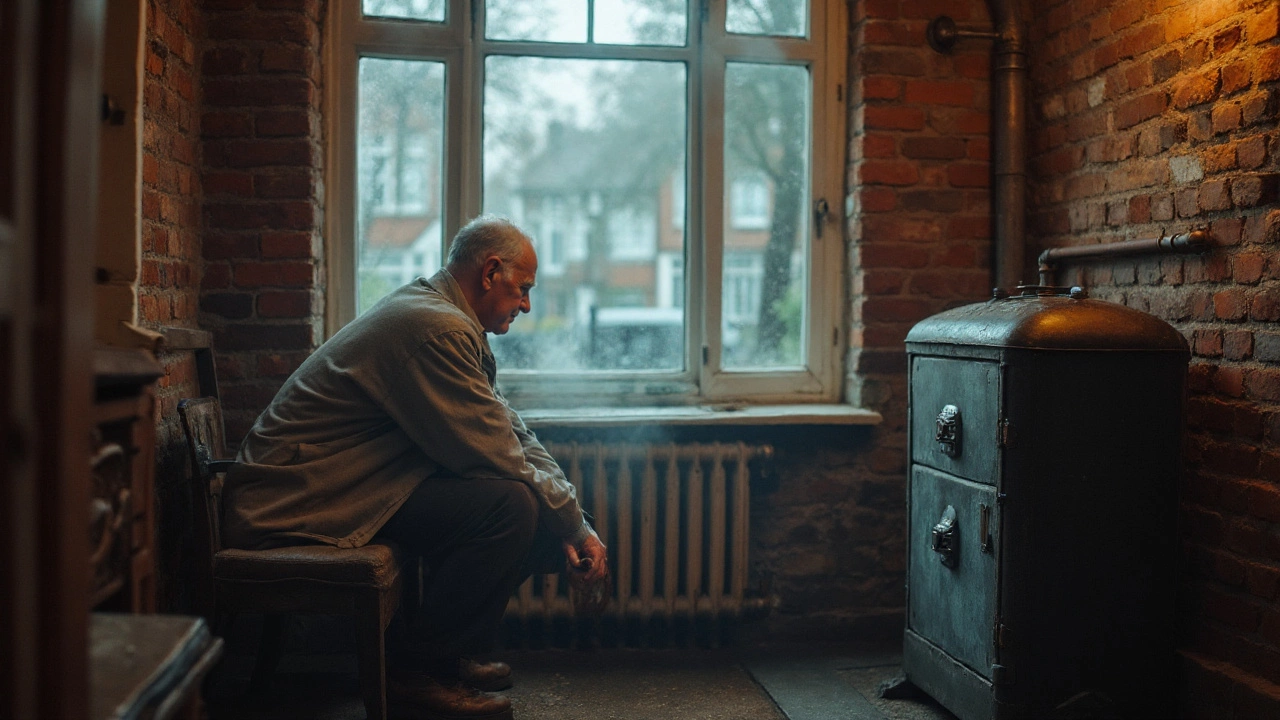
You’ve got a boiler that’s older than your kids. It’s been humming along for 40 years, and you’re wondering: is a 40-year-old boiler safe? The short answer? Probably not. And if you’re still using it, you’re taking a risk that isn’t worth it.
Boilers Don’t Last Forever - Even if They Still Work
Most modern boilers are built to last 10 to 15 years. A few might squeeze out 20 with perfect care. But 40? That’s not durability - that’s luck. And luck runs out.
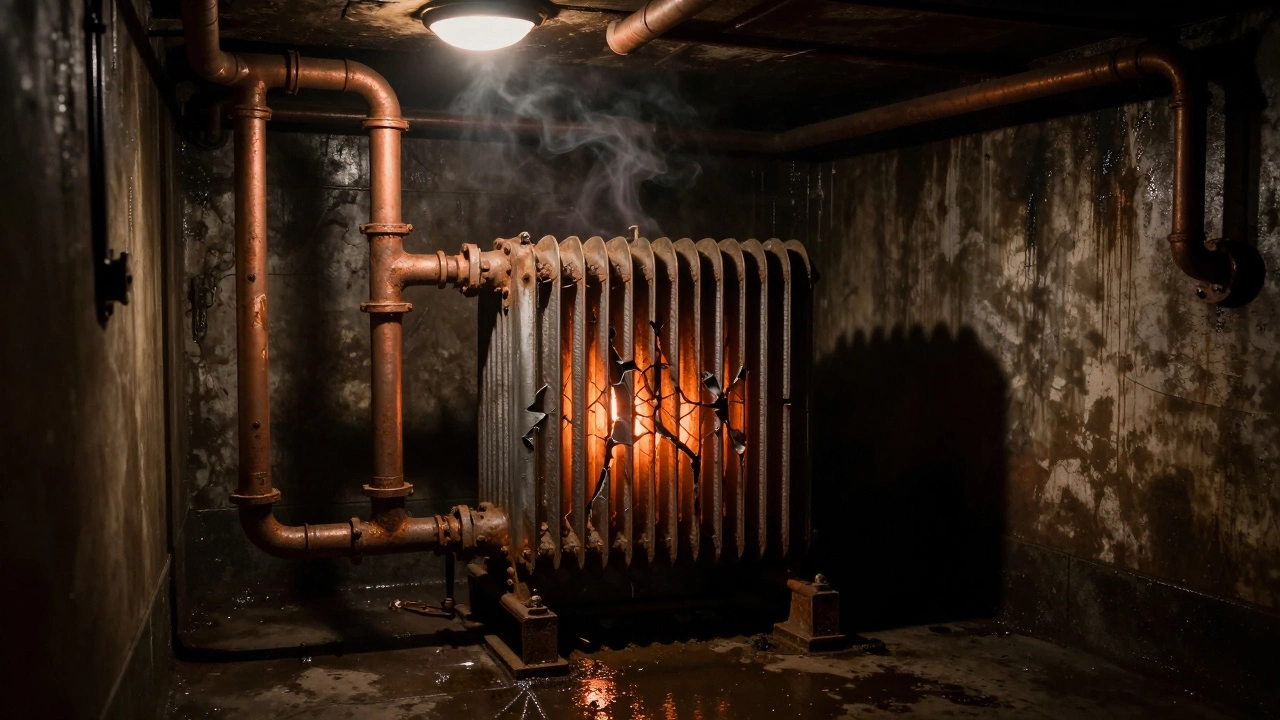
Old boilers don’t just wear out slowly. They start failing in dangerous ways. Corrosion eats through pipes from the inside. Seals dry out and crack. Heat exchangers develop tiny holes you can’t see. These aren’t problems you can fix with a wrench. They’re structural failures waiting to happen.
I’ve seen boilers from the 1980s still firing up. They heat the house. The pilot light stays blue. Everything seems fine. But under the casing? Rust is eating the copper tubes. The pressure relief valve is stuck shut from mineral buildup. The gas valve is leaking a fraction of a percent - enough to build up in a basement over weeks.
The Real Danger: Carbon Monoxide
The biggest risk with an old boiler isn’t that it stops working. It’s that it keeps working - and quietly kills you.
Carbon monoxide (CO) is odorless, colorless, and deadly. A 40-year-old boiler is far more likely to produce it. Why? Because combustion efficiency drops as parts degrade. Air-to-fuel ratios get thrown off. Incomplete burning creates CO. And if the flue is blocked by soot or the venting system is cracked, that gas flows back into your home.
In New Zealand, over 20 people die each year from accidental CO poisoning. Half of those cases involve faulty heating systems. Most victims are in homes with boilers over 25 years old. The Ministry of Health doesn’t track age alone, but every investigation into a CO death finds the same pattern: outdated equipment, no CO alarm, and a false sense of security because the boiler still heats the house.
What’s Wearing Out - And Why You Can’t Fix It
Here’s what actually fails in a 40-year-old boiler:
- Heat exchanger: Made of thin steel or cast iron. After decades of heating and cooling, it cracks. Water leaks into the burner chamber. Gas mixes with water vapor. Explosions can happen.
- Gas valve: Older valves use rubber diaphragms that harden and split. They don’t shut off fully. Gas leaks into the cabinet - not enough to smell, but enough to ignite with a spark.
- Pressure relief valve: This is your last safety net. If pressure gets too high, it opens. In a 40-year-old boiler, it’s likely clogged with limescale or rust. It won’t open when needed.
- Flue and venting: Older systems use single-wall metal pipes. They rust through. Condensation from modern high-efficiency boilers corrodes them faster. A cracked flue means exhaust gases enter your living space.
- Electrical components: Thermostats, ignition systems, and safety controls from the 1980s aren’t designed for today’s standards. They fail unpredictably.
You can replace a pump. You can flush the system. You can even reseal a minor leak. But you can’t repair a corroded heat exchanger. You can’t retrofit a 40-year-old gas valve to meet today’s safety codes. These aren’t maintenance issues - they’re design failures.
Insurance and Legal Risks
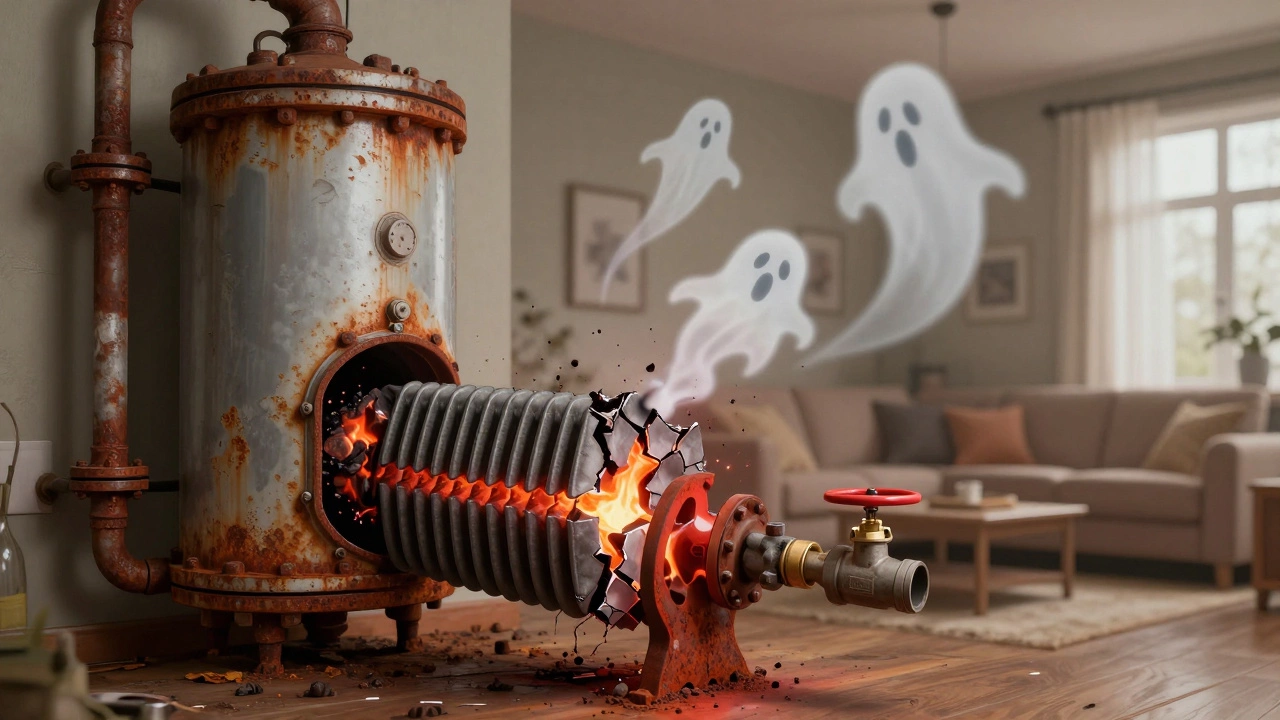
Most home insurance policies in New Zealand have clauses about “reasonable maintenance.” If your boiler fails and causes a fire or flood, the insurer will investigate. If they find it’s 40 years old with no recent service records? They’ll likely deny your claim.
And if someone gets sick from CO in your home? You could be held legally liable. Especially if you ignored warnings from a qualified technician. Courts don’t care that the boiler “still worked.” They care that you ignored known risks.
I spoke to a plumber in Auckland last year who was called to a house where a family of four ended up in the hospital from CO poisoning. The boiler was 42 years old. The homeowner had been told three times to replace it. He didn’t because “it’s still heating fine.” The insurance company refused to pay. The homeowner is now facing civil action.
What a Professional Inspection Really Shows
Some people think, “I’ll just get it checked.” That’s good - but not enough.
A standard boiler service includes checking the flame, pressure, and flue. That’s fine for a 5-year-old boiler. But for a 40-year-old one? You need a full diagnostic.
A qualified technician should check:
- CO levels in the flue gases - above 100 ppm is dangerous
- Gas pressure at the inlet and burner - older valves drift out of spec
- Heat exchanger integrity - using a borescope camera to look for cracks
- Flue condition - looking for rust, gaps, or blockages
- Combustion efficiency - anything below 75% means it’s wasting fuel and producing more CO
If any of these are off, the boiler isn’t safe - even if it’s still blowing warm air. And most 40-year-old boilers fail at least two of these tests.
When to Walk Away - No Exceptions
Here’s when you need to replace your boiler - right now:
- You smell gas, even faintly
- The pilot light goes out often
- There’s yellow or orange flame instead of blue
- You hear banging, hissing, or gurgling from the boiler
- Your CO alarm has gone off - even once
- The boiler is leaking water or rust stains around the base
- You’ve had it serviced in the last 5 years and were told it’s nearing end-of-life
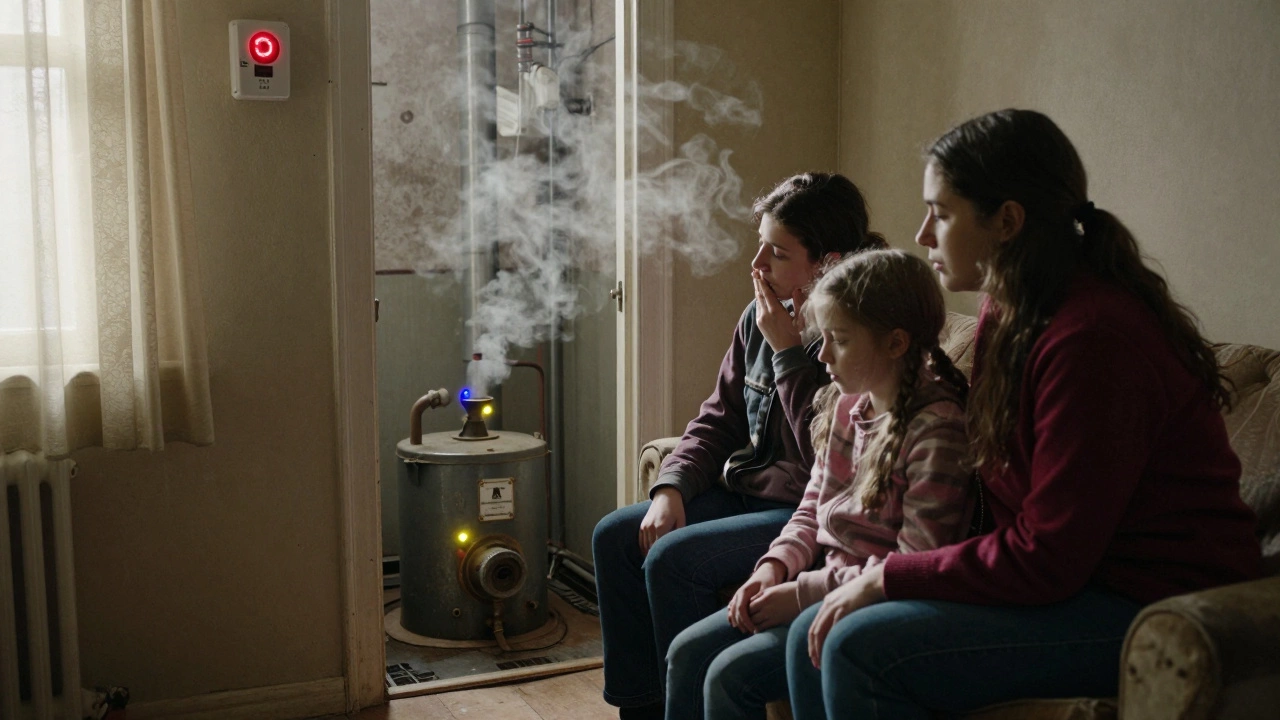
If any of these apply, don’t wait. Turn off the gas at the main valve. Open windows. Get everyone out. Call a gas fitter immediately.
What to Replace It With
Modern boilers are 90%+ efficient. They’re safer, quieter, and smaller. You’ll save 30-40% on your gas bill each year. That pays for the new unit in 3-5 years.
Look for:
- Condensing boiler - captures waste heat from exhaust
- Combi boiler - no need for a hot water tank, saves space
- Smart controls - adjust heat based on weather and occupancy
- Warranty of at least 7 years - shows confidence in the build
Brands like Vaillant, Worcester Bosch, and Baxi have models approved for New Zealand conditions. Avoid the cheapest options. You’re not buying a toaster. This is your life support system.
Government Help and Rebates
In New Zealand, the Warm Up New Zealand: Heat Smart programme offers subsidies for low-income households replacing old boilers. Even if you’re not eligible for that, some local councils offer rebates for energy-efficient upgrades.
Check with your local council or Energy Efficiency and Conservation Authority (EECA). You might get $1,500-$3,000 off a new boiler. That’s a big help when you’re replacing something that’s been costing you more in repairs than it’s worth.
Final Answer: Is a 40-Year-Old Boiler Safe?
No. It’s not safe. Not even close.
It might still heat your house. But it’s a ticking time bomb. The risks - carbon monoxide poisoning, fire, explosion, insurance denial, legal liability - far outweigh the cost of replacement.
Don’t wait for the alarm to go off. Don’t wait for the boiler to break down in winter. Don’t wait because “it’s worked this long.”
Replace it. Now.
Can I keep using my 40-year-old boiler if I service it every year?
No. Annual servicing helps, but it can’t reverse decades of wear. Corrosion, metal fatigue, and outdated safety systems can’t be cleaned or tightened. A service might catch a leak or adjust the flame, but it won’t fix a cracked heat exchanger or a failing gas valve. These are structural failures. No amount of maintenance makes a 40-year-old boiler safe.
How much does it cost to replace a 40-year-old boiler?
In New Zealand, a standard combi boiler replacement costs between $4,500 and $7,500, including removal of the old unit, new pipework, and installation. Prices vary by brand, home size, and whether you need a new flue. High-end models or complex installations can go up to $10,000. But remember - you’ll save $800-$1,200 a year on gas bills. The payback period is under 5 years.
Do I need a new flue when replacing an old boiler?
Almost always. Old boilers used single-wall metal flues that rust through. Modern condensing boilers produce cooler, wetter exhaust that corrodes old flues faster. New boilers require a sealed, stainless steel flue system. Installing a new flue adds $800-$1,500 to the job, but it’s non-negotiable for safety and efficiency.
Can I install a new boiler myself to save money?
No. In New Zealand, only licensed gas fitters can legally install or modify gas appliances. DIY gas work is illegal and extremely dangerous. Even experienced handymen have died trying. Plus, your insurance won’t cover damage from unlicensed work. Always hire a registered gas fitter - it’s the law and your only real safety net.
What if I can’t afford to replace the boiler right now?
If you can’t afford a full replacement, get a professional inspection immediately. Ask about payment plans - many plumbers offer 0% interest financing. Check if you qualify for EECA or local council rebates. In the meantime, install a battery-powered CO alarm on every level of your home. Test it monthly. This isn’t optional. It’s the difference between life and death.
Don’t gamble with your family’s safety. A 40-year-old boiler isn’t a relic - it’s a hazard. Replace it before it’s too late.