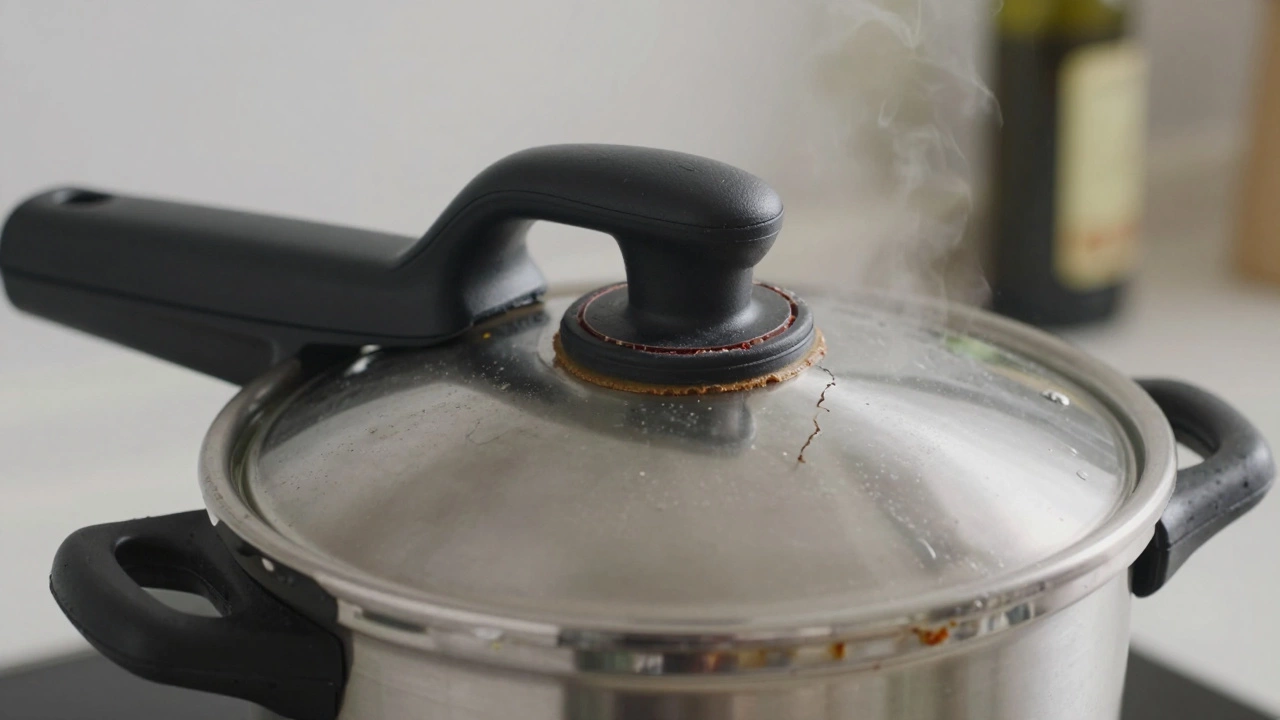
If your pressure cooker isn’t working right, you’re not alone. Thousands of households rely on these appliances for fast, energy-efficient meals - but when they start acting up, it’s frustrating, and sometimes even dangerous. The most common problem? Leaking steam. It’s not just messy - it means your cooker isn’t building pressure, which ruins cooking times and can turn a 20-minute stew into a 45-minute disaster.
Why Steam Keeps Escaping
Most pressure cookers seal using a rubber gasket, or sealing ring. Over time, this ring gets hard, cracked, or misshapen. You might not even notice it’s damaged until steam starts hissing out around the lid. I’ve seen dozens of these rings in repair shops - some are brittle from heat exposure, others are stretched from being forced into place after being cleaned in the dishwasher. Dishwashers are a big no-no for these gaskets. The high heat and harsh detergents break down the silicone faster than you think.The lid itself can also warp, especially on cheaper models. If the lid doesn’t sit flat against the pot, no amount of tightening will fix the leak. You can test this by laying the lid on a flat surface like a countertop. If it wobbles or doesn’t sit flush, it’s time for a replacement. Manufacturers don’t always make replacement lids easy to find, so knowing your model number is key.
Pressure Release Valve Issues
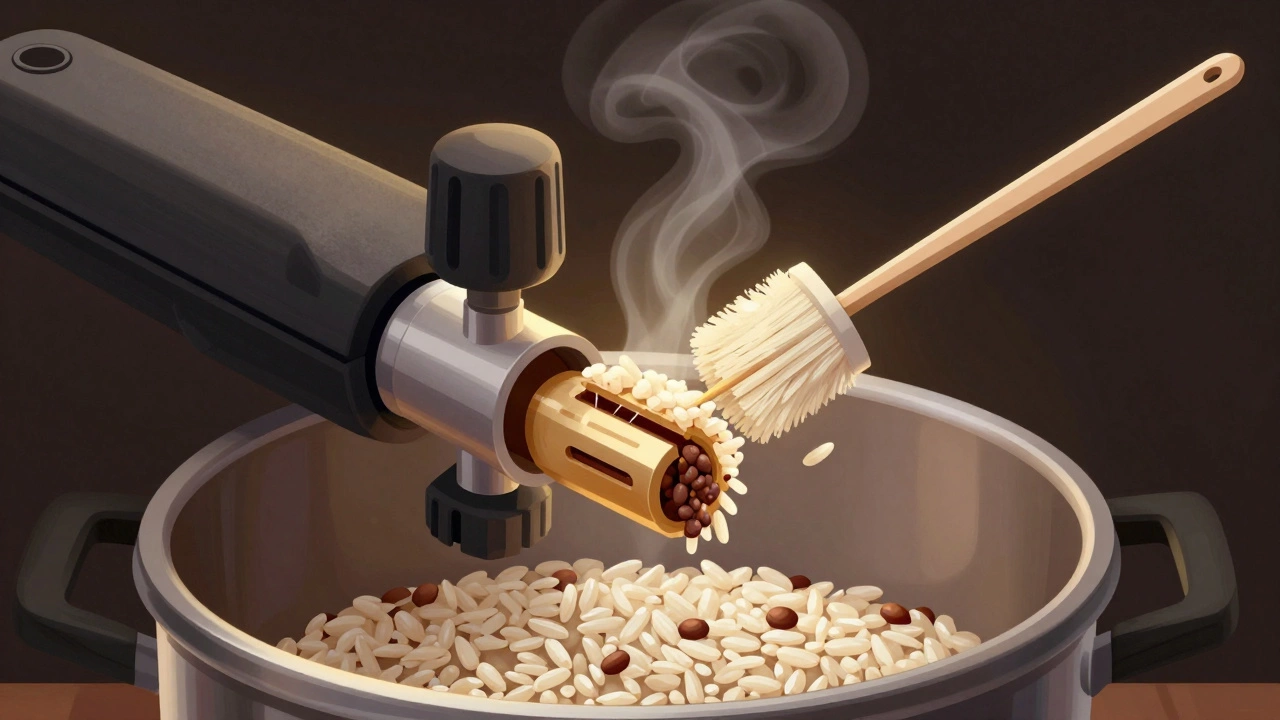
Another big culprit is the pressure release valve. This small part controls how steam escapes during cooking and when you’re done. If it’s clogged with food particles - which happens often with rice, lentils, or pasta - the cooker can’t regulate pressure properly. You might hear a constant hissing, or worse, the cooker won’t build pressure at all.Most pressure cookers have a removable valve you can pop out. Clean it with a toothpick or a small brush. Don’t use metal tools - they can scratch the inside. A drop of vegetable oil on the moving parts helps it slide smoothly again. If cleaning doesn’t fix it, the valve assembly is probably worn out. Replacement valves are cheap and usually come with instructions. Don’t ignore this part. A faulty valve can cause the cooker to overpressurize, which is a safety risk.
Locking Mechanism Failure
If the lid won’t lock or unlocks while cooking, you’ve got a mechanical issue. The locking arms or latch system can bend, break, or get clogged with food debris. On older models, the latch is spring-loaded. If the spring snaps, the lid won’t stay sealed. On newer ones, there’s a sensor that checks alignment before allowing pressure to build. If the sensor thinks the lid isn’t locked - even if it looks fine - the cooker won’t start.Try this: open the lid, wipe the locking mechanism with a damp cloth, then dry it completely. Look for any visible bends or cracks. If you can’t see the issue, try gently wiggling the lid while it’s in the locked position. If it moves at all, the mechanism is worn. Replacement parts are often available from the manufacturer or third-party suppliers like PressureCookerParts.com. Don’t force the lid. That’s how you break something.
Food Residue and Mineral Buildup
Hard water is a silent killer of pressure cookers. If you live in an area with high mineral content - like Auckland - limescale can build up inside the base, around the heating element, and even in the steam vent. This buildup insulates the bottom, so heat doesn’t transfer efficiently. Your cooker takes longer to reach pressure, or worse, it never gets there.Descaling is simple. Fill the pot with equal parts white vinegar and water. Let it sit for 30 minutes, then boil the solution for 10 minutes. Let it cool, then scrub gently with a non-scratch sponge. Rinse twice. Do this every 3-4 months if you use your cooker weekly. Skip this, and you’ll end up replacing the whole unit sooner than expected.
Electric vs. Stovetop: Different Problems
Electric pressure cookers - like Instant Pots - have more parts, so more things can go wrong. The heating element can fail, the control board can glitch, or the power cord can fray. If your electric cooker turns on but doesn’t heat, the issue is likely internal. Don’t try to open it yourself. These have high-voltage components. Take it to a repair shop.Stovetop models are simpler. They don’t have electronics. But they rely on your stove’s heat output. If your burner isn’t delivering consistent heat - say, an old gas ring with a weak flame - the cooker won’t reach pressure. Try switching to a different burner. If it works there, your original burner needs cleaning or adjustment.
When to Replace Instead of Repair
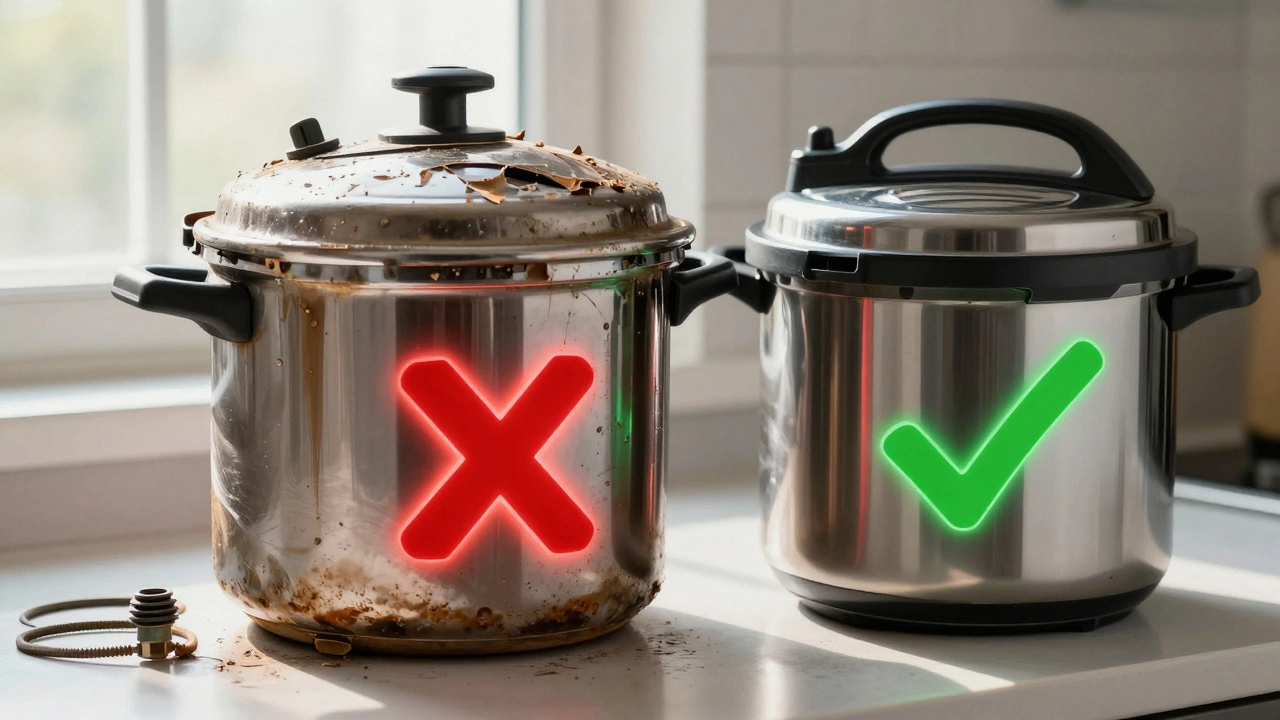
Not every problem is worth fixing. If your cooker is over 10 years old and you’re replacing multiple parts - the gasket, valve, latch, and base - it’s probably time for a new one. Modern pressure cookers are safer, more efficient, and come with better warranties. Brands like Instant Pot, Fagor, and Presto have models under $150 that last 5-7 years with regular care.Also, if you’ve ever smelled burning plastic or seen smoke, stop using it immediately. That’s not a repairable issue - it’s a fire hazard. Same goes for deep dents in the pot or cracks in the lid. No patch job makes those safe.
Prevention Is Easier Than Repair
The best way to avoid pressure cooker problems? Routine maintenance. Clean the gasket after every use. Don’t let food dry on it. Store the lid upside down so the gasket doesn’t get compressed. Never use metal utensils inside - they scratch the nonstick coating and can damage the sealing surface. And always follow the max fill line. Overfilling is the #1 cause of clogged valves and steam leaks.Keep your model number handy. Most manufacturers offer replacement parts for 5-8 years after a model is discontinued. If you can’t find parts online, call the customer service line. They often have stock in warehouses you won’t find on Amazon.
Quick Fixes You Can Do Today
- Check the gasket for cracks or stiffness - replace if it doesn’t bounce back when stretched.
- Remove and clean the pressure valve with a toothpick and warm water.
- Wipe the sealing surface of the pot and lid with a vinegar-soaked cloth.
- Make sure the lid is aligned correctly before locking - listen for the click.
- Never force the lid shut. If it doesn’t lock easily, something’s wrong.
Why does my pressure cooker leak steam even when the lid is locked?
The most likely cause is a worn, cracked, or misshapen sealing gasket. Even if the lid locks, steam will escape if the gasket doesn’t form a tight seal. Check the gasket for stiffness, cracks, or gaps. Replace it if it doesn’t spring back when stretched. Also, ensure the lid and pot’s sealing surfaces are clean - food residue or mineral buildup can prevent a proper seal.
Can I use my pressure cooker if the safety valve is clogged?
No. A clogged safety valve is a serious hazard. It’s designed to release pressure if the main valve fails. If it’s blocked, pressure can build beyond safe limits, risking explosion. Clean the valve immediately with a toothpick and warm water. If it’s damaged or doesn’t move freely after cleaning, replace the entire valve assembly before using the cooker again.
How often should I replace the sealing ring?
Replace the sealing ring every 12-18 months with regular use. If you use your cooker daily, replace it every 6-9 months. Signs it’s time: the ring smells like burnt rubber, feels stiff, or doesn’t return to its original shape after stretching. Dishwashers shorten its life - hand wash it with mild soap and dry it completely before storing.
Why won’t my electric pressure cooker turn on?
First, check the power cord and outlet. Plug something else in to confirm the outlet works. If the display is blank, the internal fuse or control board may have failed. Don’t open the unit - electric pressure cookers have live circuits even when unplugged. Contact the manufacturer or a certified appliance repair technician. If it’s under warranty, get it replaced.
Is it safe to use a pressure cooker with a bent lid?
No. A bent lid won’t seal properly, which means pressure can’t build and steam will leak. More importantly, the lid’s locking mechanism may not engage correctly, increasing the risk of accidental opening under pressure. This is a safety hazard. Replace the lid immediately. Don’t try to bend it back - metal fatigue makes it weaker each time.