Every year in New Zealand, thousands of tumble dryers get thrown out because they’re "broken." But before you toss yours into the skip, ask yourself: is it really worth repairing? The answer isn’t as simple as "yes" or "no." It depends on how old your dryer is, what’s broken, and how much you’re willing to spend. Let’s cut through the noise and show you exactly when a repair makes sense-and when it’s just throwing money down the drain.
How much does tumble dryer repair actually cost?
In Auckland, a basic service call from a qualified technician runs between $80 and $120. That’s just to come to your house. Then you pay for parts and labor. Most common repairs-like replacing a thermal fuse, drum roller, or belt-cost between $180 and $300 total. More serious issues, like a failed motor or damaged heating element, can push the price to $400 or more. For comparison, a brand-new mid-range tumble dryer starts at around $500. So if your repair bill is nearing half the price of a new machine, you’re already in risky territory.
Here’s what you’re likely paying for:
- Thermal fuse replacement: $120-$180 (common in overheating models)
- Drum belt replacement: $150-$220 (noisy spinning or not turning)
- Heating element: $250-$350 (dryer runs but doesn’t heat)
- Motor replacement: $350-$500 (machine won’t spin at all)
- Control board failure: $300-$450 (display errors, buttons not working)
These aren’t guesses. These are average prices from three major appliance repair services in Auckland-Allied Appliance, FixIt Fast, and NZ Home Services-based on their 2025 service logs. If your dryer is older than eight years, any repair over $250 is usually a bad investment.
Age matters more than you think
Most tumble dryers last between 8 and 12 years. That’s the sweet spot. After that, parts become harder to find, and wear-and-tear accelerates. If your dryer is 10 years old and the motor goes out, you’re not just paying for a motor-you’re paying for a system that’s already worn thin. The drum bearings? They’ll fail next. The vent hose? It’s probably cracked. The lint trap housing? Cracked from years of heat.
Think of it like a car. Would you spend $1,500 to fix a transmission on a 15-year-old sedan with 200,000 km on it? Probably not. The same logic applies here. A 10-year-old dryer has already given you 80-90% of its useful life. Replacing it isn’t a loss-it’s a smart upgrade.
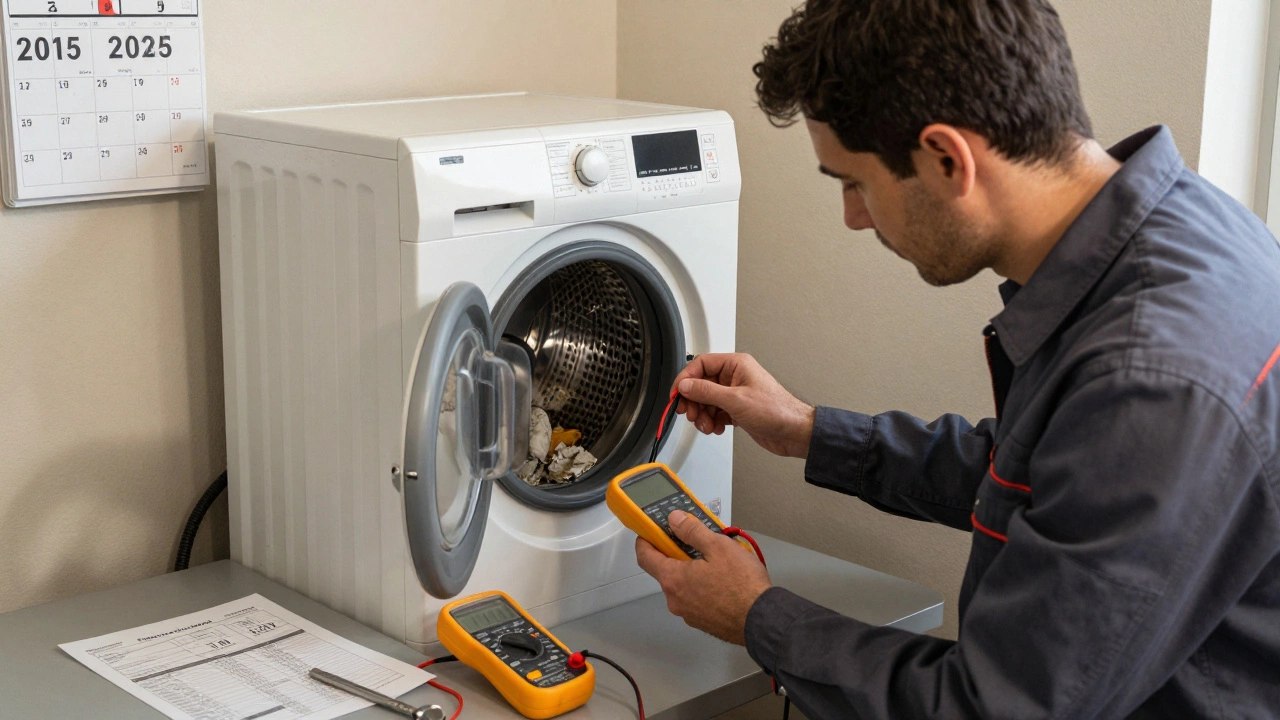
Check the serial label on the back or inside the door. It usually includes the manufacture date. If you can’t find it, look up the model number online. Most manufacturers list average lifespan on their support pages. If it’s from 2014 or earlier, you’re in replacement territory.
Energy efficiency isn’t just about bills-it’s about safety
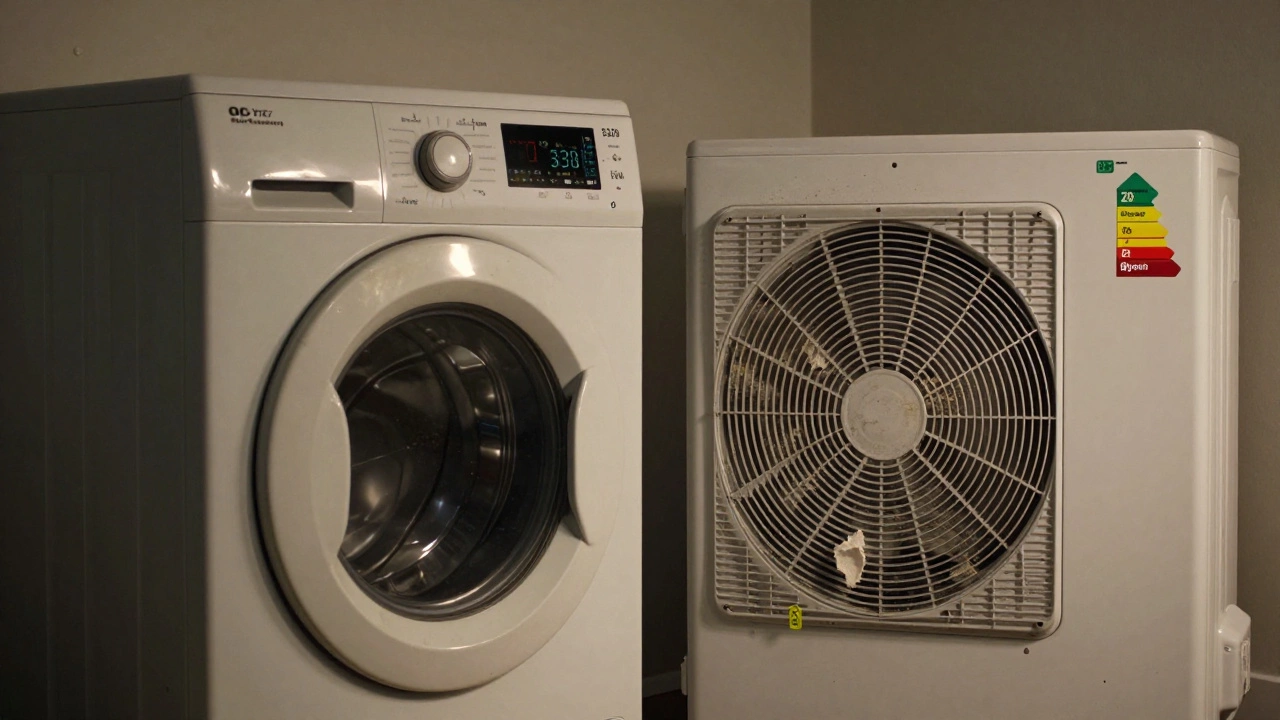
Older dryers aren’t just inefficient. They’re dangerous. A 2010 model might use 6.5 kWh per load. A new one? Around 3.5 kWh. That’s a 46% drop in energy use. In New Zealand, where electricity prices keep climbing, that adds up. Running an old dryer for 200 loads a year could cost you $180 extra annually compared to a modern model.
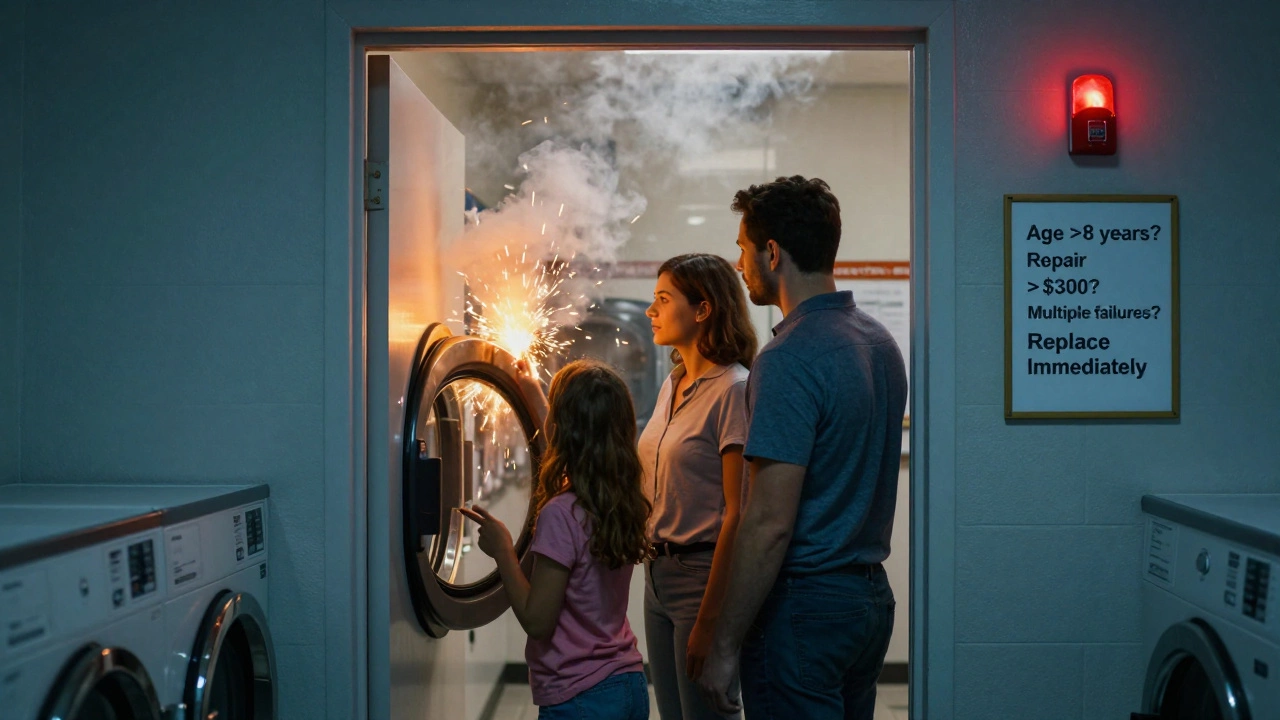
And it gets worse. Older dryers often lack modern safety features. No moisture sensors? That means they overheat. No auto-shutoff? That means lint builds up, and lint + heat = fire. Fire services in Auckland report 12-15 dryer-related fires each year. Most involve machines over 8 years old. A new dryer with sensor drying and auto-cool features cuts that risk by more than 70%.
Is your dryer under warranty? Probably not.
Most manufacturers offer a 1-year full warranty. Some extend it to 2 years on parts. But after that? You’re on your own. Extended warranties sold at the time of purchase? They rarely cover motor or control board failures after year three. And if you bought your dryer secondhand, forget about warranty entirely. You’re not getting a refund, a replacement, or even a discount on repairs.
Don’t be fooled by "lifetime service plans" from some repair shops. They’re often just monthly subscriptions that add up to more than a new machine over time. Stick to one-time repairs only if they make financial sense.
When repair makes sense
There are real cases where fixing your dryer is the smart move:
- Your dryer is under 5 years old.
- The issue is a simple part-like a belt, fuse, or thermostat.
- You’ve already invested in quality maintenance (cleaned the lint trap monthly, vent cleaned yearly).
- You’re attached to the model because it’s quiet, large-capacity, or has a feature you love.
For example, a 3-year-old Samsung dryer with a broken door switch is a no-brainer. The part costs $25. Labor? $80. Total? $105. That’s less than 10% of a new unit. Same with a 4-year-old LG that’s not heating-replace the element, and you’re back in business for under $300.
Also, if you’re renting and the landlord pays for repairs? Go ahead and fix it. The cost is theirs, not yours.
When to walk away
Here’s when to stop throwing money at it:
- Your dryer is 8+ years old.
- The repair quote is over $300.
- You’ve had multiple repairs in the last two years.
- The dryer makes loud grinding, squealing, or banging noises.
- It takes two cycles to dry a load.
- The control panel is flickering or showing error codes you can’t find online.
If you answered yes to any of those, your dryer is done. Keep using it? You’re risking fire, wasting electricity, and stressing yourself out every time it runs.
What to look for in a new dryer
Don’t just buy the cheapest one. Look for these features:
- Heat pump technology: Uses 50% less energy than vented models. Best for Auckland’s damp climate.
- Moisture sensors: Automatically stops when clothes are dry. No more over-drying.
- Quiet operation: Look for models under 65 decibels. Some go as low as 58.
- Large capacity (9kg+): Fits a king-size duvet in one load.
- Smart features: App control, cycle reminders, energy usage tracking.
Brands like Miele, Bosch, and LG have models that cost $800-$1,200 but last 15+ years. You’ll save money on energy and repairs over time. Even a $600 energy-efficient model pays for itself in 3-4 years through lower power bills.
Final checklist: Should you repair or replace?
Use this quick guide to decide:
- Age: Under 5 years? Repair. Over 8 years? Replace.
- Cost: If repair is more than 50% of a new dryer’s price, walk away.
- Frequency: Had two or more repairs in 12 months? It’s a sign of systemic failure.
- Performance: Takes longer to dry? Uses more electricity? That’s your hint.
- Safety: Smells like burning? Makes loud noises? Doesn’t shut off? Replace immediately.
If you’re still unsure, call a technician for a quote. But ask them: "If this was your dryer, would you fix it?" Their answer tells you more than any price tag.
Is it cheaper to repair a tumble dryer or buy a new one?
It depends. If your dryer is under five years old and the repair cost is under $300, fixing it is usually cheaper. But if it’s over eight years old, or the repair costs more than half the price of a new model, replacement is the better long-term choice. Newer dryers use 40-50% less energy and last longer.
How long should a tumble dryer last?
Most tumble dryers last between 8 and 12 years with proper care. Regular lint cleaning, vent maintenance, and avoiding overloading can push that to 15 years. But after 10 years, parts become harder to find, and failure rates jump sharply.
Can a faulty tumble dryer cause a fire?
Yes. Faulty dryers cause about 12-15 fires per year in New Zealand. Most are linked to lint buildup, overheating motors, or old heating elements. Dryers over 8 years old without moisture sensors are the biggest risk. Always clean the lint filter after every load and have the vent cleaned yearly.
What are the most common tumble dryer repairs?
The top three repairs are: 1) Thermal fuse replacement (due to overheating), 2) Drum belt replacement (causes drum not to turn), and 3) Heating element failure (dryer runs but doesn’t heat). These account for over 70% of all service calls. Control board failures are rarer but more expensive.
Should I buy a heat pump dryer?
If you live in a humid area like Auckland, yes. Heat pump dryers use half the energy of traditional vented models and don’t need an external vent. They’re more expensive upfront ($800-$1,200), but they pay for themselves in energy savings within 3-4 years. They’re also gentler on clothes and quieter.