Boiler Repair vs. Replace Decision Tool
System Details
Critical Condition Checks
Our Verdict:
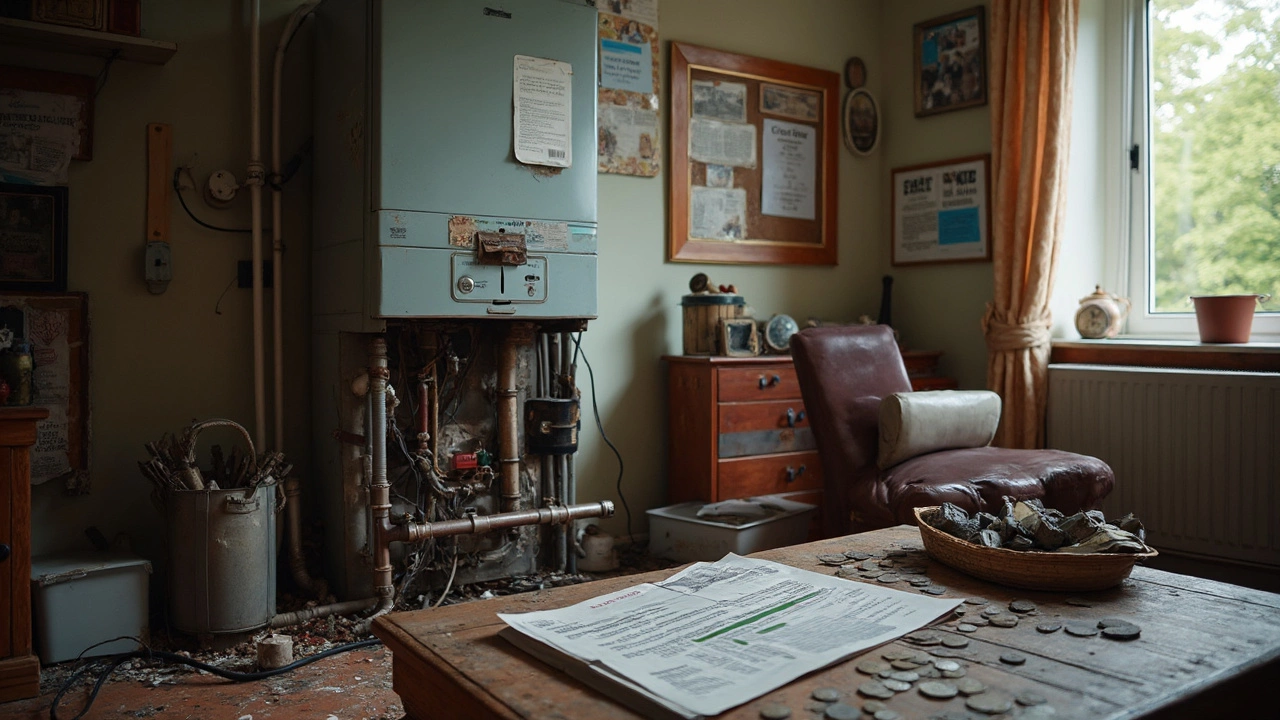
Your heating goes out on a freezing Tuesday morning, and suddenly you're staring at a leaking tank or a screen flashing an ominous error code. The first question isn't usually "how do I fix this?" but rather "should I even bother fixing this?" Spending $500 on a part for a machine that's about to die feels like throwing money into a fire. On the flip side, spending $4,000 on a brand-new system when a simple valve replacement would have worked is a huge waste of cash.
Quick Guide: The Repair or Replace Verdict
- Repair if: The unit is under 10 years old, the fix is a one-time mechanical failure, and the cost is less than 50% of a new unit.
- Replace if: The unit is 15+ years old, you've had 3+ repairs in two years, or the heat exchanger has cracked.
- Immediate Replacement: Any one-time failure that creates a carbon monoxide leak or severe structural corrosion.
The Age Factor: When is a Boiler Officially "Old"?
In the world of HVAC, age is the biggest red flag. Most Boilers is a heating system that boils water or creates steam to warm a building via radiators or underfloor heating are designed to last between 15 and 20 years. If your unit is hitting the 15-year mark, you've entered the "danger zone." While some heavy-duty cast iron models can last 30 years, most modern condensing units start to lose efficiency after a decade.
Why does age matter so much? It's not just about the machine breaking down; it's about the parts. As HVAC (Heating, Ventilation, and Air Conditioning) technology evolves, manufacturers stop making parts for older models. If you have a 20-year-old unit and the control board fries, you might find that the part is no longer manufactured. At that point, the decision is made for you: you have to upgrade.
The 50% Rule for Budgeting
If you're struggling with the math, use the "50% Rule." If a single boiler repair costs more than 50% of the price of a new, energy-efficient installation, stop and rethink. For example, if a new high-efficiency unit costs $5,000 and your repair quote is $3,000, you're paying a premium just to keep an old, inefficient machine on life support.
You also have to consider the "hidden" costs of repair. A patch-up job might fix the leak today, but it doesn't fix the fact that your old unit might be operating at 60% efficiency while a new Condensing Boiler provides 90% or more. You're essentially paying for the repair and then paying a monthly "inefficiency tax" on your gas bill.
| Criteria | Choose Repair | Choose Replacement |
|---|---|---|
| Unit Age | < 10 Years | 12-15+ Years |
| Repair History | First major issue | Recurring breakdowns |
| Energy Bills | Stable/Predictable | Increasing every year |
| Part Availability | Commonly stocked | Obsolete/Custom order |
Red Flags That Demand Immediate Replacement
Some issues aren't just "expensive," they're dangerous. If you notice a strong smell of sulfur or rotten eggs, you might have a Carbon Monoxide leak. This is a colorless, odorless gas that can be fatal. If a heat exchanger is cracked-the component where the fire heats the water-it can leak these fumes directly into your home. A cracked heat exchanger is almost always a "replace immediately" scenario because the structural integrity of the unit is gone.
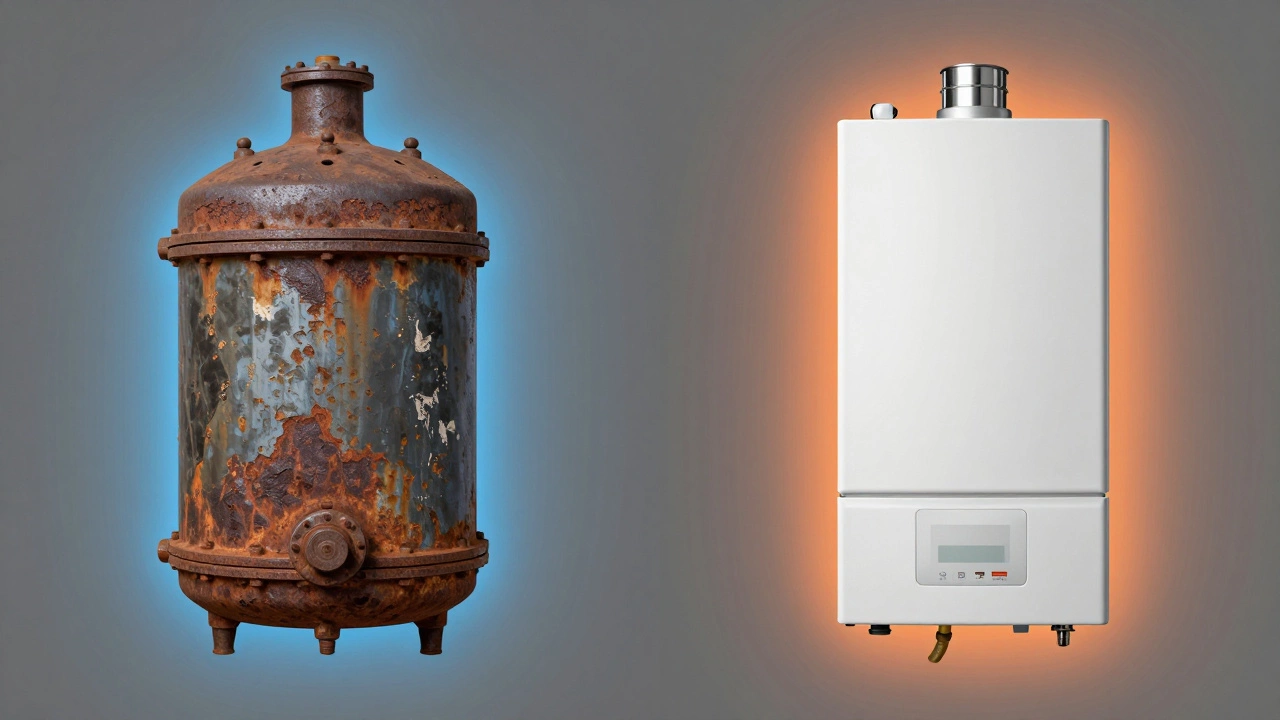
Another warning sign is heavy corrosion. If you see rust eating through the bottom of the tank or the piping, the metal is thinning. While you can patch a small leak, systemic corrosion means the entire chassis is failing. Trying to repair a rusted-out boiler is like putting a band-aid on a crumbling wall; eventually, the whole thing comes down.
The Efficiency Gap and Long-Term Savings
Let's talk about the money you don't see. Older non-condensing boilers lose a massive amount of heat through the flue. A Heat Pump or a modern condensing boiler captures that waste heat. If you're running an old unit from 2005, you could be wasting 30% of the fuel you pay for.
Consider a real-world scenario: A homeowner in a 2,000 sq ft house spends $150 a month on heating with an old boiler. By upgrading to a high-efficiency model, that bill often drops to $100. That's $600 a year in savings. Over five years, the new boiler has effectively paid for $3,000 of its own installation cost just through lower utility bills. When you add in the increased home value, the "expensive" replacement often becomes the cheaper financial move.
Evaluating the "Quick Fix" Temptation
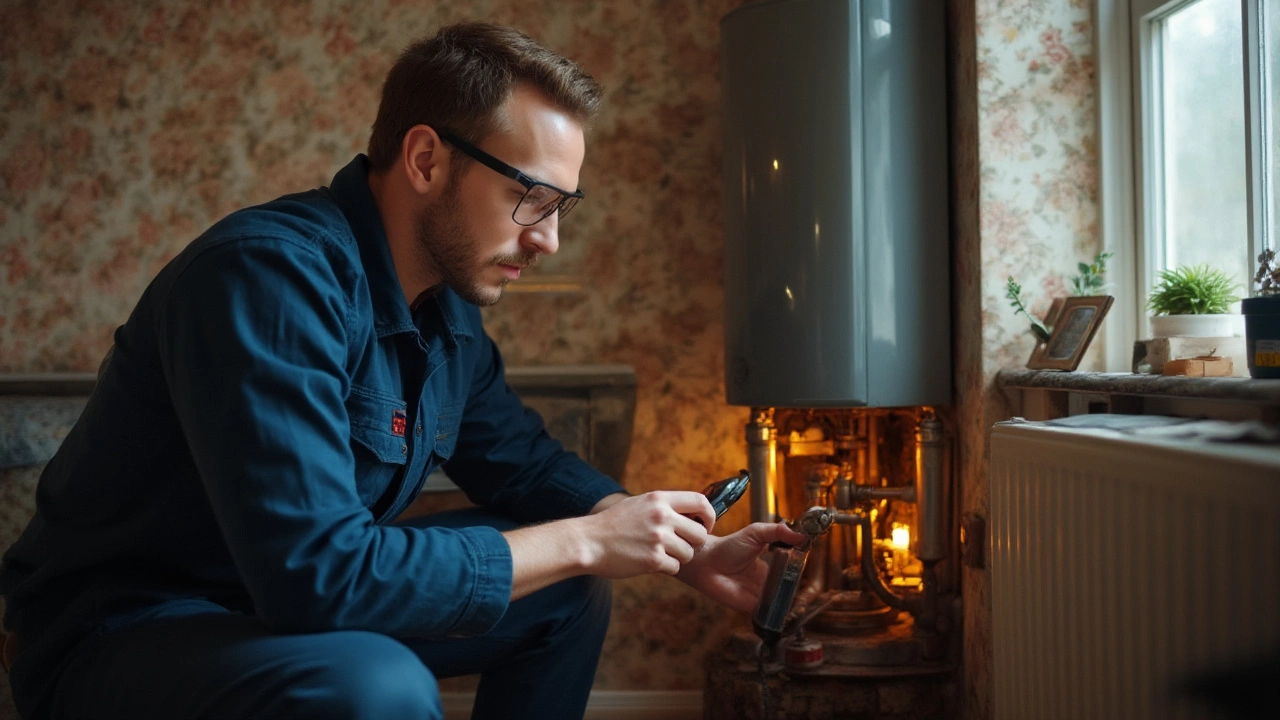
When a technician tells you they can "just swap the sensor" for $200, it's tempting. But ask yourself: why did the sensor fail? If it's just a bad part, go for it. If it failed because the system is overheating due to sludge buildup in the Radiators, you aren't fixing the problem; you're just treating the symptom. You'll be back in the same position in three months.
Check your repair history. If you've spent $400 on a pump last year, $300 on a valve six months ago, and now you need a $500 PCB (Printed Circuit Board) replacement, you're in a cycle of diminishing returns. The probability of the next part failing increases as the others age. It's better to take the financial hit now for a new unit with a 10-year warranty than to gamble with a fragile machine every winter.
How long do most boilers actually last?
On average, a well-maintained boiler lasts between 15 and 20 years. Cast iron boilers can sometimes stretch to 30 years, while high-efficiency condensing models often have a slightly shorter lifespan of 12-15 years due to the complexity of their internal components.
What is the most common sign that I need a new boiler?
The most telling sign is an increase in energy bills despite no change in usage, combined with inconsistent room temperatures. If you're noticing "cold spots" in your home or a loud rattling noise (known as kettling), the system is struggling to maintain efficiency.
Can I just replace the boiler and keep my old radiators?
Yes, you can usually keep your existing radiators, but it is highly recommended to perform a system flush. Old sludge and debris from the previous boiler can clog the new unit's heat exchanger, which could void your warranty or cause the new boiler to fail prematurely.
Is it worth repairing a boiler that is 12 years old?
It depends on the cost of the repair. If the fix is under $500 and the unit is generally healthy, it's worth it. However, if the repair exceeds $1,000, you are better off putting that money toward a new unit that offers better energy ratings and a fresh warranty.
What happens if I ignore a small leak in my boiler?
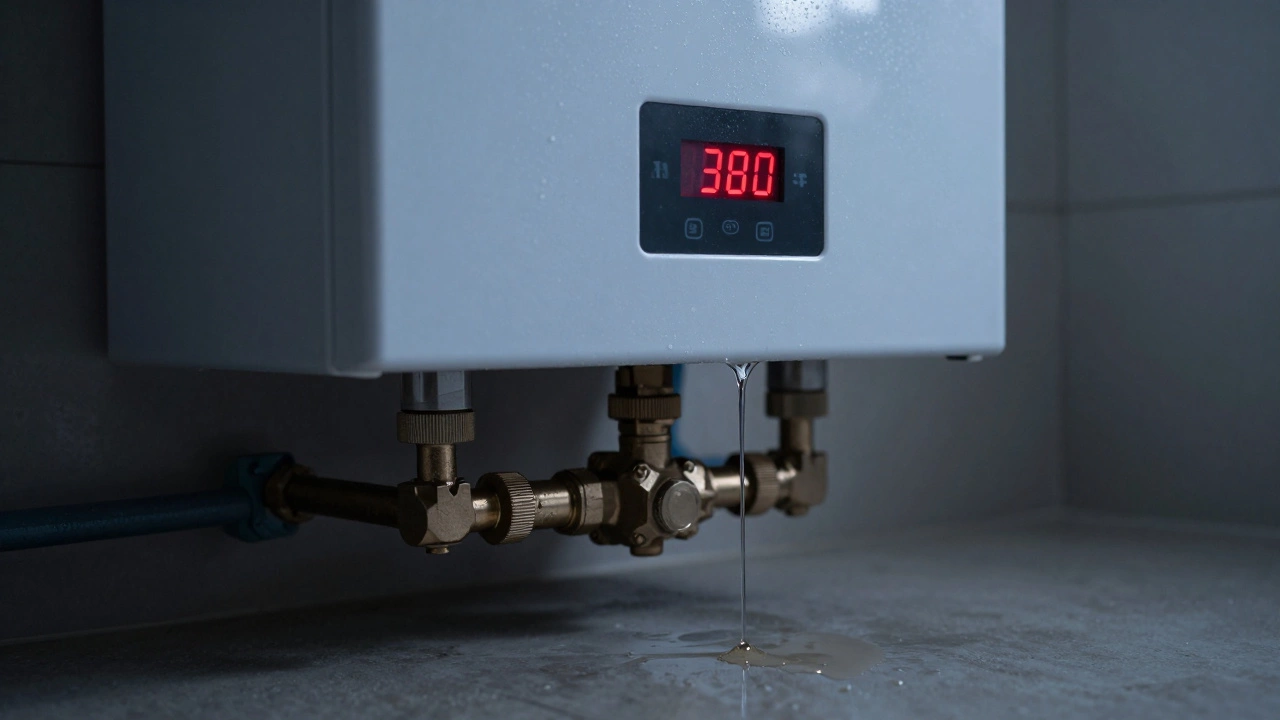
A small leak can lead to significant water damage to your flooring and joists. More importantly, leaks often cause internal components to rust or short-circuit, turning a simple gasket replacement into a full system failure.
Final Steps for Homeowners
If you've decided to replace, don't just buy the cheapest unit on the market. Look at the BTU (British Thermal Units) rating to ensure it's sized correctly for your home; an oversized boiler will "short cycle," meaning it turns on and off rapidly, which wears out the parts faster. Get at least three quotes from certified technicians and ask about the warranty period for both the parts and the labor.
If you're opting for repair, ensure the technician provides a written guarantee for the work. If the same part fails within six months, you should have a path to a refund or a free fix. Keep a log of every repair-dates, costs, and part names-so that when you eventually face this decision again, you have the hard data to make the right call.