Oven Repair Cost Estimator
Oven Repair Cost Calculator
Enter details to see estimated repair costs.
If your oven won’t heat up, the timer keeps blinking, or it smells like something burned inside - you don’t need a magician. You need someone who knows how ovens actually work. But what do you call that person? The answer isn’t as simple as you might think.
They’re Not Just ‘Handymen’
A lot of people say, ‘Call a handyman,’ but that’s like saying, ‘Call a doctor’ when you need a heart surgeon. A handyman might fix a leaky tap or hang a shelf. But an oven? That’s a different beast. Ovens have gas lines, electrical circuits, thermostats, heating elements, control boards, and sometimes even Wi-Fi modules. You need someone trained for this.
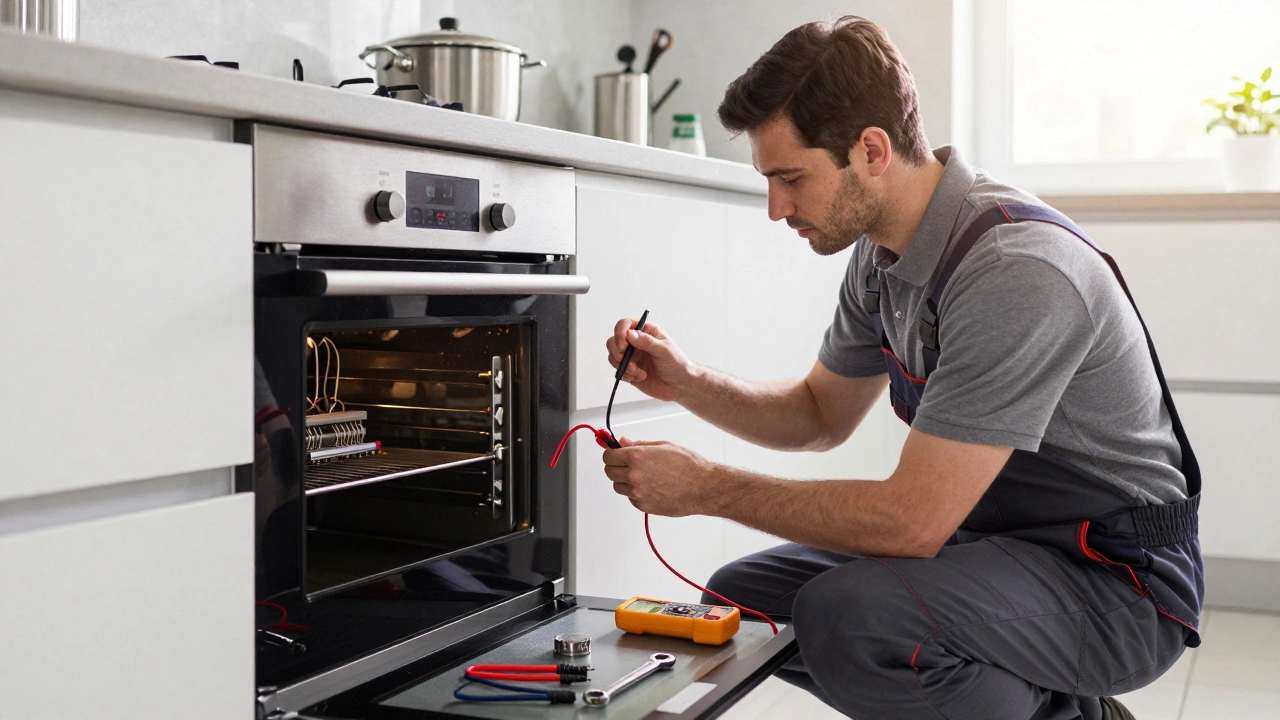
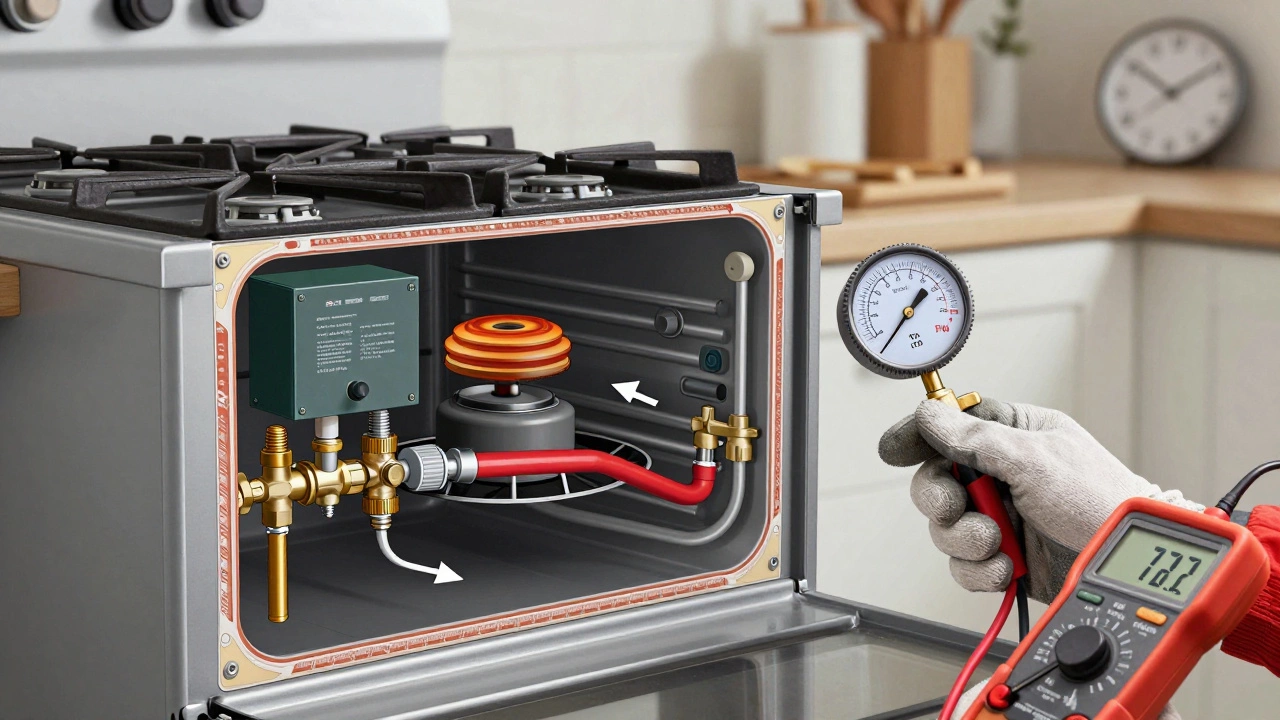
In New Zealand, the most accurate title is oven repair technician. It’s specific. It’s professional. And it’s what you’ll see on a certified technician’s van or invoice. These people don’t guess. They test voltage, check thermocouples, measure gas pressure, and trace circuit paths. They carry multimeters, gas leak detectors, and spare parts in their toolkits - not just screwdrivers and duct tape.
Other Names You Might Hear
You might also hear terms like ‘oven repairer’ or ‘appliance repair specialist.’ Both are correct, but they mean slightly different things.
‘Oven repairer’ is casual - the kind of term you’d use talking to a neighbor. It’s not wrong, but it doesn’t carry the weight of certification. ‘Appliance repair specialist’ is broader. That person might fix fridges, dishwashers, and washing machines too. But if they specialize in ovens, they’ll tell you. Look for someone who lists ‘ovens’ first on their service page.
Some companies call them ‘service technicians’ or ‘field technicians.’ That’s corporate speak. It sounds official, but it doesn’t tell you what they fix. Always ask: ‘Do you repair ovens specifically?’
What Makes a Good Oven Repair Technician?
Not everyone who says they fix ovens actually can. Here’s what separates the pros from the guessers:
- They’re licensed for gas work - if your oven runs on natural gas or LPG, only a licensed gasfitter can legally touch the gas line. In New Zealand, that means a Class 2 gasfitter certification.
- They carry liability insurance. If they break something - or worse, cause a fire - you’re covered.
- They use manufacturer-approved parts. Generic heating elements might fit, but they won’t last. OEM parts are built to the oven’s exact specs.
- They diagnose before they replace. A good tech won’t just swap out the heating element because it looks burnt. They’ll check the thermostat, the control board, the safety valve, and the wiring. Many oven problems are caused by faulty sensors, not broken elements.
I’ve seen technicians charge $150 just to ‘look at it’ - and then say, ‘Replace the whole control board.’ That’s $800. But a skilled tech will find the real issue: a loose connection on the temperature sensor. Fix that? $45. And it’s been happening for years.
How They Learn This Job
Most oven repair technicians don’t go to university. They start as apprentices. In New Zealand, many train under the Trade Training Scheme with companies like Fisher & Paykel or local repair firms. They spend two to four years learning electrical systems, gas safety, diagnostics, and customer service.
They also get certified through Electrical Workers Registration Board (EWRB) for electrical work and Gasfitters Registration Board for gas appliances. These aren’t optional. If a technician says they’re ‘self-taught’ and doesn’t show a current license, walk away.
What They Fix - Beyond the Basics
People think oven repair means ‘it’s not heating.’ But there’s more:
- Uneven cooking - often a faulty fan motor or broken heating element in a convection oven
- Display errors like ‘F1,’ ‘E3,’ or ‘PF’ - those are fault codes from the control board
- Self-cleaning mode won’t start - usually a door lock sensor failure
- Gas oven lights but won’t stay lit - that’s the thermocouple or gas valve
- Smell of gas when the oven is off - serious. Shut off the gas and call a licensed gasfitter immediately
Modern ovens - especially those from brands like Miele, Bosch, or Siemens - have complex electronics. A technician needs firmware knowledge too. Some can reset control boards remotely or update software. That’s not something a general handyman can do.
When to Call One - And When Not To
You should call a technician if:
- The oven doesn’t heat at all
- You smell gas
- There are error codes on the display
- It’s over 10 years old and acting up
You can try fixing it yourself if:
- The light bulb’s out - that’s easy
- The oven door won’t close properly - check the hinges
- The timer’s wrong - reset it
But if you’re poking around inside the oven, unplugging wires, or trying to ‘jiggle’ something back into place - stop. You risk electrocution, gas leaks, or making the problem worse. And you’ll void the warranty.
What to Expect When They Show Up
A good technician will:
- Ask you what happened before the oven stopped working
- Check the power supply - is the circuit breaker tripped?
- Test the oven’s voltage with a multimeter
- Inspect the heating element for cracks or discoloration
- Check the thermostat and temperature sensor
- Look for gas leaks if it’s a gas oven
- Give you a clear diagnosis - not just a quote
- Explain the fix in plain language
- Leave your kitchen cleaner than they found it
They should also give you a written quote before starting work. No surprises. No ‘oh, we found another issue.’ If they do, get a second opinion.
How Much Does It Cost?
In Auckland, a standard oven repair costs between $120 and $250, including call-out fee and labor. Parts vary:
- Heating element: $60-$120
- Thermostat: $80-$150
- Temperature sensor: $40-$90
- Control board: $200-$400
- Gas valve: $180-$300
Some companies charge $80 just to show up. Others include it in the total. Always ask: ‘Is the call-out fee included in the quote?’
Don’t fall for the ‘$99 oven repair’ ads. That’s usually a trap. They’ll say the problem is ‘more complicated’ and jack up the price. Stick with local, licensed technicians with reviews.
How to Find a Reliable One
Look for these signs:
- They have a physical address - not just a PO box
- They’re listed on the Gasfitters Register or EWRB website
- They’ve been in business for over 5 years
- They have real customer reviews (not just 5-star Google reviews with no detail)
- They offer a 30- to 90-day warranty on parts and labor
Ask for references. Call past customers. Ask: ‘Did they fix it right the first time?’
And avoid anyone who shows up in a van with no logo, no license plate, or no ID. That’s not a technician. That’s a risk.
Why This Matters
An oven isn’t just an appliance. It’s your kitchen’s heart. It’s where you cook meals for your family. A broken oven can mean skipped dinners, takeout bills, or even food safety issues if it’s not heating properly.
Calling the right person saves you time, money, and stress. And it keeps your home safe. A gas leak or electrical fault from a bad repair can be deadly.
So next time your oven fails - don’t just say, ‘Call someone.’ Say: ‘Call an oven repair technician.’ And make sure they’re licensed, insured, and experienced. Your kitchen - and your family - will thank you.