Appliance Energy Savings Calculator
Calculate how much money you'll save annually by upgrading to a more energy-efficient appliance that meets current New Zealand standards.
New Zealand's appliance standards ensure your appliances use up to 40% less electricity than older models.
Input Your Details
Annual Energy Savings
Annual Cost Savings
Payback Period
Ever bought a new fridge, washer, or oven and wondered why it looks a certain way, makes a specific noise, or uses so little electricity? That’s not luck. It’s because of something called appliance standard. It’s the set of rules that every appliance sold in New Zealand - and most countries - has to meet before it hits the shelf. These aren’t just suggestions. They’re legal requirements. And they affect your wallet, your home, and even the environment.
What Exactly Is an Appliance Standard?
An appliance standard is a government-backed rule that defines how efficient, safe, and reliable an appliance must be to be sold or used. Think of it like a report card. Every time you buy a new washing machine, microwave, or air conditioner, it’s been tested and graded against these standards. If it fails, it doesn’t get sold here.
In New Zealand, appliance standards are set by the Ministry of Business, Innovation and Employment (MBIE). They cover things like energy use, water consumption, noise levels, and even how easy it is to repair. The goal? Reduce waste, lower electricity bills, and cut greenhouse gas emissions. Since 2020, these standards have been updated every few years to keep up with technology.
Why Should You Care?
You might think, "It’s just a label on the box." But that label tells you everything. An appliance that meets the latest standard uses up to 40% less electricity than one from ten years ago. For a fridge running 24/7, that’s $80-$120 saved per year. For a household with multiple appliances, that adds up fast.
And it’s not just about money. Older appliances are the hidden energy hogs in most homes. A fridge from 2005 might use 1,200 kWh a year. A new one meeting today’s standard uses under 500 kWh. That’s like turning off a 100-watt bulb for 700 hours straight - every single year.
There’s also safety. Standards require things like child locks on ovens, automatic shut-offs on dryers, and insulation that won’t overheat. In 2023, New Zealand saw a 22% drop in appliance-related fires compared to 2019 - mostly because of updated standards.
How Are Standards Set?
It’s not random. Every standard goes through a public review. Manufacturers submit data. Independent labs test products. Consumer groups give feedback. Then MBIE sets minimum performance levels based on real-world usage, not just lab conditions.
For example, the current standard for refrigerators (effective January 2025) says:
- Must use no more than 0.4 kWh per day per litre of total volume
- Must have a temperature stability of ±1°C in the fridge and ±2°C in the freezer
- Must not exceed 42 decibels in normal operation
That’s stricter than the 2020 version. And it’s why your new fridge is quieter, colder, and uses less power - even if it looks the same size.
What Do the Labels Mean?
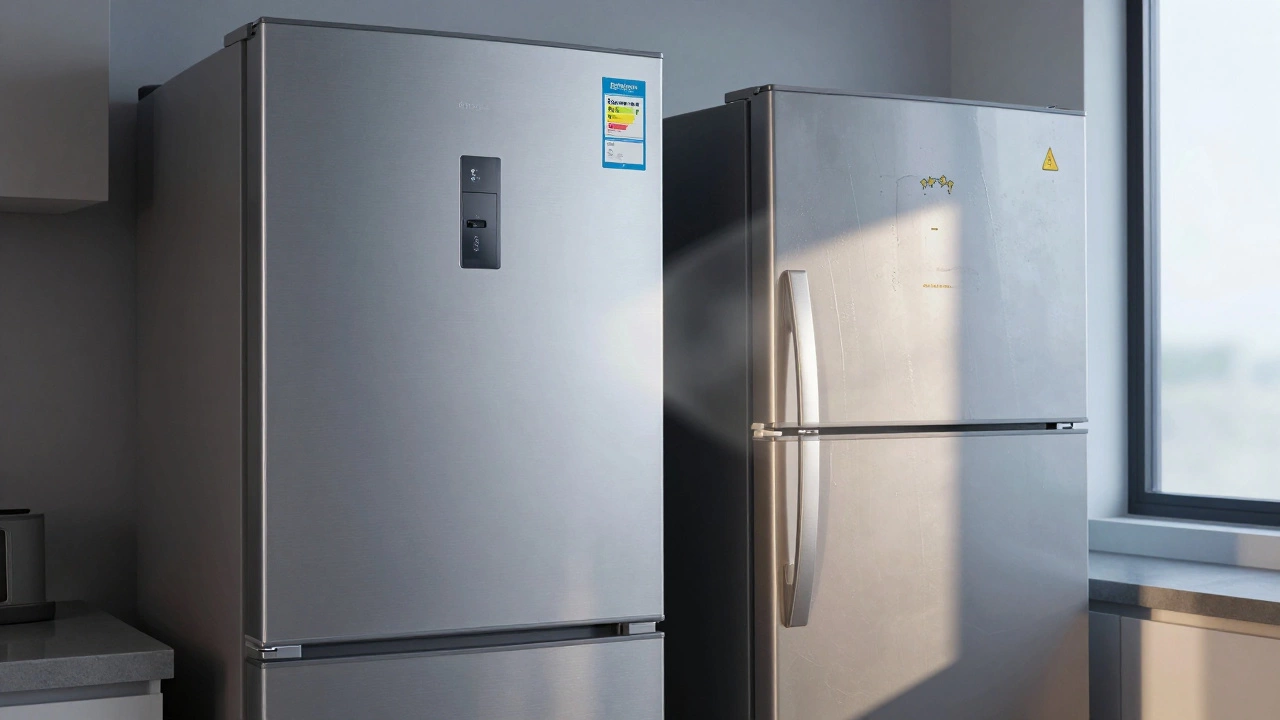
You’ve probably seen the Energy Rating Label - the one with stars. That’s part of the appliance standard system. It’s not marketing. It’s a government-mandated rating based on actual energy tests.
Here’s what you’re looking at:
- Star rating: From 1 to 6 stars (sometimes more for top-tier models). More stars = less energy used
- Annual energy use: Shown in kWh/year. Compare this number across models
- Water use: For washing machines and dishwashers - in litres per cycle
- Sound level: In decibels. Below 50 dB is quiet. Below 40 dB is whisper-quiet
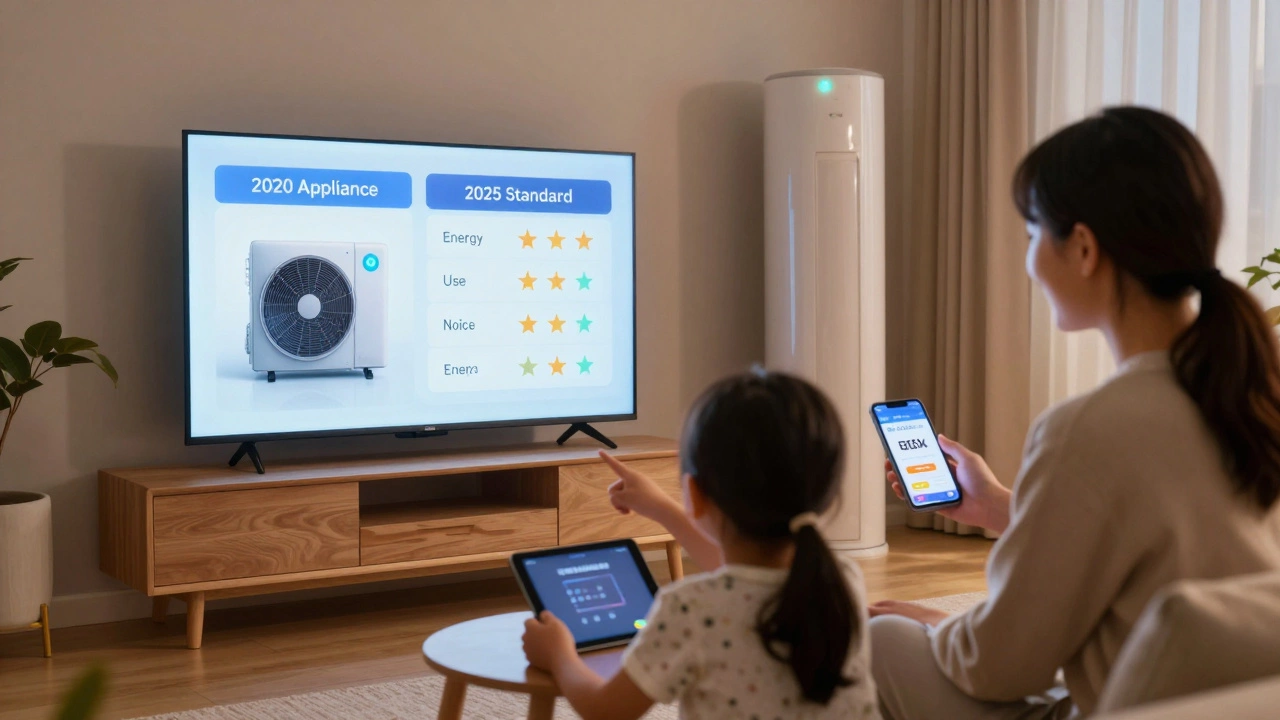
Here’s a quick comparison between a 2020 fridge and a 2025 model meeting today’s standard:
| Feature | 2020 Standard | 2025 Standard |
|---|---|---|
| Energy Use (per litre) | 0.6 kWh/day | 0.4 kWh/day |
| Noise Level (dB) | 45 dB | 42 dB |
| Temperature Stability | ±1.5°C | ±1°C |
| Minimum Star Rating | 3 stars | 4 stars |
That drop from 0.6 to 0.4 kWh/day might not sound like much - but multiply it by 200,000 refrigerators sold in NZ each year, and you’re saving over 200 GWh annually. That’s enough to power 30,000 homes.
What Appliances Are Covered?
Not everything. But the big ones? Yes. Here’s what’s regulated under NZ appliance standards as of 2026:
- Refrigerators and freezers
- Washing machines and dryers
- Dishwashers
- Ovens and cooktops (gas and electric)
- Air conditioners (split and ducted)
- Water heaters (electric and heat pump)
- Televisions and monitors (energy efficiency only)
- External power supplies (like phone chargers)
Smaller items - like toasters, blenders, or coffee machines - aren’t covered. Why? Because their total energy use is too low to make a big impact. But if you’re replacing a fridge or a heater, you’re dealing with standards.
What Happens If an Appliance Doesn’t Meet the Standard?
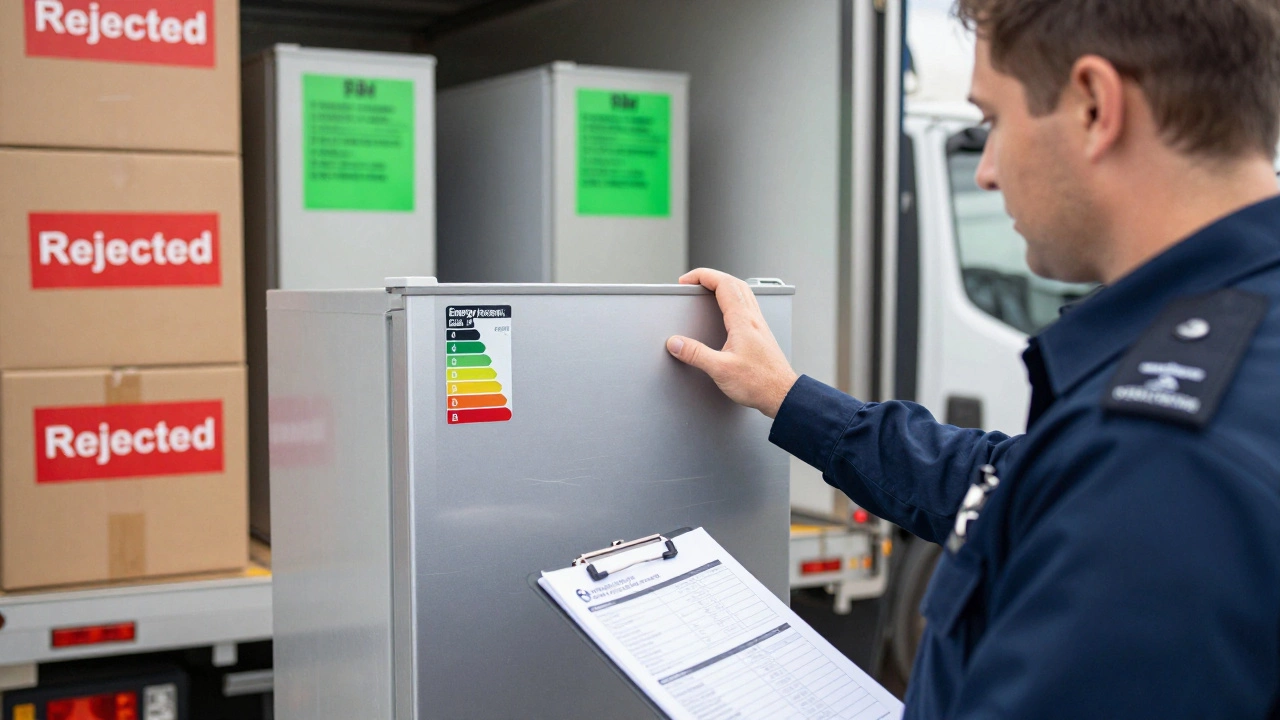
It can’t be sold in New Zealand. Period. Importers and retailers are legally responsible. If a store tries to sell a non-compliant microwave, they can be fined up to $200,000. The Ministry of Business, Innovation and Employment does random spot checks at ports and warehouses.
That’s why you won’t find old, inefficient models on sale here anymore. Even if they’re cheap. Even if they’re "from overseas." If it doesn’t meet the NZ standard, it’s blocked.
What About Repairs?
This is where it gets personal. If your appliance is older than 10 years, it likely doesn’t meet today’s standard. But that doesn’t mean you need to replace it right away.
Here’s the smart move: If your fridge, washer, or heater is still working - and repairs are affordable - get it fixed. But if you’re paying more than $400 a year in electricity for an old model, it’s probably time to upgrade. Newer models pay for themselves in 3-5 years through energy savings.
And here’s a tip: When you get it repaired, ask if the technician uses parts that meet current standards. Some cheaper replacement motors or thermostats don’t. That can knock your appliance back to pre-2020 efficiency levels.
How to Spot a Compliant Appliance
You don’t need to be an engineer. Just look for these three things:
- The Energy Rating Label - it must be clearly visible on the front or side
- The 4-star minimum - anything below 4 stars for fridges, washers, or heaters is outdated
- The manufacturer’s name and model number - you can verify it on the MBIE website
Don’t trust "energy efficient" claims without the label. That’s marketing. The label is law.
What’s Coming Next?
By 2027, New Zealand will expand appliance standards to include:
- Smart appliances - they’ll need to meet cybersecurity and data privacy rules
- Heat pumps - stricter efficiency thresholds for heating mode
- Standby power limits - devices must use less than 0.5 watts when idle
And by 2030, the goal is to phase out all appliances that use more than 1.0 kWh per day per cubic metre of volume. That means even the most efficient fridges today will need upgrades.
It’s not about forcing you to buy new stuff. It’s about making sure when you do buy, you’re getting the best possible performance - with the lowest cost and least environmental impact.
Final Thought: Standards Are Your Friend
Appliance standards aren’t bureaucracy. They’re protection. They stop companies from selling junk. They help you save money. They reduce your carbon footprint. And they make your home safer.
Next time you’re shopping for a new appliance, don’t just look at the price tag. Look at the star rating. Check the energy use. Ask if it meets the 2025 standard. It’s the easiest way to make sure your next purchase lasts longer, costs less, and does less harm.
What happens if I buy an appliance without a star rating?
If it doesn’t have the official Energy Rating Label, it’s not legally allowed to be sold in New Zealand. That means it was either imported illegally, is a second-hand unit from overseas, or is counterfeit. Avoid it. There’s no guarantee it’s safe or efficient.
Do appliance standards apply to second-hand appliances?
No. Standards only apply to new appliances sold for the first time in New Zealand. But if you’re buying a used fridge or washer, it’s still smart to check its energy use. Older models can cost twice as much to run. If it’s over 10 years old, upgrading could save you hundreds a year.
Can I get a rebate for buying a high-star appliance?
Some local councils and energy companies offer rebates for energy-efficient appliances - especially heat pumps and water heaters. Check with your electricity provider or visit the Energy Efficiency and Conservation Authority (EECA) website. Rebates can be up to $500 for qualifying models.
Why do some appliances look the same but have different star ratings?
Size and features matter. Two 500L fridges can have different ratings if one has a better compressor, better insulation, or a smarter defrost system. Always compare the annual energy use (kWh/year), not just the star count. A 4-star model with 400 kWh/year is better than a 5-star with 480 kWh/year.
Are appliance standards the same in Australia?
Very similar, but not identical. Australia and New Zealand share the same Energy Rating Label system, but their minimum standards can differ slightly. An appliance sold in Australia might not meet NZ’s 2025 requirements. Always check the label for NZ compliance - don’t assume.