Ventilation vs. Extractor Fan Checker
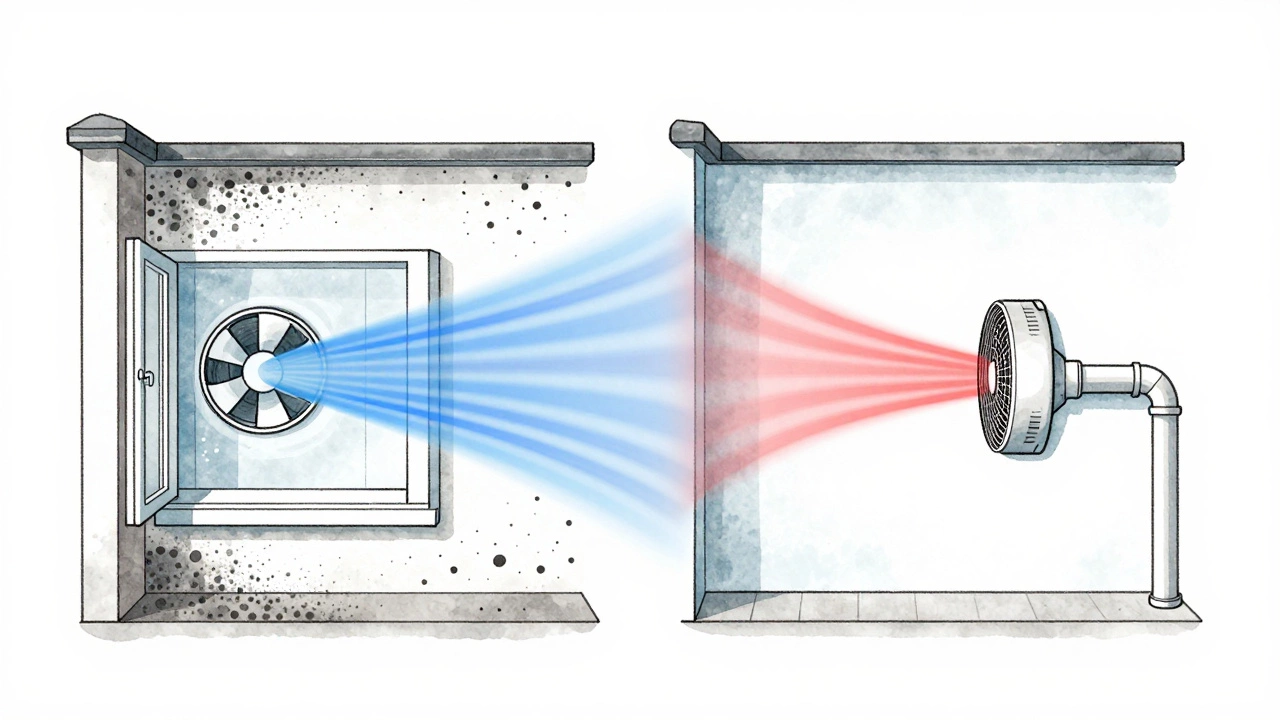
The key difference between a ventilation fan and an extractor fan is whether it has a visible duct connected to it. Extractor fans pull air out through a duct to the outside. Ventilation fans circulate air without ducts.
If you’ve ever stood in your kitchen after cooking and wondered why the smell still lingers, or if your bathroom mirror stays fogged even after a hot shower, you’ve probably thought about fans. But not all fans are the same. People often use the terms ventilation fan and extractor fan like they’re interchangeable. They’re not. And mixing them up can lead to poor air quality, mold growth, or even costly repairs down the line.
What a ventilation fan actually does
A ventilation fan is designed to move air around inside a space. It doesn’t pull air out - it circulates it. Think of it like a ceiling fan in your living room. It stirs the air, helps distribute heat or coolness, and makes the room feel less stuffy. In bathrooms or kitchens, a ventilation fan might pull in fresh air from a window or another room and blow it across the space to reduce humidity or odors.In New Zealand homes, especially older ones with limited external ventilation, you’ll often find ventilation fans installed in bathrooms. They’re usually low-power, quiet, and meant to keep the air moving without removing moisture from the room. They’re great for comfort, but they won’t stop condensation from building up on tiles or windows.
What an extractor fan actually does
An extractor fan, on the other hand, is built to remove air - and everything in it - from a room. It pulls contaminated, humid, or smelly air out through a duct that leads directly to the outside. This is why you’ll see extractor fans above stoves, in kitchens, and in bathrooms with no windows.In Auckland, where humidity is high and homes are often tightly sealed for energy efficiency, extractor fans are critical. A kitchen extractor fan pulls grease, smoke, and steam from cooking straight out of the house. A bathroom extractor fan removes moist air before it turns into mold on the walls or ceiling. Without it, you’re just recycling damp air, not getting rid of it.
Key differences you can see and feel
Here’s how to tell them apart in your home:- Location: Ventilation fans are often on ceilings or walls without visible ducts. Extractor fans are almost always connected to a pipe or duct going through the roof, wall, or eaves.
- Noise: Ventilation fans are quiet - they’re meant for background air movement. Extractor fans are louder because they’re working harder to push air through a duct.
- Moisture control: After a shower, if your mirror still fogs up, you likely have a ventilation fan. If your mirror clears within seconds, you’ve got an extractor fan.
- Condensation: If you notice water droplets on windows or peeling paint near the bathroom ceiling, your fan isn’t extracting - it’s just circulating.
Some brands market fans as “ventilation and extraction” models. These are usually extractor fans with a recirculation mode - meaning they can switch between pulling air outside or filtering and blowing it back in. Always check the specs. If it says “ductless” or “recirculating,” it’s not a true extractor fan.
Why mixing them up causes problems
A lot of homeowners install a ventilation fan in their kitchen, thinking it’ll get rid of cooking smells. It won’t. It’ll just blow grease and smoke around the room until it settles on your cabinets and walls. Over time, that grease builds up, becomes a fire hazard, and attracts pests.Same with bathrooms. A ventilation fan in a windowless bathroom might make the air feel less stagnant, but it won’t stop mold. In fact, it can make it worse - by spreading moisture across surfaces instead of removing it. After two or three wet winters in Auckland, you’ll start seeing black spots on grout, peeling wallpaper, or a musty smell that won’t go away.
Extractor fans are required by New Zealand building code for any bathroom without a window and for all kitchens with gas cooktops. Ventilation fans are not. That’s not a suggestion - it’s a legal requirement for new builds and major renovations.

How to tell which one you have
Here’s a simple test you can do right now:- Turn on the fan in your kitchen or bathroom.
- Hold a piece of tissue paper or a light plastic bag near the grille.
- Watch what happens.
If the paper is pulled tightly against the grille and stays there, you’ve got an extractor fan - it’s creating suction and pulling air out.
If the paper just flutters or moves gently, it’s a ventilation fan - it’s pushing air around, not pulling it out.
You can also look behind the grille. If you see a small motor with no duct connected, it’s likely a ventilation fan. If you see a round pipe or flexible duct leading into the ceiling or wall, it’s an extractor fan.
What to do if yours isn’t working right
If you think you’ve got an extractor fan but it’s not removing smells or moisture, it’s probably clogged. Grease, dust, and spider webs build up in the duct over time - especially in kitchens. A clogged duct means the fan motor has to work harder, burns out faster, and stops pulling air effectively.For kitchen extractors, clean the grease filter every month. For bathroom extractors, check the duct every six months. If the duct is longer than 3 meters or has more than two bends, it’s harder for the fan to work properly. That’s why professional installers in Auckland always try to keep extractor ducts short and straight.
If your fan is old, noisy, or doesn’t turn on at all, it might need replacing. Most extractor fans last 8-12 years. If yours is older than that, even if it still runs, it’s probably not moving enough air to be effective.
Choosing the right fan for your home
When replacing a fan, don’t just match the size - match the function.- Kitchen: Always use an extractor fan with a minimum airflow of 100 liters per second. Look for models with grease filters and a timer so it keeps running after you turn off the stove.
- Bathroom: Use an extractor fan with at least 15 liters per second. If you have a shower or bath, go for 20+ liters per second. A humidity sensor that turns the fan on automatically is a smart upgrade.
- Laundry or utility room: Extractor fans are essential here too - damp clothes and washing machines create a lot of moisture.
Never install a ventilation fan where moisture or grease is generated. That’s not just inefficient - it’s a health risk.
Common myths about fans
- Myth: “More CFM is always better.”
Reality: A fan that’s too powerful for a small room can create negative pressure, pulling in air from unwanted places - like your gas heater or fireplace. That’s dangerous. - Myth: “I can just use a window instead.”
Reality: In Auckland’s damp climate, opening a window in winter just lets cold air in and traps moisture inside. Extractor fans work better and use less energy than heating a cold room. - Myth: “Ductless fans are just as good.”
Reality: Ductless kitchen fans use charcoal filters to trap grease and odors. They’re okay for small apartments with no duct access, but they need frequent filter changes and still leave humidity behind.
When to call a professional
If you’re unsure what kind of fan you have, or if you’re replacing one, get a licensed electrician or appliance technician involved. Wiring an extractor fan wrong can be dangerous - especially if it’s connected to a gas appliance. They’ll also check the duct for blockages, proper slope, and ventilation to the outside.And if you’ve got mold growing near your fan, don’t just clean it. The fan might be the symptom, not the cause. A professional can check for leaks, insulation gaps, or poor ventilation design that’s letting moisture build up behind walls.
Final takeaway
A ventilation fan moves air. An extractor fan removes it. One makes your room feel better. The other protects your home. If you’re cooking, showering, or drying clothes, you need extraction - not just circulation. Don’t settle for a fan that just blows air around. Get one that gets rid of the problem at the source.Can I use a ventilation fan instead of an extractor fan in my kitchen?
No. A ventilation fan only circulates air - it doesn’t remove grease, smoke, or steam. In a kitchen, this leads to grease buildup on surfaces, poor air quality, and a higher fire risk. Building codes in New Zealand require extractor fans with ducting to the outside for all kitchens with gas or electric cooktops.
Why does my bathroom fan make a loud humming noise?
A loud humming usually means the motor is struggling. This often happens when the duct is clogged with dust, lint, or spider webs, or if the fan is old and the bearings are worn. Clean the filter and duct first. If the noise continues, the motor may need replacing. Older fans over 10 years old are rarely worth repairing.
Do I need an extractor fan if my bathroom has a window?
Not legally required, but highly recommended. Even with a window, opening it in winter isn’t practical or energy-efficient. A quiet extractor fan with a humidity sensor will turn on automatically when moisture levels rise, removing steam before it causes mold. Many modern homes in Auckland install them even in windowed bathrooms.
How often should I clean my extractor fan duct?
For kitchen extractors, clean the grease filter monthly and check the duct every 6 months. For bathroom extractors, inspect the duct twice a year - especially if you notice lingering odors or longer drying times after showers. If your duct is longer than 3 meters or has sharp bends, clean it annually. Buildup reduces airflow by up to 50% over time.
What’s the difference between a ducted and ductless extractor fan?
A ducted extractor fan pulls air out through a pipe to the outside. A ductless fan filters air with a charcoal filter and blows it back into the room. Ducted fans remove moisture and odors completely. Ductless fans only trap some smells and leave humidity behind - making them unsuitable for bathrooms or high-moisture kitchens. They’re only a temporary fix for apartments without duct access.