Oven Repair vs. Replace Calculator
Enter Your Oven Details
Enter your details on the left to get a personalized recommendation.
There is nothing quite as frustrating as pulling a tray of perfectly baked goods out of the oven only to find one side burnt and the other raw. Or worse, waiting two hours for a roast that never actually cooked because the thermostat was lying to you. We’ve all been there. You might be staring at your aging kitchen appliance wondering if a quick fix will do the trick or if it is time to bite the bullet and buy a new one.
Deciding whether to repair or replace your electric oven is a major kitchen appliance responsible for baking, roasting, and broiling food using electrical heating elements isn't just about convenience; it is often a matter of safety and energy efficiency. An oven from the early 2000s operates very differently than modern units, consuming more power and lacking critical safety features. So, how do you know when your oven needs to be replaced? Let's look at the concrete signs that tell you it is time to say goodbye.
The 50% Rule: Is Repair Worth the Cost?
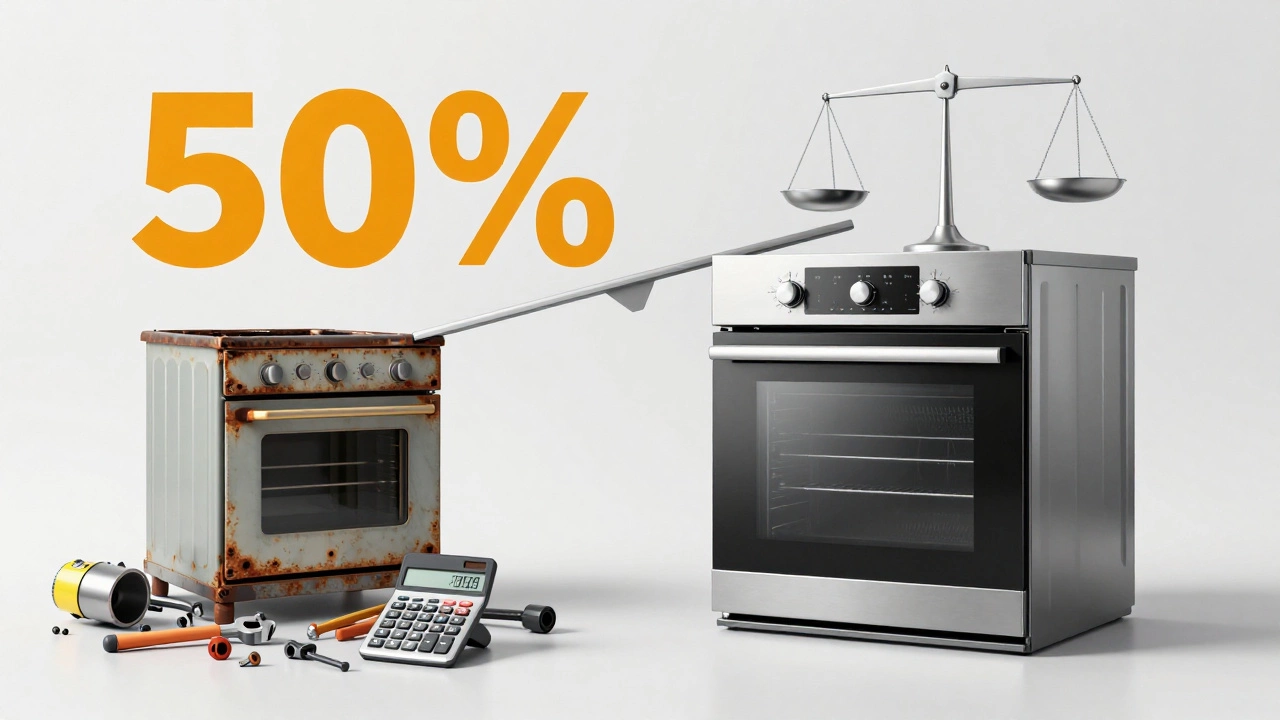
Before we get into the technical symptoms, let's talk money. The most practical way to decide is by applying what I call the "50% Rule." If the cost of repairing your current oven exceeds 50% of the price of a brand-new, comparable model, you should almost always replace it.
Here is why this rule works so well. When you pay for a repair on an older unit, you are buying a temporary fix. That part could fail again in six months. Meanwhile, a new oven comes with a warranty-usually two to five years depending on the brand-and significantly better energy efficiency. In Auckland, where electricity prices can fluctuate, an inefficient old oven is quietly draining your wallet every time you bake a loaf of bread.
If your oven is less than three years old, lean towards repair. If it is over seven or eight years, lean towards replacement. The middle ground requires looking at the specific symptoms below.
Inconsistent Heating and Hot Spots
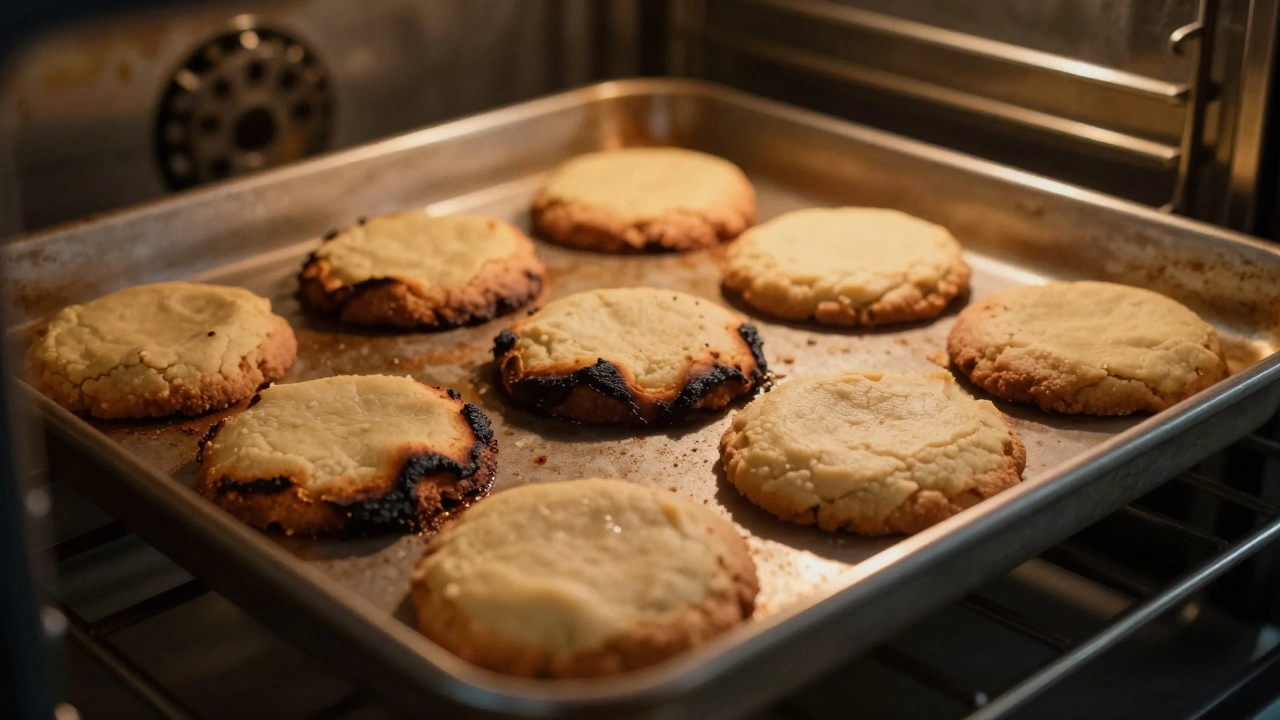
Your oven should be a predictable environment. When you set it to 180°C, it should stay close to 180°C across the entire cavity. If you notice that your cookies are browning unevenly or you have to rotate trays halfway through cooking to save dinner, your heating elements or thermostat are failing.
This inconsistency usually stems from two places:
- Faulty Heating Elements: Look inside your oven. Do the top or bottom coils glow red evenly? If parts of the element remain dark while others glow bright orange, that section has high resistance and is failing. This creates hot spots that burn food.
- A Broken Thermostat: The thermostat tells the oven when to turn off. If it is stuck, the oven might run too hot (burning food) or not hot enough (undercooking). You can test this with an inexpensive oven thermometer. Place it in the center of the oven, set the dial to 180°C, and wait for it to preheat. If the thermometer reads 160°C or 200°C, your calibration is off. While some ovens allow manual recalibration, many modern digital models require a professional board replacement, which pushes you closer to the replacement threshold.
Visible Damage to the Door Seal
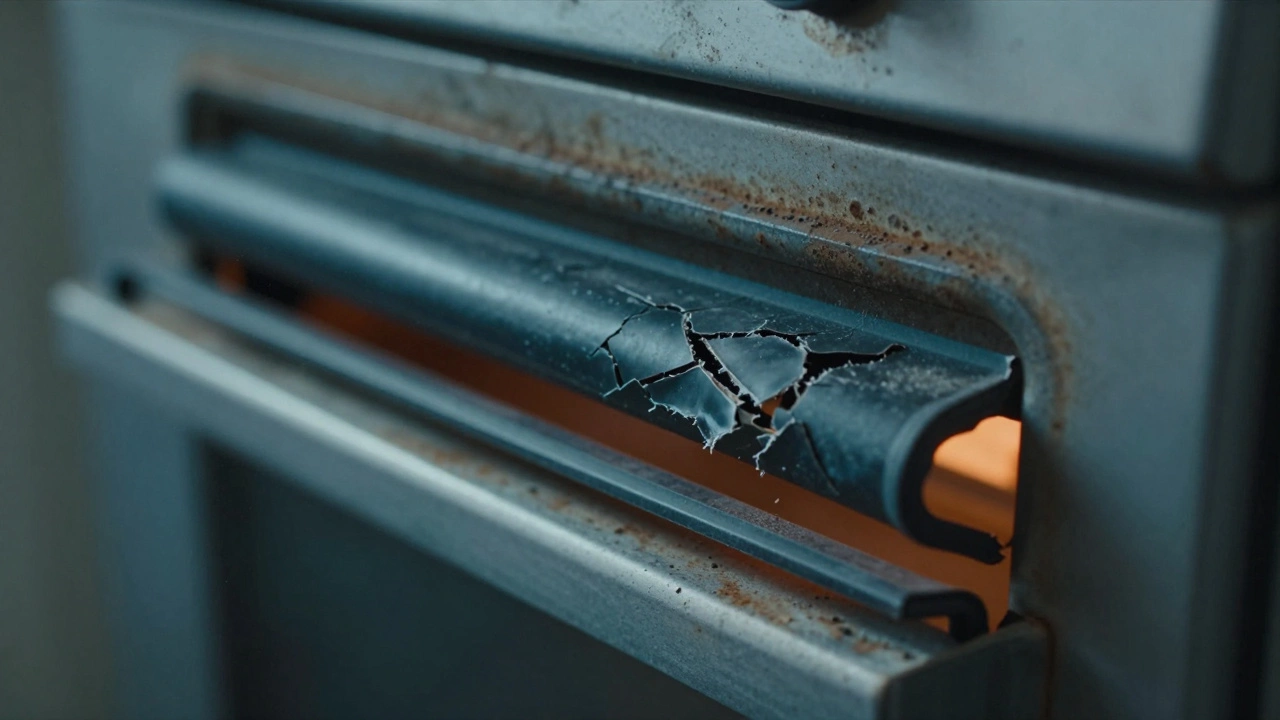
Take a close look at the rubber gasket around your oven door. This seal is crucial for retaining heat. Over time, the constant expansion and contraction from high temperatures cause the rubber to crack, shrink, or detach.
If you can see light leaking from under the door when it is closed, or if you feel warm air escaping onto your hands when you hover near the edges, your seal is compromised. A broken seal means your oven has to work twice as hard to maintain temperature. This leads to higher electricity bills and longer cooking times. While you can sometimes buy a replacement gasket online for a modest fee, if the metal frame holding the seal is warped or rusted, no amount of new rubber will fix the problem. That is a sign the door assembly is failing, pointing toward a full replacement.
Strange Noises and Burning Smells
An oven should be relatively quiet. You might hear a faint click when the relay switches the heating element on and off, but anything louder is a red flag. Humming, buzzing, or grinding noises often indicate issues with the fan motor in convection ovens or failing electrical components.
More concerning are smells. A slight plastic smell during the first few uses of a new oven is normal-it is the protective coatings burning off. But if your old oven starts emitting a sharp, acrid burning smell that persists after cleaning, stop using it immediately. This could be insulation melting, wiring shorting out, or grease igniting in hidden crevices. Electrical fires start small. If the smell is coming from the control panel or the back wall of the oven cavity, do not attempt a DIY fix. Call a professional, but be prepared for them to recommend replacement due to fire risk.
Control Panel Glitches and Digital Errors
Modern ovens rely on electronic control boards to manage timing, temperature, and functions. If your display is flickering, buttons are unresponsive, or the clock resets randomly, your control board is likely dying.
Unlike a simple heating element, control boards are complex and expensive to replace. In many mid-range ovens, the cost of a new control board plus labor can reach $300-$500 NZD. Since the board is the brain of the appliance, its failure often coincides with other age-related wear and tear. If your oven is showing multiple error codes or behaving erratically, the underlying issue is rarely isolated to just the screen. It is a systemic failure of the electronics.
Age and Energy Efficiency
Let's talk about the lifespan of an electric oven. On average, a quality oven lasts between 10 and 15 years. If yours is approaching or exceeding that mark, it is statistically overdue for retirement. Even if it seems to work fine, it is likely operating at peak inefficiency.
Ovens manufactured before 2010 lack the advanced insulation and precise digital controls of today's models. According to energy rating standards, a modern 4-star rated oven can use up to 20-30% less electricity than an unstarred model from fifteen years ago. Over the course of a year, that savings adds up, especially if you cook daily. Furthermore, newer ovens offer features like self-cleaning cycles, steam injection, and smart connectivity that make cooking easier and safer. Sticking with an ancient unit means paying premium rates for inferior performance.
| Factor | Lean Towards Repair | Lean Towards Replace |
|---|---|---|
| Age of Oven | Less than 5 years | More than 10 years |
| Repair Cost | Under $150 NZD | Over $300 NZD |
| Issue Type | Simple part (thermostat, element) | Complex part (control board, gas valve) |
| Safety Concerns | None | Burning smells, sparks, exposed wires |
| Efficiency | Current bill is manageable | Electricity bill spikes when oven is used |
Physical Wear and Cosmetic Degradation
We tend to overlook aesthetics until we are ready to sell our home or simply want a brighter kitchen. However, cosmetic issues can signal deeper problems. Rust inside the oven cavity is a major warning sign. Unlike surface rust on the exterior, internal rust compromises the structural integrity of the metal. As the rust flakes off, it can fall into your food or clog the drain channels in self-cleaning ovens.
If the enamel coating inside the oven is chipping or peeling, moisture can get underneath and accelerate corrosion. Once the enamel goes, the steel beneath is exposed to extreme heat and acidic food splatters. There is no effective DIY patch for internal oven enamel. At this stage, the oven is essentially falling apart from the inside out. Replacement is the only safe option.
Outdated Features and Safety Standards
Kitchen technology has evolved rapidly. Older ovens often lack basic safety features that are now standard. For example, child locks prevent little ones from turning on the oven or changing settings. Modern doors also lock automatically during self-cleaning cycles to prevent burns. If your oven does not have these features, upgrading improves household safety.
Additionally, consider the type of fuel. If you are currently using an electric oven but are considering switching to induction hobs elsewhere in the kitchen, you might want a compatible range cooker or a standalone electric oven that matches your new aesthetic. Consistency in your kitchen appliances makes the space feel more cohesive and modern.
Conclusion: Trust Your Gut
Ultimately, you know your oven better than anyone else. If you dread opening it, if you constantly second-guess your cooking times, or if you feel uneasy about its condition, it is time to replace it. Cooking should be enjoyable, not stressful. A reliable, efficient oven pays for itself in peace of mind, lower energy bills, and better meals. Don't wait for a catastrophic failure on Christmas Eve. Plan ahead, compare models, and upgrade to an appliance that serves you well for the next decade.
How much does it cost to replace an electric oven in New Zealand?
The cost varies widely based on brand and features. Entry-level standalone electric ovens typically range from $400 to $800 NZD. Mid-range models with convection fans and pyrolytic cleaning cost between $900 and $1,500 NZD. High-end brands with smart features and superior build quality can exceed $2,000 NZD. Installation costs may apply if you need a sparky to hardwire the unit or modify the cabinetry.
Can I fix a broken oven thermostat myself?
While replacing a mechanical thermostat is a moderately difficult DIY task involving screwdrivers and multimeters, it is not recommended for beginners. Ovens involve high voltage electricity. Incorrect installation can lead to inaccurate temperatures or electrical shocks. If you are not comfortable working with live electrical components, hire a licensed technician. The labor cost is often worth the safety assurance.
Is it safe to use an oven with a cracked glass door?
No, it is not safe. The glass door on an oven is designed to withstand high internal temperatures while keeping the exterior cool enough to touch. A crack compromises this thermal barrier. Heat can escape rapidly, posing a burn risk, and the remaining glass may shatter completely due to thermal stress. Stop using the oven immediately and contact a repair specialist or plan for replacement.
What is the average lifespan of an electric oven?
Most electric ovens last between 10 and 15 years with regular use and proper maintenance. Factors that shorten lifespan include frequent high-temperature cleaning cycles, lack of ventilation, and power surges. Regularly wiping up spills to prevent carbon buildup and ensuring the area around the oven is clear for airflow can help extend its life.
Should I choose a built-in or standalone oven?
This depends on your kitchen layout and budget. Standalone ovens (range cookers) are easier to install and generally cheaper upfront. Built-in ovens offer a sleeker, custom look and fit seamlessly into cabinetry, potentially increasing home value. If you are renovating, built-ins are preferred. If you are just replacing a broken unit quickly, a standalone model is the practical choice.