Gas Hob Troubleshooter
What's happening with your gas hob?
Critical Safety Alert
If you smell gas or see a gas leak:
- Do NOT light any flames
- Turn off main gas supply
- Evacuate immediately
- Call 0800 424 535 (Gas Emergency) from a safe location
This tool provides guidance only. For gas emergencies, contact a licensed professional immediately.
If your gas hob suddenly stops lighting, you’re not alone. It’s one of the most common kitchen emergencies - especially in Auckland homes where gas hobs are still the go-to for serious cooks. One minute you’re searing a steak, the next, you’re staring at a cold burner and wondering what went wrong. The good news? Most of the time, it’s not a major repair job. You just need to know where to look.
Gas doesn’t flow - check the gas supply
Before you start poking at burners or replacing parts, make sure the gas is actually getting to the hob. It sounds simple, but a lot of people miss this. Check the gas valve behind the hob. Is it fully open? Sometimes, during cleaning or moving the cooker, someone accidentally turns it off. In older homes, the valve might be stiff or corroded. If you smell gas, don’t try to light it. Turn off the main supply and call a professional. No gas smell? Then the valve’s probably fine.Ignition system failure - spark or no spark?
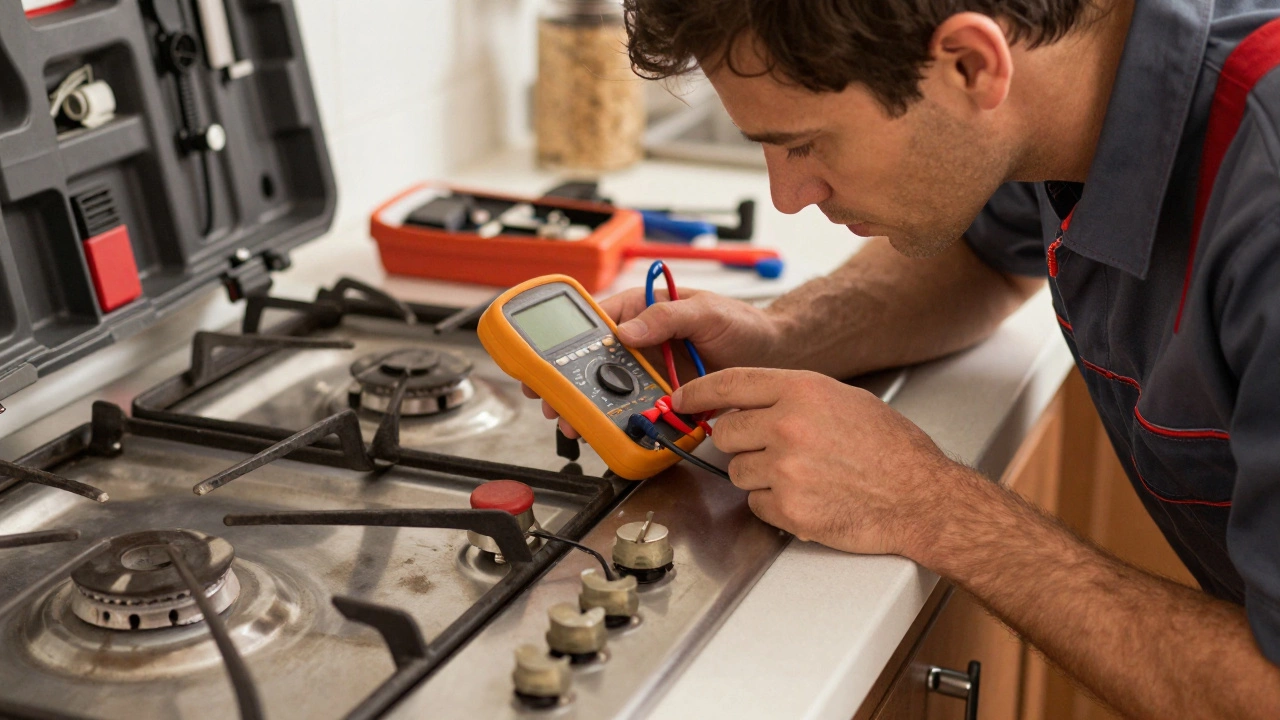
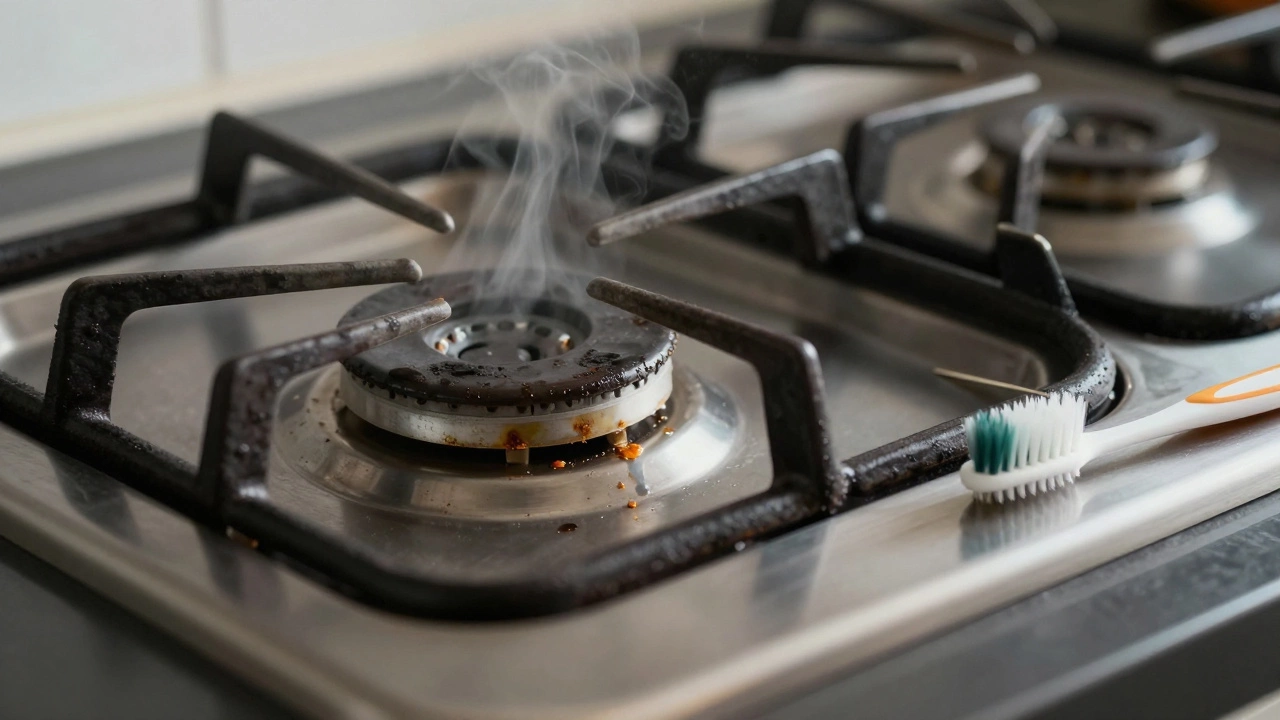
Most modern gas hobs use electronic ignition. You turn the knob, and you hear a clicking sound - that’s the spark generator trying to light the gas. If you hear nothing, the problem is likely the igniter or its wiring. The igniter is a small ceramic piece near each burner. Over time, grease and food splatter build up on it. That grease acts like an insulator, stopping the spark from jumping to the gas. Clean it with a toothbrush and rubbing alcohol. If the clicking still doesn’t happen after cleaning, the spark module might be dead. These modules usually last 8-12 years. If your hob is older than that, replacement is often cheaper than repair.Blocked gas ports - the silent killer
Even if the spark works, the flame won’t light if the gas can’t get out. Each burner has tiny holes around the edge - these are the gas ports. Over months or years, they get clogged with dried food, grease, or even spider webs. I’ve seen hobs where the ports were so blocked, the flame only came out on one side, making cooking uneven. To fix this, turn off the gas and remove the burner caps and grates. Use a needle or a pin to gently clear each port. Don’t use metal tools that could scratch the surface. A soft-bristled brush works well for loose debris. Reassemble everything and test. If the flame comes back strong and even, you’ve solved it.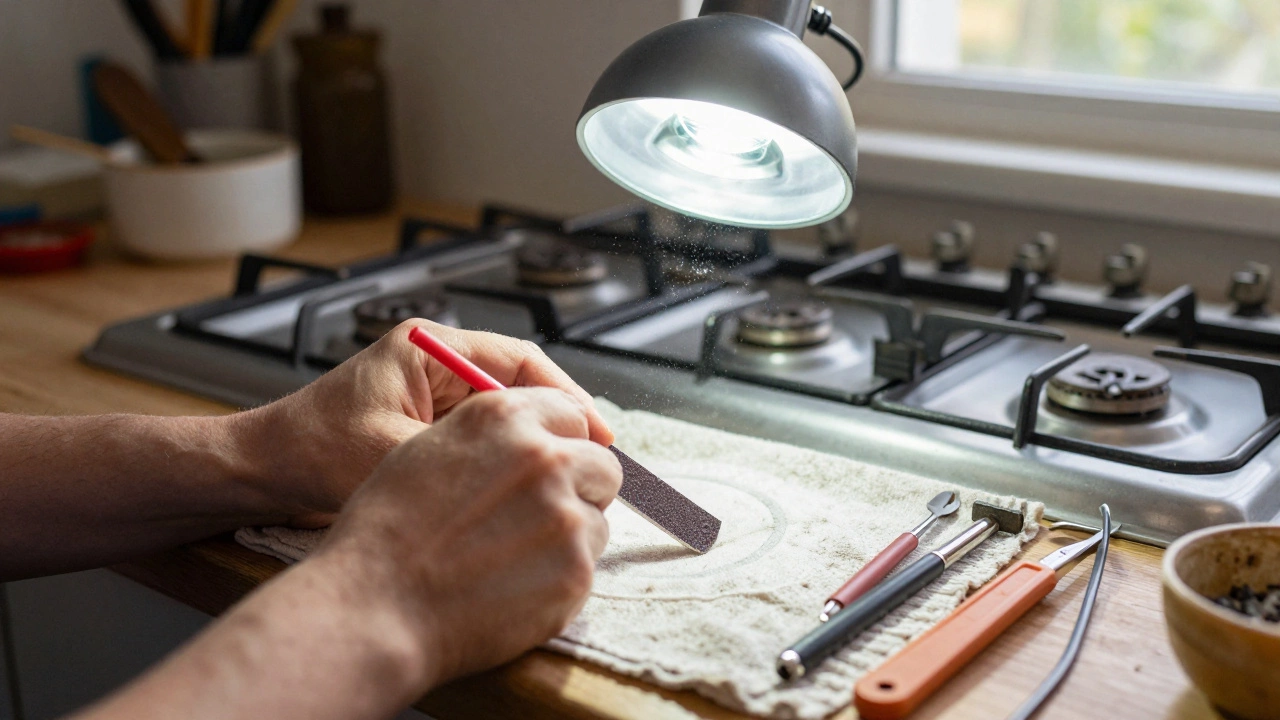
Thermocouple issues - safety feature gone wrong
Older gas hobs have a thermocouple - a safety device that shuts off the gas if the flame goes out. It’s a thin metal rod next to the burner. When the flame heats it up, it sends a signal to keep the gas valve open. If the thermocouple is dirty, bent, or worn out, it won’t sense the flame properly. The result? The gas shuts off seconds after you light it. Try cleaning the thermocouple with fine sandpaper. If that doesn’t help, it might need replacing. Thermocouples are cheap - usually under $20 - but getting the right one matters. Check your hob’s model number and match it exactly. A wrong part won’t fit or work.Low gas pressure - not always the hob’s fault
If all your burners are weak or won’t light, and the problem started suddenly, it might not be the hob at all. It could be your gas supply. In Auckland, gas pressure issues are rare but can happen after maintenance on the main line or during extreme weather. If your neighbor’s hob is also acting up, that’s a clue. Call your gas provider. They can check the pressure at the meter. If it’s below 20 mbar (the standard for residential gas hobs), they’ll fix it. Don’t try to adjust the pressure yourself - that’s dangerous and illegal.Moisture or water damage - the hidden culprit
A spilled pot of boiling water or a leaky sink above the hob can flood the control panel or ignition system. Water doesn’t always kill electronics right away. Sometimes, it causes intermittent faults - the hob works after drying out for a few hours, then stops again. If you’ve had a spill, turn off the gas and electricity to the hob. Remove the control knobs and let everything air dry for at least 24 hours. Don’t use a hairdryer - heat can warp plastic parts. Once dry, test it. If it still doesn’t work, moisture may have corroded the circuit board. That’s when you need a technician.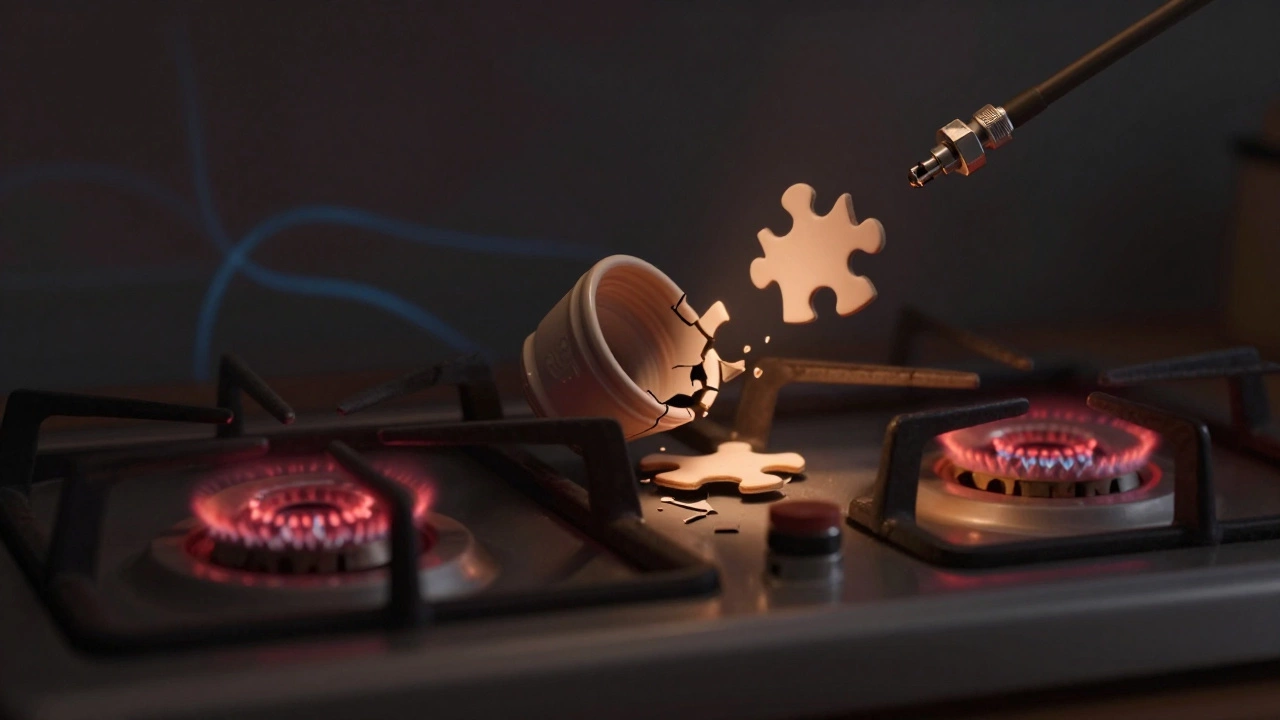
Age and wear - when it’s time to replace
Gas hobs last 10-15 years on average. If yours is older than that and you’re fixing it every few months, it’s probably cheaper to replace it. New models are more efficient, safer, and have better ignition systems. Look for ones with automatic flame failure devices - they shut off gas if the flame goes out, even without a thermocouple. Also, check if your hob is still supported by the manufacturer. If spare parts are hard to find or expensive, replacement makes more sense. A decent new gas hob in New Zealand costs between $600 and $1,200. That’s less than five years of repair bills for an old unit.What to do if you’re not sure
If you’ve tried cleaning, checking the gas valve, and replacing the thermocouple - and it still won’t light - stop. Gas is dangerous. A small leak or faulty spark can lead to a fire or explosion. Don’t risk it. Call a registered gas fitter. In New Zealand, they must be licensed by the Gas Safe Register. Ask for proof of certification before they start work. A good technician will diagnose the issue in under 30 minutes and give you a clear quote. Most repairs cost between $100 and $250. That’s far less than the cost of a new hob - unless your unit is already near the end of its life.Prevention tips to keep your gas hob working
- Wipe spills immediately - don’t let grease bake onto burners.
- Clean burner caps and ports every 2-3 months.
- Never use abrasive cleaners on ignition parts.
- Keep the area under the hob dry and dust-free.
- Test the ignition monthly - even if it’s working - to keep the mechanism lubricated.
Simple habits like these can double the life of your hob. And if you’ve got kids or pets, make sure the knobs are turned off when not in use. Accidental ignition is a common cause of minor gas leaks.
Why does my gas hob click but not light?
If your gas hob clicks but doesn’t light, the spark is working but gas isn’t reaching the flame. Most likely, the gas ports are blocked with grease or debris. Clean them with a needle or pin. If the ports are clear and it still doesn’t light, check the gas valve and thermocouple. A faulty thermocouple can shut off gas even if the spark is fine.
Can a gas hob work without electricity?
Yes, but only if it has a manual ignition system. Most modern gas hobs rely on battery-powered or mains-powered electronic ignition. If the power’s out and your hob won’t light, you can often light it manually with a match or lighter. Hold the flame to the burner and turn the knob to the low position. But never do this if you smell gas - turn off the supply first.
Is it safe to use a gas hob with a broken igniter?
It’s safe if you light it manually with a match or lighter - as long as the gas valve works properly and there’s no leak. But a broken igniter means you’re losing the automatic safety feature. If the flame goes out unexpectedly, you won’t get an automatic shut-off unless your hob has a thermocouple. Replace the igniter or get the hob serviced soon.
Why does my gas hob only light on one burner?
If only one burner lights, the problem is isolated to that burner’s gas port, thermocouple, or spark module. Clean the burner cap and ports first. If that doesn’t help, check the thermocouple for that burner - it might be dirty or misaligned. If other burners work fine, the main gas line and ignition system are likely okay. Focus on the single burner.
How do I know if my gas hob needs replacing?
Signs your gas hob needs replacing: frequent repairs, uneven flames, rust on burners, difficulty lighting, or if it’s over 12 years old. If repair costs add up to more than half the price of a new unit, it’s time. New hobs are more energy-efficient, safer, and come with better warranties. Look for models with flame failure devices and automatic shut-off.
If you’re unsure about any step - especially anything involving gas - don’t guess. Call a licensed gas fitter. A quick check-up now can prevent a dangerous situation later. And remember: a clean hob is a working hob. Regular maintenance beats emergency repairs every time.