Freezer Troubleshooting Diagnostic Tool
Follow the steps below to identify why your freezer isn't cooling. Select the symptom that best matches your situation.
Power Failure Check
Your freezer isn't getting power. This is often a simple electrical issue.
- Check if the plug is loose or disconnected.
- Check your electrical panel for a tripped circuit breaker.
- Verify if other appliances on the same circuit are working.
Airflow & Heat Dissipation
The motor is working, but heat isn't escaping or cold air isn't circulating.
- Clean Condenser Coils: Vacuum the dust and pet hair from the coils at the back/bottom.
- Check Airflow: Ensure there's 2 inches of space around the unit.
- Organize Food: Ensure vents aren't blocked by large frozen items.
Compressor / Relay Issue
A clicking sound usually indicates the compressor is trying to start but failing.
- Check Start Relay: This small part on the compressor may have failed.
- Inspect Fan: Ensure the condenser fan isn't jammed by a stray wire or debris.
- Feel Compressor: If it's scorching hot, it may have overheated and shut off.
Defrost System Failure
Ice buildup on the back wall blocks air from passing through the evaporator coils.
- Manual Defrost: Unplug the unit and let it melt completely for 24 hours.
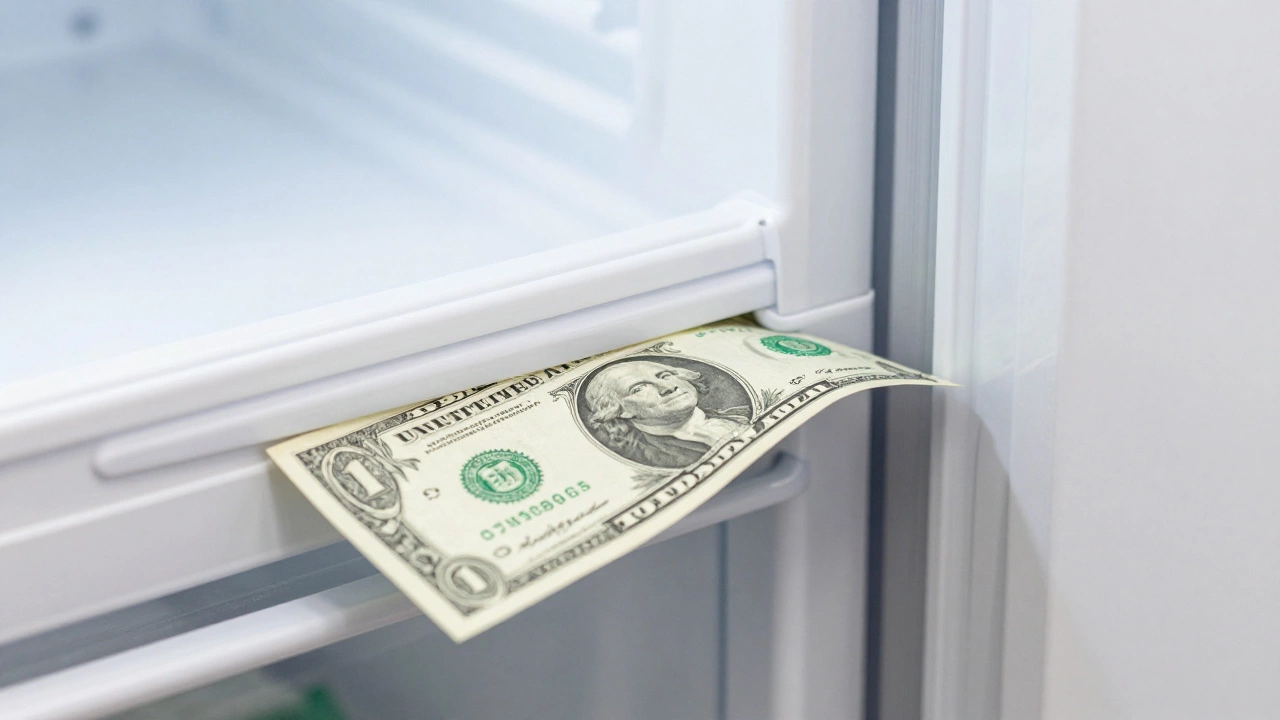
- Dollar Bill Test: Check door gaskets for leaks letting warm air in.
- Check Timer: If ice returns quickly, the defrost timer or heater is likely broken.
Systemic Cooling Failure
If fans are running and coils are clean but no cold air is produced, it's likely a sealed system issue.
- Refrigerant Leak: A breach in the tubing requires a certified professional.
- Compressor Failure: Mechanical internal seizure cannot be fixed at home.
Quick Fix Checklist
- Check if the plug is loose or if a circuit breaker tripped.
- Ensure there is at least 2 inches of space around the unit for airflow.
- Clear out any ice buildup blocking the vents.
- Verify that the thermostat isn't set too high by accident.
- Clean the condenser coils if they look like they're covered in dust.
The Power and Settings Basics
Before you tear the machine apart, look at the obvious stuff. I've seen cases where a vacuum cleaner bumped a plug just enough to break the connection, or a child turned the temperature dial while playing. First, check your electrical panel. If the circuit breaker is flipped, reset it. If the freezer is plugged in but not humming, you might have a blown fuse.
Next, look at the Thermostat is a sensing device that monitors and regulates the internal temperature of the appliance. If the dial is set to a "low" or "medium" setting during a heatwave, the freezer might struggle to keep up. Turn it to the coldest setting for an hour to see if the temperature drops. If the digital display shows an error code, that's your golden ticket-look up that specific code in your manual to find the exact part that's failing.
Dealing with Airflow and Frost Build-up
If you hear the motor running but the air isn't cold, you likely have an airflow problem. In most modern units, Frost-Free Freezers use a fan to push cold air from the freezer section into the fridge. If the freezer is packed too tight-like when you buy a massive haul of frozen veg-you might be blocking the vents. This traps the cold air in one spot and leaves the rest of the freezer warm.
Then there's the dreaded "frost wall." Even in frost-free models, the Evaporator Coils is a set of coils that absorbs heat from the air inside the freezer to cool it down can freeze over. This happens if the door seal is leaking or if you leave the door open too long. When ice cakes onto these coils, air can't pass through them. If you see a thick layer of ice on the back wall, you'll need to manually defrost the unit. Unplug it, remove the food, and let it melt completely for 24 hours. If the cooling returns after this, your defrost timer or heater is likely broken.
Cleaning the Condenser Coils
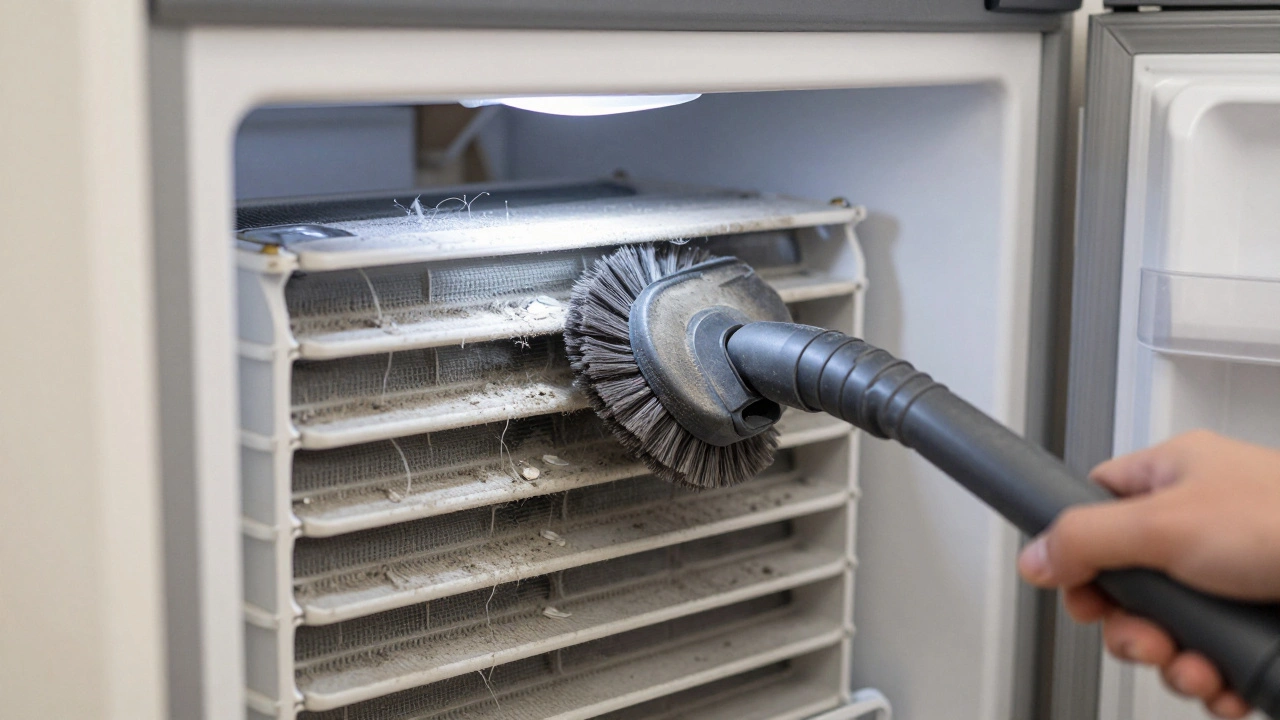
Many people forget that their freezer needs to "breathe." The Condenser Coils is a series of tubes that release heat from the interior of the freezer to the outside air are usually located at the bottom or back of the unit. Over time, pet hair, dust, and grease build up on these coils, creating a blanket of insulation. Instead of releasing heat, the coils keep it, which forces the compressor to work overtime and eventually overheat.
If you pull your freezer away from the wall and see a thick layer of grey fuzz on the coils, that's your problem. Use a vacuum cleaner with a brush attachment or a coil brush to gently clear the debris. Once the coils are clean, the system can shed heat more efficiently, and you'll notice the internal temperature dropping back to a safe level. Do this every six months to avoid a total system shutdown.
Diagnosing the Compressor and Fan
If the unit is silent and the coils are clean, we have to look at the heart of the machine: the Compressor is the pump that moves refrigerant through the cooling system to remove heat from the freezer. You can usually find this at the bottom back of the unit. It should be vibrating slightly and feeling warm to the touch. If it's scorching hot or completely silent while the lights are on, the compressor or the start relay has failed.
Check the Condenser Fan is a fan that cools the condenser coils by blowing air across them. This fan sits right next to the compressor. If the fan is stuck or the motor is burnt out, the compressor will overheat and shut off to protect itself. If you see a piece of plastic or a stray wire jamming the fan blades, clear it out. If the fan doesn't spin even though it's getting power, it needs to be replaced.
Testing the Door Gaskets
Cold air is like water-it will find the easiest way out. The Door Gasket is a rubberized seal that creates an airtight closure between the freezer door and the cabinet must be perfectly intact. If there's a crack or a warp in the rubber, warm air leaks in, causing the freezer to work 24/7 without ever reaching the target temperature.
Try the "dollar bill test." Close the door on a dollar bill (or a piece of paper). If you can pull the bill out with zero resistance, your seal is gone. You can sometimes fix a warped gasket by heating it gently with a hairdryer to soften the rubber and pushing it back into shape. If the rubber is cracked or brittle, you'll need to order a replacement gasket specific to your model number.
| Symptom | Likely Cause | Difficulty to Fix | Solution |
|---|---|---|---|
| No sound, no cooling | Power failure / Blown fuse | Easy | Check plug and breaker |
| Humming, but warm | Dirty Condenser Coils | Easy | Vacuum the coils |
| Clicking sound, no cold | Faulty Compressor Relay | Medium | Replace start relay |
| Ice on back wall | Defrost System Failure | Medium | Manual defrost / Replace timer |
| Fan running, no cold air | Refrigerant Leak | Hard | Call a certified professional |
When to Call a Professional
Not every fix is a DIY job. If you've cleaned the coils, defrosted the unit, and checked the power, but it's still warm, you might be dealing with a Refrigerant Leak is a breach in the sealed tubing that allows the cooling gas to escape. This is a chemical issue that requires specialized equipment to detect and fix. You cannot simply "top up" the gas; a pro must find the leak, weld it shut, and vacuum the system before recharging it.
Similarly, if the compressor has suffered a mechanical failure (internal seizure), the cost of replacement often outweighs the cost of a new freezer. If your unit is more than ten years old and the compressor is dead, it's usually time to shop for a new, more energy-efficient model.
How long does it take for a freezer to cool down after a defrost?
Usually, it takes about 4 to 24 hours to reach a safe operating temperature (0°F or -18°C). Don't put a full load of warm food back in immediately, as this slows the process down. Wait until the walls feel cold to the touch.
Can I use a hair dryer to defrost my freezer?
Be very careful. While a hair dryer can speed things up, too much heat can melt or warp the plastic liner of your freezer. It's safer to leave the doors open and let it melt naturally or use a bowl of hot water inside the unit.
Why is my freezer humming loudly but not cooling?
This usually means the compressor is trying to start but can't, or the condenser fan is struggling against a blockage. If you hear a clicking sound every few minutes, it's a classic sign of a failing start relay or an overheating compressor.
Is it normal for the back of the freezer to feel warm?
Yes, the condenser coils release the heat they've pulled from the inside. However, if it feels scorching hot or smells like burning electronics, you likely have dirty coils or a failing fan that isn't dissipating the heat properly.
What is the best temperature for a freezer?
The FDA recommends keeping your freezer at 0°F (-18°C) or colder. This ensures that food remains frozen solid and slows down the growth of bacteria and enzymes that cause food spoilage.
Next Steps and Troubleshooting
If you're still stuck, start by isolating the sound. Is the fan spinning? If yes, the problem is likely the refrigerant or the compressor. If no, it's an electrical or motor issue. For those with older units, check the start relay-it's a small plug-in part on the side of the compressor that's cheap and easy to replace.
If you've tried all the above and the temperature isn't budging, take a photo of the model number sticker and the specific parts you've checked. This will save you time and money when you call a technician, as they can bring the correct parts on the first visit.