Stove Repair vs Replacement Calculator
This tool helps determine if repairing your electric stove makes financial sense based on industry standards. The general rule is: if repair costs exceed 50% of a new comparable stove, replacement is recommended.
Enter your stove details to see if you should repair or replace.
Most people don’t think about how long their electric stove will last until it stops working. Then suddenly, the burners won’t heat, the oven won’t reach temperature, or the control panel goes dark. You’re left wondering: is this worth fixing? Or should I just buy a new one? The truth is, an electric stove doesn’t have a magic expiration date - but it does have a typical range, and knowing it can save you money and hassle.
How Long Do Electric Stoves Usually Last?
On average, a well-maintained electric stove lasts between 13 and 15 years. That’s the number you’ll see from the U.S. Department of Energy and appliance repair associations like the Appliance Repair Association. But that’s just a baseline. Some last 20 years. Others give out after 8. What makes the difference?
It’s not just about brand. It’s how often you use it, how well you clean it, and whether you ignore small problems before they become big ones. In Auckland, where homes are older and humidity levels are high, corrosion on heating elements and wiring connections is more common than in drier climates. That means even a good-quality stove can wear out faster if it’s not cared for.
What Parts Wear Out First?
Electric stoves don’t just die all at once. They fail piece by piece. The first things to go are usually the parts that get the most use or heat:
- Heating elements - The coils on the cooktop and the bake/broil elements in the oven. These can crack, blister, or stop conducting electricity after 10-12 years of daily use.
- Thermostats and temperature sensors - If your oven runs too hot or too cold, this is often the culprit. These sensors degrade over time, especially if grease and food splatter build up around them.
- Control knobs and electronic panels - Older models with physical dials last longer. Newer stoves with touch controls or digital displays are more prone to circuit board failures, sometimes as early as 7-8 years.
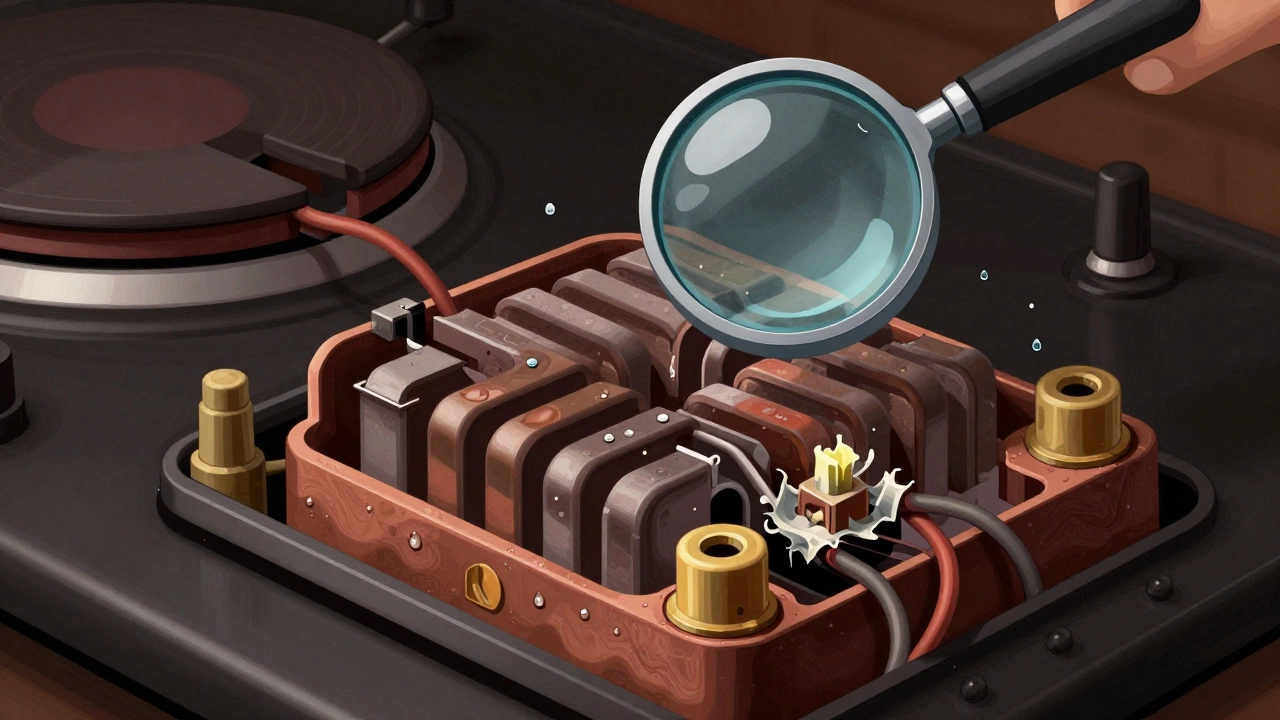
- Wiring and terminals - Heat and moisture cause wires to loosen or corrode. Loose connections can cause sparks, uneven heating, or even fire hazards.
Replacing a single element might cost $50-$100. Replacing a control board? That’s $200-$400 - and sometimes more than half the price of a new stove.
When Should You Replace Instead of Repair?
There’s no hard rule, but here’s a simple test: if the repair cost is more than 50% of what a similar new stove costs, walk away. For example, if a basic electric range costs $700 new, and your repair quote is $375, it’s time to replace.
Also, consider this:
- Is your stove over 12 years old? Then even if one part works, others are likely close to failing.
- Are you paying more in electricity bills than before? Older stoves aren’t as energy efficient. A 2010 model might use 20% more power than a 2025 model.
- Do you have inconsistent heating? Hot spots, uneven baking, or burners that take forever to warm up? That’s not just annoying - it’s a sign the internal components are wearing unevenly.
Some people hold onto old stoves out of habit or nostalgia. But if your stove is making strange noises, smells like burning plastic, or trips the circuit breaker every time you turn on the oven - that’s not a sign of character. That’s a safety risk.
How to Make Your Electric Stove Last Longer
You can stretch your stove’s life by a few years - even a decade - with simple habits:
- Clean spills right away. Burnt-on food insulates heating elements, forcing them to work harder and overheat. Use baking soda and water for gentle scrubbing.
- Don’t use metal scouring pads on glass cooktops. They scratch the surface, which lets moisture in and causes electrical shorts.
- Check the oven door seal. If you can see light around the door when it’s closed, heat is escaping. Replace the gasket - it’s cheap and easy.
- Don’t overload the burners. Heavy pots on small elements strain the wiring. Use pots that match the burner size.
- Have a professional inspect wiring every 5 years. Especially in older homes or coastal areas like Auckland, corrosion builds up unseen. A $100 check-up can prevent a $1,000 fire.
One Auckland homeowner I spoke with kept her 1998 GE stove running until 2023 - 25 years - because she cleaned it weekly, replaced the bake element once, and never used the self-cleaning function. That’s rare, but it shows what’s possible with care.
What’s the Best Replacement Option?
If you’re replacing your stove, you’ve got choices:
- Electric range (all-in-one) - The most common. Cooktop and oven in one unit. Good for standard kitchens. Prices: $600-$1,500.
- Induction cooktop + separate electric oven - More expensive upfront ($2,000+), but faster, more precise, and 30% more energy efficient. Great if you cook often.
- Gas cooktop + electric oven - If you like gas for stovetop control but want electric baking. Requires gas line installation.
For most households in New Zealand, a mid-range electric range from brands like LG, Bosch, or Samsung offers the best balance of price, reliability, and features. Look for models with ceramic glass cooktops - they’re easier to clean than coil elements - and digital thermostats with error codes that help diagnose problems early.
Why Older Stoves Are Riskier
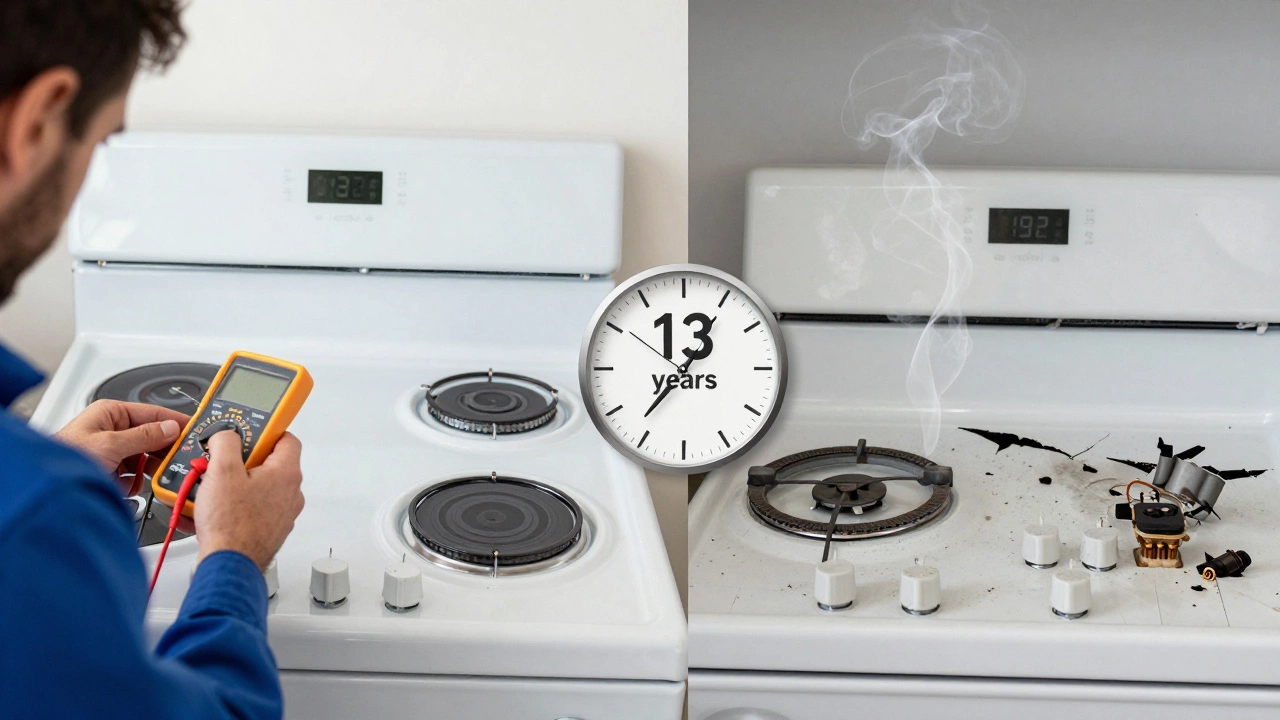
Stoves made before 2010 often lack modern safety features:
- No automatic shut-off if the oven gets too hot.
- No child lock.
- No overheating protection on the control panel.
- Older wiring that doesn’t meet current NZ electrical codes.
In 2024, WorkSafe New Zealand reported 12 incidents of kitchen fires linked to aging electric appliances - 8 of them involved stoves over 15 years old. Most were preventable. The risk isn’t just fire. Faulty wiring can also cause electric shocks, especially in damp kitchens.
What to Do When Your Stove Dies
If your stove stops working:
- Check the circuit breaker first. Sometimes it’s just tripped.
- Test the outlet with another appliance. If it doesn’t work, the problem is the power supply, not the stove.
- If the breaker and outlet are fine, call a licensed appliance technician. Don’t try to open the back panel yourself - live wires are dangerous.
- Get a written quote. Ask if they can test the heating elements, thermostat, and wiring separately. That way, you know exactly what’s broken.
- If repair is over half the cost of a new unit, or the stove is over 12 years old, replace it.
Don’t wait until the stove fails completely. If you notice flickering lights when you turn it on, a burning smell, or inconsistent heat, act early. A small fix now saves a big mess later.
Final Thought: It’s Not Just About Cost
Replacing a stove isn’t just a financial decision. It’s about safety, efficiency, and how much you enjoy cooking. An old stove might seem like a bargain - until you’re stuck with unevenly cooked meals, higher bills, or a fire alarm going off at 2 a.m.
Think of your electric stove like a car. You wouldn’t drive a 20-year-old car with worn brakes just because it still runs. The same logic applies here. When your stove hits 12-13 years, start thinking about replacement. Not because it’s broken - but because the next failure might not be so easy to fix.
How long does an electric stove usually last?
Most electric stoves last between 13 and 15 years with normal use and proper maintenance. Some can last up to 20 years if well cared for, while others fail sooner due to heavy use, poor cleaning, or environmental factors like humidity.
Is it worth repairing an old electric stove?
It’s usually worth repairing if the stove is under 10 years old and the repair cost is less than half the price of a new one. If it’s over 12 years old or the repair exceeds $300, replacement is often the better choice - especially since older models are less efficient and lack modern safety features.
What are the signs my electric stove is failing?
Signs include burners that don’t heat evenly, the oven not reaching the right temperature, strange smells (like burning plastic), sparks from the control panel, frequent circuit breaker trips, or a glass cooktop that’s cracked or discolored. These aren’t just inconveniences - they’re warning signs.
Can I extend the life of my electric stove?
Yes. Clean spills immediately, avoid metal scouring pads on glass tops, replace worn door seals, use pots that match burner sizes, and have a technician check wiring every 5 years. These simple steps can add 5-10 years to your stove’s life.
Should I replace my electric stove with an induction cooktop?
If you cook often and want faster, more precise heat, induction is a great upgrade. It’s 30% more energy efficient than traditional electric and safer because the surface doesn’t get hot. But it requires magnetic cookware and costs more upfront. For occasional cooks, a standard electric range is still the most practical choice.