Water Heater Failure Diagnostic Tool
Quick Summary
- Sediment buildup is the #1 cause of premature failure in storage tank heaters, leading to overheating and leaks.
- The sacrificial anode rod protects your tank from rust; once it dissolves, corrosion spreads rapidly to the steel walls.
- In tankless systems, mineral scaling inside heat exchangers causes blockages and error codes long before mechanical parts fail.
- A leaking temperature and pressure (T&P) relief valve often signals dangerous pressure spikes or thermostat malfunctions.
- Ignoring small signs like strange noises or lukewarm water usually turns a cheap fix into a total unit replacement.
The Silent Killer: Sediment Buildup at the Bottom
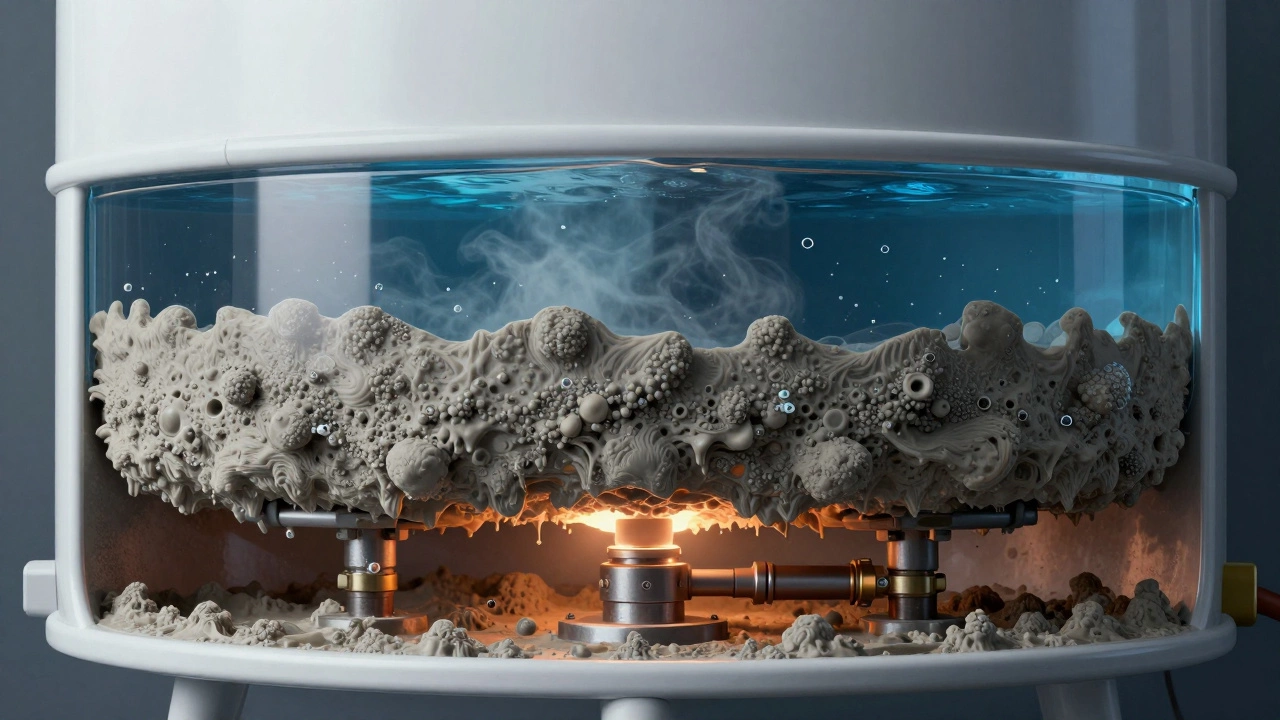
If you own a traditional storage tank water heater, there is one specific spot where most units meet their end: the bottom of the tank. This isn't just a random guess; it’s physics and chemistry working against you. Over time, minerals dissolved in your water-primarily calcium and magnesium-settle out when heated. In areas with hard water, this process accelerates dramatically.
This layer of sediment acts as an insulator between the burner (or heating element) and the water. Think of it like trying to boil a pot of soup while leaving a thick crust of dried food stuck to the bottom. The metal gets incredibly hot because the heat can’t transfer efficiently into the water. Eventually, that steel weakens, warps, and cracks. You might hear popping or rumbling sounds coming from your unit. That’s the sound of steam bubbles trying to escape through the sediment layer. If you ignore those noises, you’re waiting for a leak that will likely ruin your floorboards.
To combat this, flushing the tank annually removes loose sediment. However, if the layer has hardened into concrete-like scale, professional descaling is required. In Auckland and many parts of New Zealand, water hardness varies significantly by suburb. Knowing your local water quality helps you predict how fast this damage occurs.
Corrosion Starts Here: The Sacrificial Anode Rod
Every standard electric or gas water heater contains a metal rod submerged in the water, known as the sacrificial anode rod. Its job is simple but critical: it corrodes instead of your tank. Made typically of magnesium or aluminum, this rod attracts corrosive elements in the water through electrolysis. As long as the anode rod exists, the steel tank remains safe.
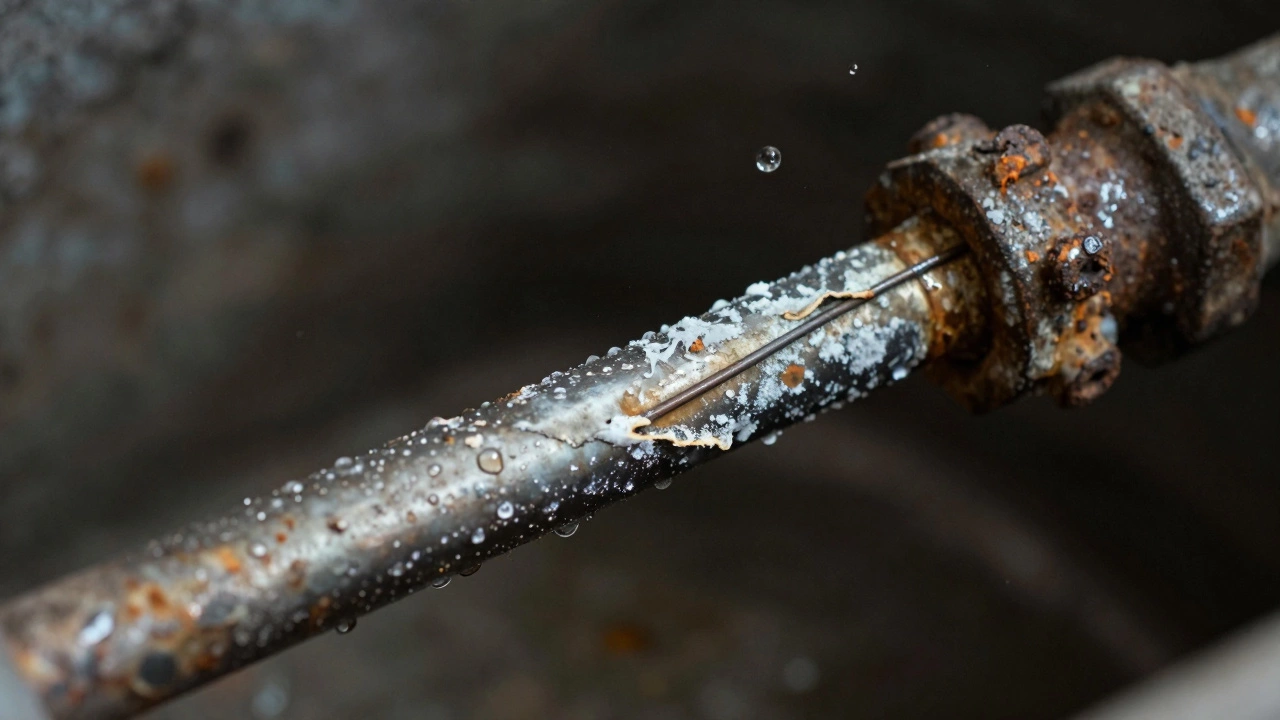
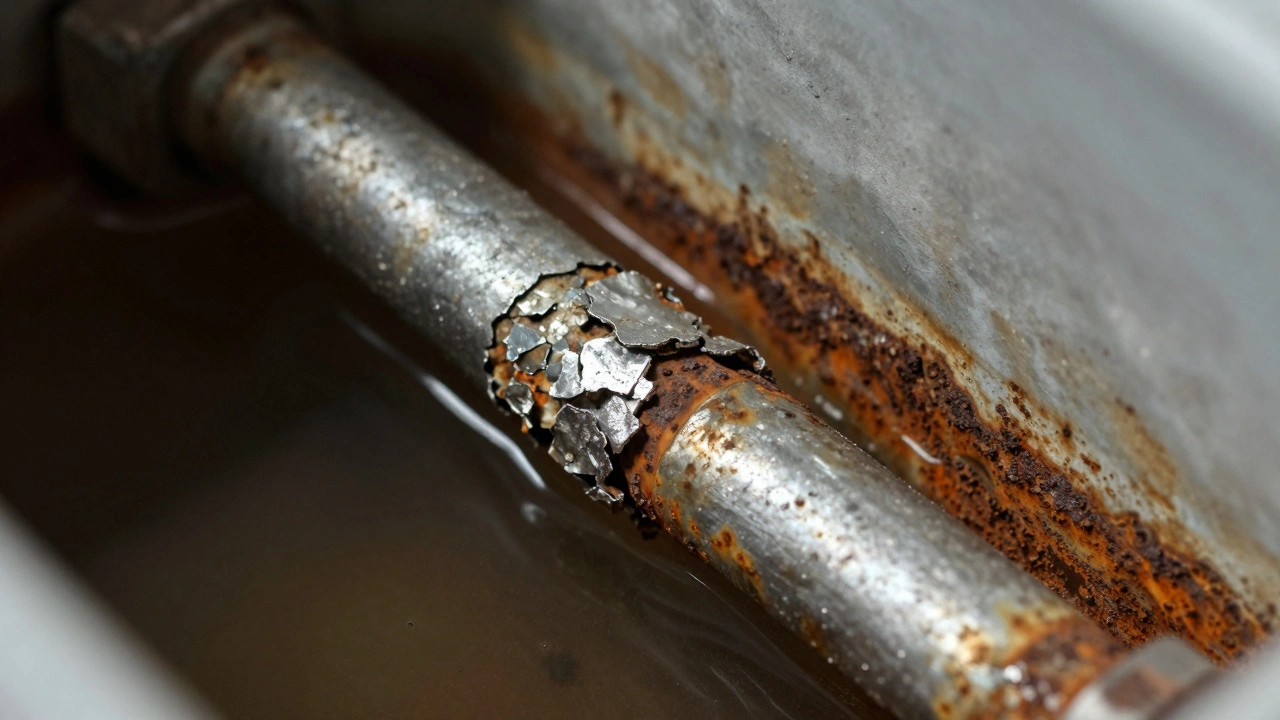
Most failures happen because homeowners never check this component. After five to ten years, depending on water chemistry, the rod completely dissolves. Once gone, nothing stops the corrosion from attacking the steel tank itself. Rust spots appear on the interior walls, eventually creating pinhole leaks. These leaks are often impossible to patch permanently because the surrounding metal is compromised.
You can inspect the anode rod yourself by turning off the power, draining some water, and unscrewing the plug near the top of the tank. If the rod looks thin, crumbly, or covered in heavy scale, replace it immediately. A new rod costs far less than a new water heater. Ignoring this single part is the most common reason tanks die prematurely.
Tankless Systems: Heat Exchanger Scaling
If you’ve switched to a tankless water heater (instantaneous water heater) to save space, you’ve traded sediment issues for a different problem: scaling inside the heat exchanger. Tankless units don’t store water, so they don’t accumulate sludge at the bottom. Instead, they heat water on demand as it flows through narrow copper or stainless steel tubes.
When hard water passes through these tight channels at high temperatures, minerals crystallize onto the tube walls. This reduces flow rate and efficiency. Your unit has to work harder to reach the set temperature, which triggers error codes and shutdowns. In severe cases, the heat exchanger overheats and fails catastrophically. Unlike tank models, replacing a heat exchanger is expensive and sometimes not worth the cost compared to buying a new unit.
The solution here is regular maintenance flushing with vinegar or specialized descaling solutions. Many manufacturers void warranties if you cannot prove annual servicing was performed. Don’t skip this step if you live in a region with moderate to hard water. The initial investment in a filtration system or regular chemical cleaning pays off by extending the life of the heat exchanger by decades.
Pressure and Temperature Relief Valves: The Safety Net
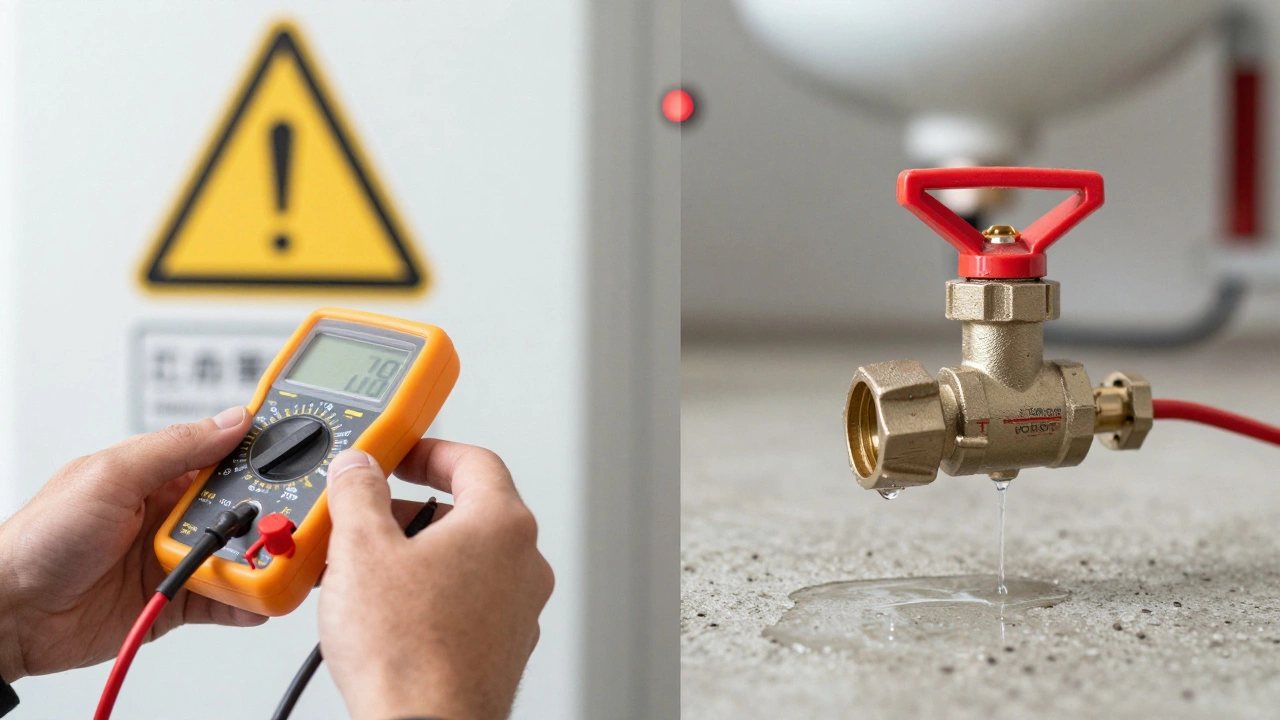
Another frequent failure point is the temperature and pressure (T&P) relief valve. Located on the side or top of the tank, this device opens automatically if internal pressure or temperature exceeds safe limits. When it starts leaking water during normal operation, it’s sending a distress signal.
Often, a leaking T&P valve indicates a faulty thermostat. If the thermostat sticks in the "on" position, water continues to heat until it boils, creating massive steam pressure. The valve releases this pressure to prevent explosion. While the valve itself might need replacement, the root cause is usually electrical or gas control malfunction. Replacing the valve without fixing the thermostat creates a false sense of security.
Additionally, check the discharge pipe connected to the valve. It must run directly to the floor or outside without elbows or caps. Blocked discharge lines trap pressure, rendering the safety mechanism useless. Ensure the pipe is clear and properly sized according to local building codes.
Thermostat and Heating Element Failures
For electric water heaters, the thermostats and heating elements are wear-and-tear components. They don’t always fail simultaneously, but they influence each other. A bad thermostat sends constant voltage to the element, causing it to burn out quickly. Conversely, a shorted element can trip breakers or blow fuses repeatedly.
Signs of element failure include inconsistent water temperature or no hot water at all. Sometimes, only the upper half of the tank heats up because the lower thermostat or element is dead. Testing resistance with a multimeter reveals if the circuit is open. Replacement involves removing access panels, disconnecting wires, and swapping the parts-a task requiring basic electrical knowledge.
In gas units, the thermocouple or flame sensor often fails first. These safety devices shut off gas supply if the pilot light goes out. If yours requires relighting every few days, clean the sensor tip or replace the thermocouple. Gas valves themselves rarely fail unless subjected to extreme pressure fluctuations or age-related degradation.
| Component | Typical Lifespan | Warning Signs | Repair Difficulty |
|---|---|---|---|
| Anode Rod | 3-7 years | Rusty water, metallic taste | Easy |
| Sediment Layer | Accumulates over 5+ years | Popping noises, reduced capacity | Moderate |
| Heating Element | 8-10 years | No hot water, tripped breaker | Moderate |
| T&P Valve | 10-12 years | Dripping from side/top | Easy |
| Heat Exchanger (Tankless) | 15-20 years | Error codes, low flow | Hard |
External Factors: Installation and Environment
Even the highest-quality water heater will fail prematurely if installed incorrectly. Poor ventilation in enclosed spaces causes combustion issues in gas units, leading to carbon monoxide risks and inefficient heating. Electrical wiring that doesn’t match the unit’s amperage draws excessive current, damaging controls and elements.
Vibration from nearby machinery or plumbing water hammer can loosen connections and crack solder joints over time. Support brackets that sag under the weight of a full tank put stress on inlet/outlet pipes, potentially causing joint failures. Always ensure your unit sits level on a stable platform and that all connections are secure.
Location matters too. Installing a water heater in an unheated garage exposes it to freezing temperatures in winter. Frozen pipes burst, and frozen tanks split open. Insulate exposed pipes and consider relocating the unit if possible. In coastal areas like Auckland, salt air accelerates external corrosion on fittings and casings. Choose stainless steel or coated components to resist environmental decay.
Preventative Maintenance Checklist
Avoiding catastrophic failure comes down to routine care. Here’s what you should do every year:
- Flush the tank: Connect a garden hose to the drain valve, open it, and let water run until clear. Repeat until sediment stops flowing out.
- Inspect the anode rod: Remove and examine condition. Replace if more than 50% consumed or heavily scaled.
- Test the T&P valve: Lift the lever briefly to ensure it snaps back and discharges water freely. Check for leaks afterward.
- Clean burners (gas): Vacuum debris from burner ports and check flame color (should be blue, not yellow).
- Verify thermostat settings: Set to 60°C (140°F) to balance safety, efficiency, and scald prevention.
These steps take less than two hours and cost minimal money. Yet they extend your unit’s life by several years and prevent emergency breakdowns during winter storms.
How do I know if my water heater is failing?
Look for warning signs such as rusty water, unusual popping or rumbling noises, lukewarm water, visible leaks around the base, or frequent cycling of the pilot light. Any combination of these symptoms suggests internal damage that needs immediate attention.
Is it cheaper to repair or replace a water heater?
If the unit is older than 10 years and requires major component replacement (like the tank or heat exchanger), replacement is usually more cost-effective. Minor repairs like anode rods, thermostats, or valves make sense for newer units still within warranty or early lifespan.
Why does my water heater keep shutting off?
This often points to a faulty thermocouple, dirty flame sensor, or tripped high-limit switch due to overheating. Gas units may also shut down if ventilation is blocked or oxygen levels drop. Electric models might trip breakers due to shorted heating elements.
Can sediment buildup explode a water heater?
While rare, severe sediment buildup combined with a failed T&P valve can create dangerous pressure conditions. The risk lies more in structural collapse from weakened tanks than explosive force. Regular flushing eliminates this hazard entirely.
Do tankless water heaters last longer than tank models?
Yes, tankless units typically last 15-20 years versus 8-12 for storage tanks. However, their longevity depends heavily on regular descaling maintenance. Without proper care, heat exchangers fail prematurely, negating the lifespan advantage.