Oven No Heat Diagnostic Tool
What type of oven do you have?
Is the oven display working and showing the time/temperature?
When you set the oven to bake at 350°F (175°C), does the bottom element glow orange within 60 seconds?
Do you see the igniter (glow bar) getting red-hot when you turn on the oven?
When you turn the oven on, do you hear any sounds?
Did you recently run a self-cleaning cycle before the problem started?
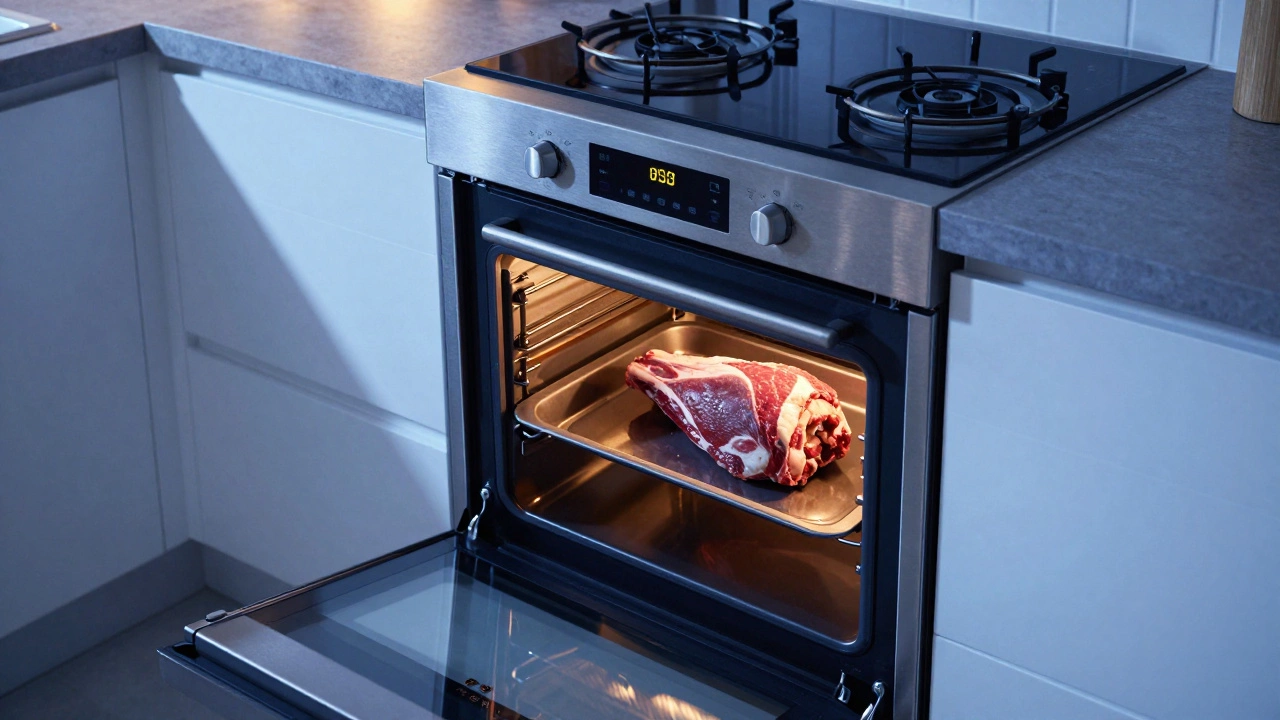
It is the middle of winter, you have a roast in the tray, and the oven clock ticks away. You open the door to check on dinner, and your hand feels nothing but cold air. The light inside might be on, the display might be bright, but the heat is completely gone. This is one of the most frustrating kitchen failures because it usually happens when you need the appliance the most.
If your oven is not producing heat, do not panic. It does not mean you need to buy a new unit immediately. In fact, the vast majority of "no heat" issues are caused by a single faulty component that costs less than $50 to replace. The problem almost always lies within the electrical circuit that generates the warmth, specifically involving the heating elements, which are coils or panels designed to convert electricity into thermal energy for cooking.
We will walk through the exact reasons why your oven has stopped heating, how to diagnose the culprit yourself, and when it is time to call a professional. We will cover everything from simple tripped breakers to complex control board failures.
The Quick Safety Check: Power and Settings
Before you grab a screwdriver or order parts, let us rule out the obvious. Sometimes the issue is not with the oven itself, but with the power supply or user error. These steps take two minutes and save you hours of unnecessary work.
- Check the Circuit Breaker: Go to your main electrical panel. Look for the switch labeled "Kitchen," "Oven," or "240V." If it is in the middle position or flipped off, reset it. Ovens draw high amperage (often 30 to 50 amps), and a surge can trip the breaker even if other outlets in the house still work.
- Verify the Mode: Are you sure the oven is set to "Bake" or "Roast"? Some modern ovens have a "Clean" mode or a "Keep Warm" setting that uses very low heat. If you accidentally selected "Broil" only, the top element will glow red, but the bottom cavity may stay relatively cool depending on the model.
- Listen for Sounds: When you turn the oven on, do you hear a click? That click is the relay engaging. If you hear silence, the issue is likely electronic (control board or timer). If you hear a hum but no heat, the issue is likely mechanical (element or fuse).
The Most Common Culprit: Faulty Heating Elements
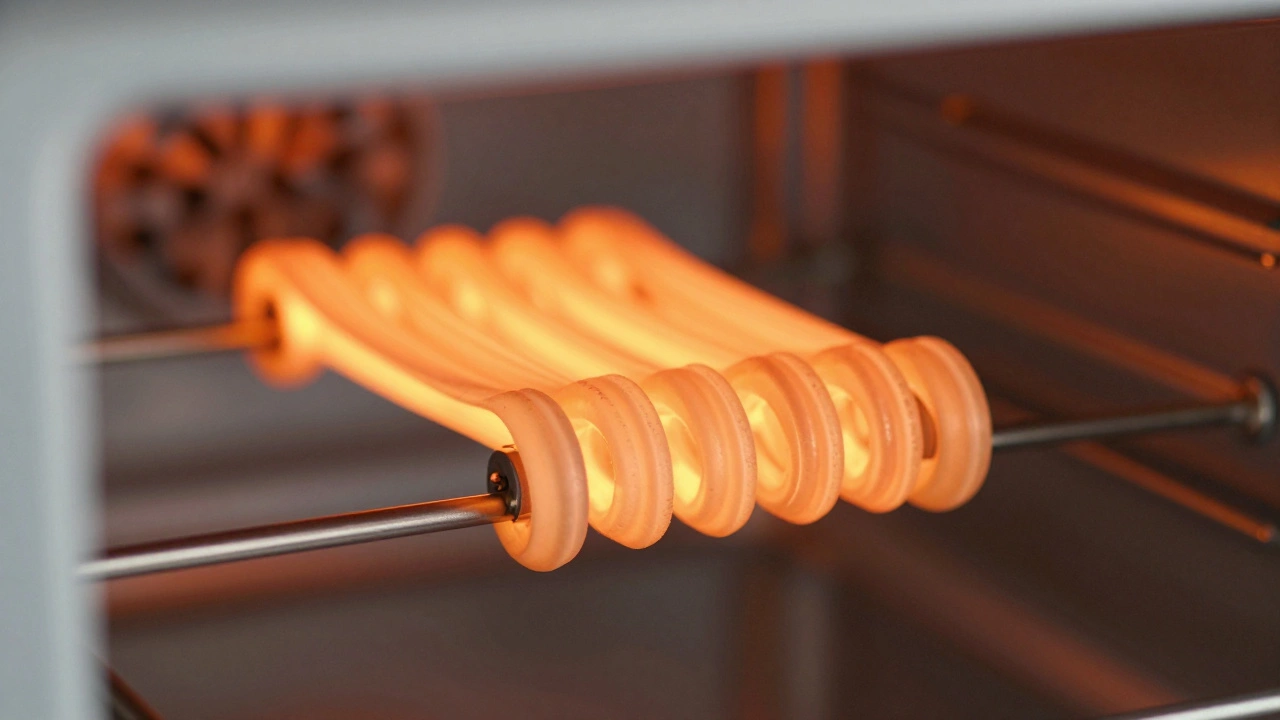
In an electric oven, heat is generated by resistive coils. There are typically two main elements involved in baking: the bake element at the bottom and the broil element at the top. If your oven is not heating at all during a standard bake cycle, the bake element is the prime suspect.
You can often diagnose this visually. Turn the oven on to 350°F (175°C) and watch the bottom element closely. Within 60 seconds, it should begin to glow a dull orange. If it remains dark while the rest of the oven seems active, the element has burned out. This happens over time as the metal fatigues from repeated expansion and contraction cycles.
| Symptom | Likely Cause | Difficulty to Fix |
|---|---|---|
| Element glows then stops | Crack in the coil causing intermittent connection | Easy (DIY) |
| Element never glows | Broken filament or loose terminal connection | Easy (DIY) |
| Burn marks on oven floor | Element touched food or foil, causing short | Medium (Inspect insulation) |
Replacing a bake element is straightforward. You simply remove the two screws holding it in place, disconnect the wires, and swap in the new part. However, before you buy a new element, you must verify that power is actually reaching it. If the element is fine but still not glowing, the problem lies upstream in the safety components.
The Silent Protector: Thermal Fuses and Cut-Offs
Ovens are equipped with safety devices designed to prevent fires. If the oven gets too hot due to a malfunctioning thermostat, these fuses blow to cut power to the heating elements. Unlike a circuit breaker, a thermal fuse cannot be reset; once it blows, it must be replaced.
The thermal fuse is a one-time safety device that melts and breaks the electrical circuit if the oven exceeds a specific temperature threshold. These are often located near the back wall of the oven cavity or behind the control panel. If your oven worked perfectly yesterday and suddenly has no heat today, a blown thermal fuse is a strong possibility, especially if you recently ran a self-cleaning cycle. Self-cleaning cycles reach temperatures over 800°F (425°C), which can stress these components.
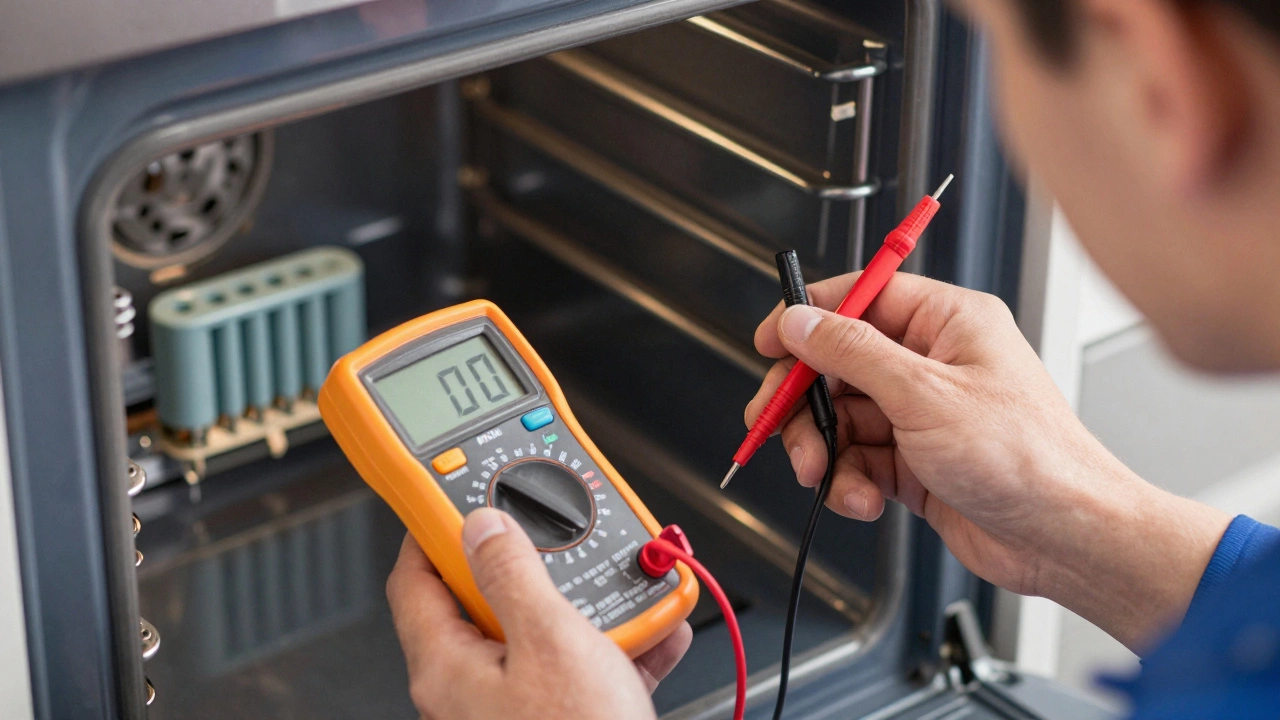
To test a thermal fuse, you need a multimeter. Set the meter to continuity (ohms). Touch the probes to the two terminals of the fuse. If the meter reads "OL" (open loop) or infinite resistance, the fuse is blown. If it beeps or shows near-zero resistance, the fuse is intact, and you need to look elsewhere.
The Brain of the Operation: Control Board and Relays
If the elements and fuses are good, the issue may be electronic. Modern ovens use a control board (also called a clock board or timer module) to manage the heating cycles. This board sends voltage to the relays, which act as switches turning the elements on and off.
Over time, relays can stick in the "off" position or burn out due to arcing. If you hear a faint buzzing sound from the back of the oven but no heat, a stuck relay is a common cause. Additionally, if the display is blank or showing error codes like "F9" or "E0," the control board itself may have failed.
Diagnosing a control board requires checking for voltage output. With the oven calling for heat, use your multimeter to check the terminals where the wires connect to the board. If you see 240V going into the board but 0V coming out to the element terminals, the relay on the board has failed. Replacing a control board is more expensive and complex than replacing an element, so it is best confirmed by a technician unless you are comfortable with high-voltage diagnostics.
Gas Ovens: A Different Beast
If you have a gas oven, the troubleshooting path changes significantly. Gas ovens do not use electric heating elements for baking (though they may use them for broiling). Instead, they rely on a gas burner at the bottom of the cavity. If there is no heat, the gas is not igniting.
The most common failure in gas ovens is the igniter, which is a glow bar or spark plug that heats up to open the gas valve, allowing fuel to flow to the burner. In older models, a pilot light keeps the valve ready. In newer models, the igniter glows red-hot. If it does not get hot enough, the gas valve never opens. You might see the igniter glow, but if it takes longer than 90 seconds to light the burner, it is weak and needs replacement.
Other gas-specific issues include:
- Clogged Burner Ports: Grease or food debris can block the gas holes. Clean them with a toothpick.
- Gas Supply Issue: Ensure the gas line to the oven is open. Check if other gas appliances (like the stove top) are working.
- Flame Sensor: If the sensor detects no flame shortly after ignition, it will shut off the gas for safety. This can be cleaned with fine steel wool.
When to Call a Professional
While many oven repairs are DIY-friendly, some situations require expert intervention. Do not attempt to fix your oven if:
- You smell gas: If you have a gas oven and smell rotten eggs, turn off the gas supply immediately and evacuate. Call your gas provider or a licensed technician.
- You are uncomfortable with electricity: Ovens operate on 240 volts. This is lethal. If you do not know how to safely disconnect power and test for live wires, hire a pro.
- The control board is fried: Replacing a motherboard involves precise wiring diagrams. One wrong connection can destroy the new board.
- The oven is under warranty: Opening the casing may void your manufacturer's warranty. Contact the brand's support line first.
In Auckland and across New Zealand, qualified appliance repair technicians can diagnose these issues quickly. They carry universal testing equipment and access to OEM parts, ensuring the repair lasts. For complex issues like control board failures or gas valve replacements, the cost of labor is often justified by the safety and reliability of the repair.
Preventing Future Failures
Once your oven is back to heating properly, you can extend its life with simple maintenance habits. First, avoid using aluminum foil directly on the oven floor. Foil can reflect heat unevenly, causing the bake element to overheat and fail prematurely. It can also melt onto the element, creating a short circuit.
Second, clean spills immediately. Sugar and starches can caramelize and drip onto the heating elements. When the element heats up next time, this residue burns, creating smoke and potentially damaging the coil. Use a liner tray instead of foil to catch drips.
Finally, do not run the self-clean cycle unnecessarily. The extreme heat stresses the door seals, hinges, and internal sensors. Regular cleaning with a paste of baking soda and water is safer for your oven's longevity.
How much does it cost to fix an oven that won't heat?
The cost varies widely depending on the part. Replacing a heating element typically costs between $50 and $150 including labor. A thermal fuse is cheaper, around $30 to $80. However, if the control board or gas valve needs replacement, costs can range from $200 to $500. Always get a diagnostic quote before authorizing major repairs.
Can I use my oven if the light works but there is no heat?
No. If the light works, the oven has power, but the heating system is compromised. Continuing to use it will not cook your food and may indicate a dangerous fault like a broken ground wire or a failing control board that could lead to a fire hazard. Stop using it until repaired.
Why does my oven heat unevenly?
Uneven heating is often caused by a failing bake element that is partially broken, or by poor airflow due to clogged vents. It can also result from improper rack placement. Ensure racks are centered and not blocking the rear fan if your oven is convection.
Is it safe to test an oven element with a multimeter?
Yes, provided you have disconnected the power to the oven at the circuit breaker. Never test for continuity while the oven is plugged in or the breaker is on. Set your multimeter to the resistance (Ohms) setting and touch the probes to the terminals of the element. A reading between 10 and 30 Ohms is normal for most elements.
What does it mean if my oven makes a clicking noise but doesn't heat?
A clicking noise usually indicates that the relay on the control board is trying to engage but failing, or that the igniter (in gas ovens) is sparking repeatedly without lighting the gas. In electric ovens, this suggests a bad connection or a failing control board relay.