Boiler Energy Savings Calculator
How much can you save?
Estimate your annual savings by turning your boiler off when you're away.
Every winter in Auckland, the same question pops up: should I turn my boiler off when I’m not home, or leave it running all day? People worry that flipping the switch too often might break it. Some swear by leaving it on, others say turning it off saves money and extends its life. The truth? It’s not as simple as yes or no - but it’s not as scary as you’ve been told.
Boilers aren’t fragile - they’re built for this
Your boiler isn’t a delicate glass vase. It’s a steel-and-copper machine designed to handle hundreds, even thousands, of on-off cycles over its lifetime. Modern condensing boilers, the kind most homes in New Zealand have today, are built to ISO 15500 standards. That means they’re tested for at least 50,000 start-stop cycles before they’re sold. If you turn yours on and off three times a day, that’s 1,095 cycles a year. Even at that rate, it’d take over 45 years to hit the test limit.
Older boilers from the 1980s and 90s? Those had weaker components and could suffer from thermal stress. But if your boiler was made after 2005 - and most homes in Auckland have one - it’s fine. The materials, the seals, the electronics - they’re all designed to handle rapid temperature changes without cracking or warping.
What actually wears out a boiler?
It’s not the on-off switching. It’s what happens when you ignore maintenance. The real killers are:
- Sludge buildup from dirty water in the system
- Corrosion from unbalanced pH levels
- Scale deposits from hard water
- Leaking seals from lack of pressure checks
- Overheating because the pump or thermostat is failing
These issues don’t care if you turn your boiler on once a day or leave it running 24/7. They’ll eat away at your system regardless. A boiler that runs constantly without a yearly service is far more likely to fail than one that’s switched off at night and maintained properly.
Turning it off saves money - and reduces wear
Here’s the myth: “Leaving the boiler on keeps it warm and avoids strain.” That’s backwards. When a boiler sits idle, its internal parts cool down. When it turns back on, it has to work harder to reheat the water. That sounds bad - but here’s the catch: it only lasts a few minutes. The energy used to restart is less than what you’d waste keeping the system hot all day.
According to the UK Energy Saving Trust (which also applies to New Zealand’s climate), turning your boiler off when you’re out or asleep cuts heating costs by 5-15% annually. That’s $200-$600 a year for most Auckland homes. And here’s the kicker: that energy saving means fewer burn cycles. Fewer cycles mean less fuel burned, less carbon buildup, and less strain on the heat exchanger.
Think of it like your car. Idling at a red light uses fuel. Turning it off and restarting uses a tiny bit more - but you still save overall. Boilers work the same way.
What about condensation and corrosion?
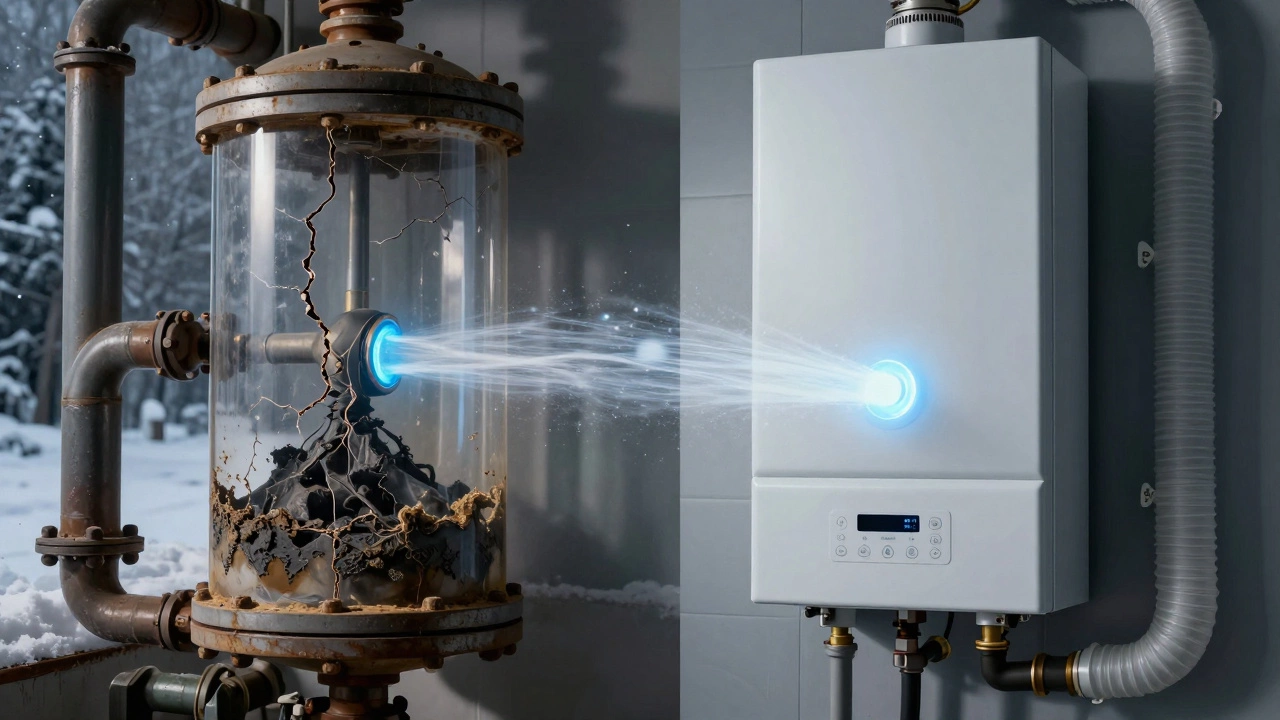
People worry that turning the boiler off causes condensation inside, which leads to rust. That’s true - but only if the system isn’t sealed properly. Modern boilers are sealed systems with corrosion inhibitors already in the water. The inhibitor stops rust from forming, even when the system cools down. If you’ve had your boiler serviced in the last 12 months, you’ve got protection.
If you haven’t had it serviced? That’s your real problem. Not turning it off. If your boiler’s been running for five years without a flush and chemical treatment, the water inside is full of sludge. That sludge causes corrosion - whether the boiler’s on or off. Fix the water quality, not the on-off habit.
Smart thermostats make this easier
If you’re still nervous about manually switching your boiler on and off, install a smart thermostat. Models like the Hive, Tado, or Nest let you set schedules. You can tell it to turn the heat on 20 minutes before you wake up, and shut off when you leave for work. No guesswork. No manual switches.
These devices don’t just save energy - they also log how often your boiler fires up. If you see it cycling more than 10 times an hour, that’s a sign of a bigger issue: wrong sizing, bad insulation, or a faulty thermostat. But if it’s cycling 2-4 times a day? Perfectly normal.

When you should avoid turning it off
There are a few cases where leaving the boiler on makes sense:
- If you have an older, non-condensing boiler (pre-2000) and live in a very cold area - but even then, a timer is better than constant running.
- If your pipes are uninsulated and at risk of freezing. In Auckland, that’s rare, but if you have pipes in an unheated garage or underfloor space, keeping the boiler on low (15°C) prevents bursts.
- If you have a combi boiler and rely on instant hot water. Turning it off means waiting 3-5 minutes for hot water to return. For some households, that’s not worth the savings.
But for 90% of Auckland homes? The answer is clear: turn it off when you don’t need it.
What to do instead of worrying about switching
Stop obsessing over turning the boiler on and off. Focus on what actually matters:
- Get a yearly service. A qualified technician will check pressure, clean the heat exchanger, test the flue, and top up corrosion inhibitors.
- Flush your system every 3-5 years. Sludge buildup is the #1 cause of boiler failure in New Zealand homes.
- Install a smart thermostat. Set it to drop to 15°C overnight or when you’re out. It’s safer and cheaper than leaving it at 21°C all day.
- Check your radiator valves. If one’s stuck open, your boiler runs longer than it needs to.
- Insulate your pipes. Even in Auckland, winter nights can drop below 5°C. Insulated pipes mean less heat loss and less work for your boiler.
These steps will extend your boiler’s life by 5-10 years. Turning it off? That’s just the easy part.
Bottom line: Turning your boiler on and off won’t break it
It’s not the switching that kills boilers. It’s neglect. If you’re worried about damage, fix the real problems: dirty water, poor insulation, and skipped maintenance. Turning your boiler off at night, when you’re at work, or when you’re away for the weekend? That’s smart. That’s efficient. And it won’t hurt your system - it’ll help it.
Stop listening to the myths. Your boiler was built for this. Use it like it’s supposed to be used - and take care of it properly. That’s the only way to make it last 15+ years.
Is it better to leave my boiler on all the time?
No. Leaving your boiler on all the time wastes energy and increases wear on internal parts. Modern boilers are designed to cycle on and off efficiently. Turning it off when not needed saves money and reduces long-term strain. Use a programmable thermostat to automate this.
Can turning my boiler off cause condensation damage?
Only if your system is old, unsealed, or has dirty water. Modern boilers have corrosion inhibitors in the water that prevent rust, even during cool-down periods. If you’re concerned, get your system flushed and serviced - that’s far more important than worrying about turning it off.
How often is too often to turn my boiler on and off?
Cycling 2-6 times a day is normal. If your boiler turns on more than 10 times per hour, something’s wrong - like a faulty thermostat, oversized boiler, or poor insulation. That’s when you need a technician, not a new habit.
Will turning my boiler off affect my hot water?
If you have a combi boiler, turning it off means you’ll wait 2-5 minutes for hot water to return after turning it back on. For storage tank systems, hot water stays warm for hours. If instant hot water is critical, use a timer to turn the boiler on 15 minutes before you need it - don’t leave it running all day.
Should I turn my boiler off during summer?
Yes - if you don’t need hot water. Most modern boilers have a summer mode that only heats water on demand. If yours doesn’t, turn it off completely. It saves energy and reduces wear. Just make sure to turn it back on and check the pressure before winter starts.