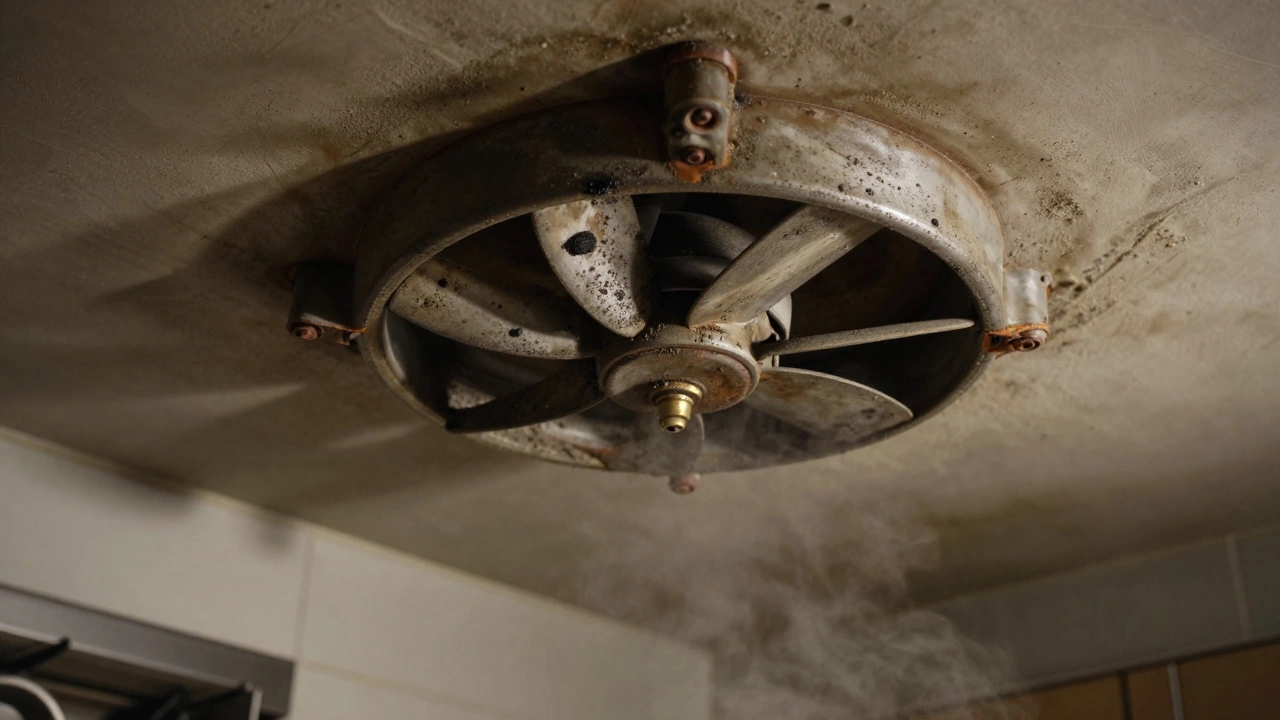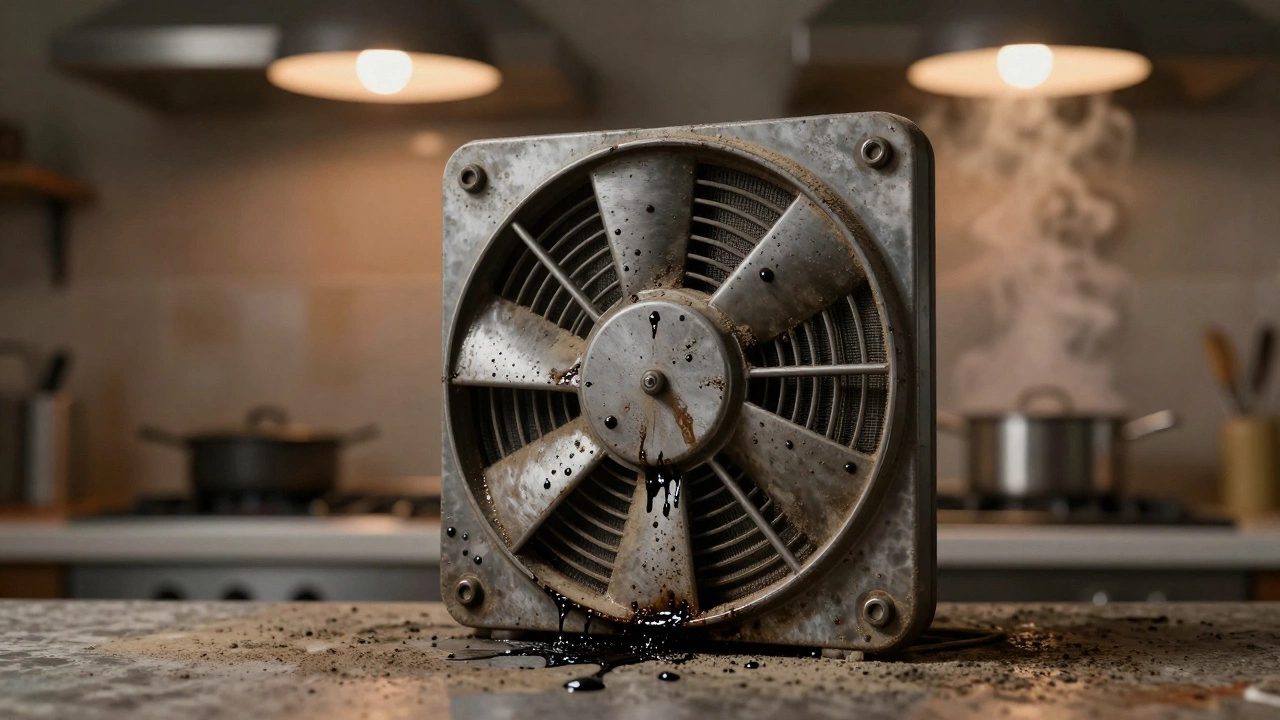
Most people don’t think about their extractor fan until it stops working. Then suddenly, smoke lingers after cooking, steam clouds the mirror, and mildew starts creeping into the corners. You wonder: how long should an extractor fan last? The answer isn’t simple - it depends on how often you use it, how well it’s maintained, and what kind you bought in the first place.
Typical Lifespan of an Extractor Fan
On average, a standard kitchen extractor fan lasts between 8 and 15 years. That’s the range most homeowners can expect from a decent-quality unit installed correctly. Cheaper models, often found in budget kitchens or rented properties, might only make it 5 to 7 years before the motor burns out or the blades get clogged beyond repair. Higher-end models with better motors and sealed bearings can stretch past 15 years - especially if cleaned regularly.
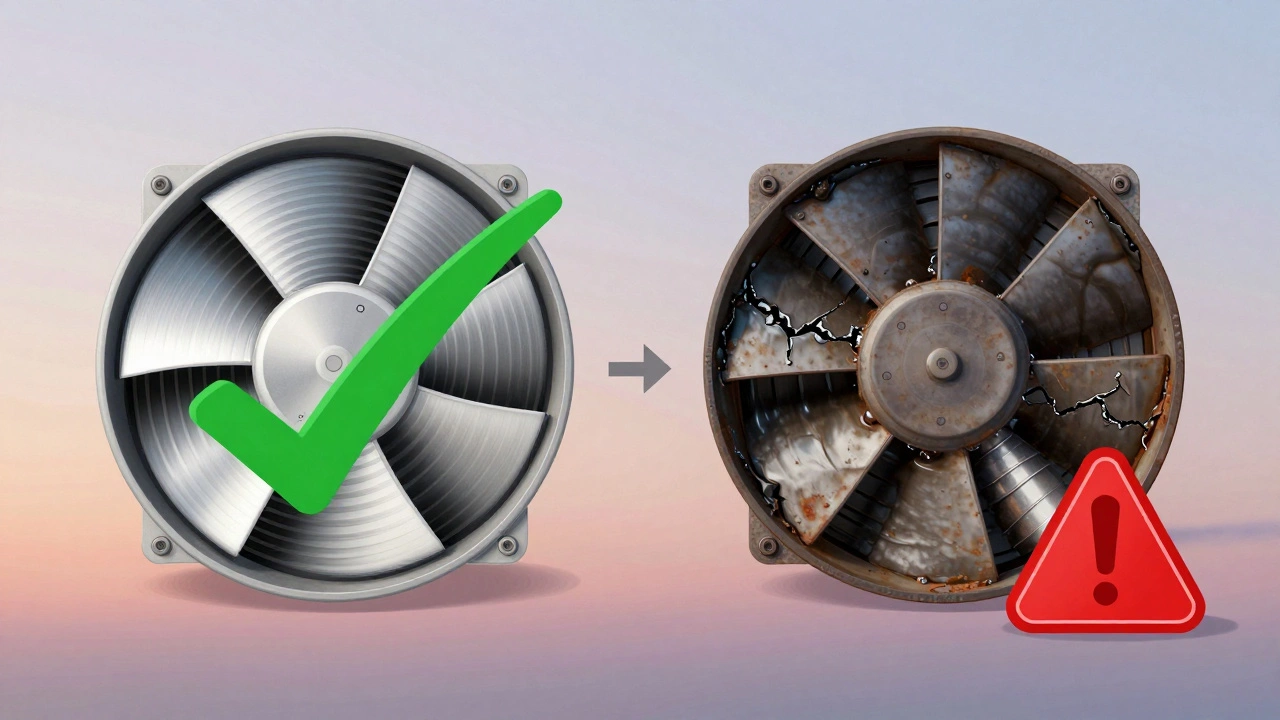
Don’t confuse lifespan with performance. Just because your fan still turns on doesn’t mean it’s doing its job. A fan that’s 10 years old might still spin, but if it’s barely pulling air out of the kitchen, it’s effectively dead. The real question isn’t whether it works - it’s whether it works well enough to protect your home.
What Kills an Extractor Fan Sooner?
Most extractor fans don’t die from age. They die from neglect.
The biggest killer? Grease buildup. Every time you fry eggs, sear steak, or boil pasta, tiny oil particles float into the air and stick to the fan’s motor, blades, and ductwork. Over time, this gunk turns into a sticky, hardened layer that forces the motor to work harder. That extra strain overheats the windings, wears out the bearings, and eventually burns out the motor. It’s not a mystery - it’s physics.
Another common cause of early failure is poor installation. If the ducting is too long, has too many bends, or isn’t properly sealed, airflow gets restricted. The fan has to push air through resistance it wasn’t designed for. That’s like running a car with the parking brake on - it’ll eventually break.
Moisture is also a silent enemy. In bathrooms, extractor fans deal with constant humidity. If the housing isn’t rated for damp environments, rust forms inside. Even in kitchens, steam from boiling pots can corrode cheap metal parts over time. Look for units labeled “IP44” or higher - that means they’re splash-proof and built for wet areas.
Signs Your Extractor Fan Is Near the End
You don’t need to wait for it to stop completely. Watch for these red flags:
- It’s louder than it used to be - rattling, grinding, or whining noises mean bearings are failing.
- It takes longer to clear steam or smoke - if it used to clear the air in 2 minutes and now takes 10, airflow has dropped by 70% or more.
- You see grease or dust buildup on the grille - if you can’t clean it with a cloth and vinegar, the fan’s internal parts are already coated.
- The light (if it has one) flickers or doesn’t turn on - this often means the control board is failing, which usually means the whole unit is on its way out.
- Mildew or mold appears near the vent - if the fan isn’t removing moisture, it’s not doing its job.
One homeowner in Ponsonby replaced her fan after 12 years because the duct was full of hardened grease. She didn’t notice until she saw black flakes falling out when she opened the cover. That’s not normal wear - that’s neglect.
Can You Extend the Life of Your Extractor Fan?
Yes - if you’re willing to do a little work every few months.
Here’s what actually helps:
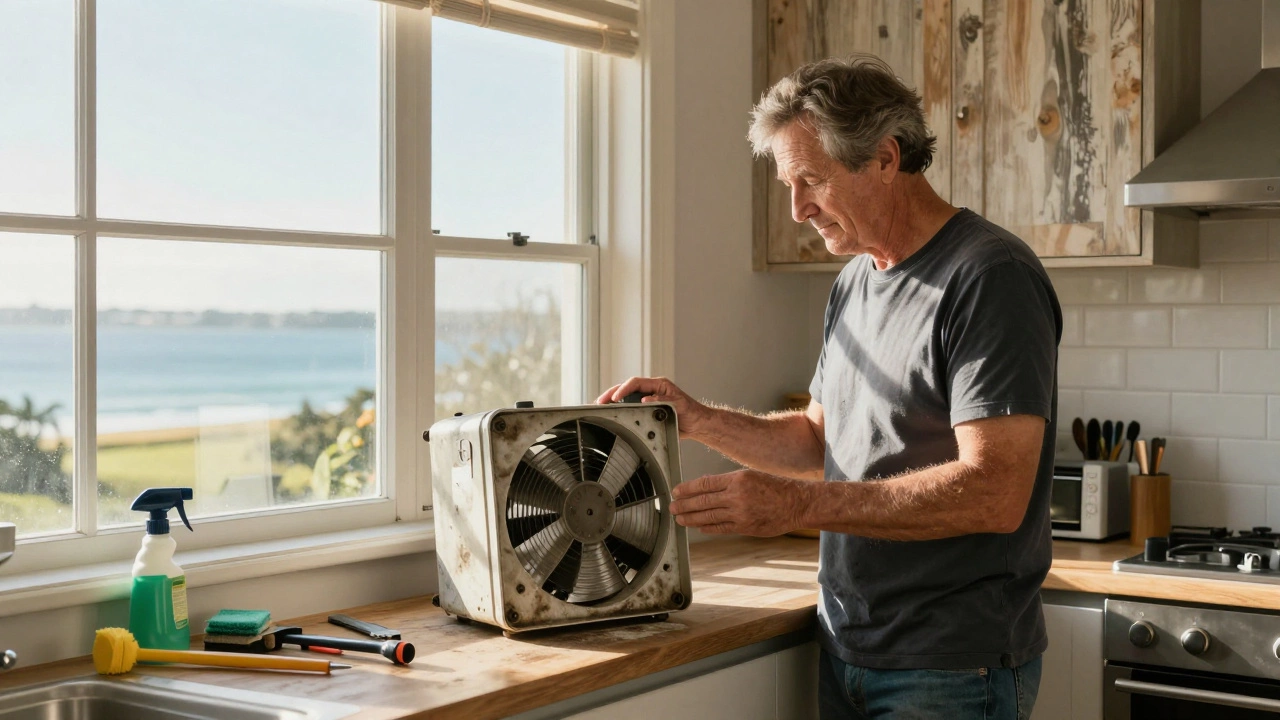
- Clean the grease filter monthly. Most fans have a removable metal mesh filter. Take it out, soak it in hot water and dish soap for 20 minutes, scrub with a brush, then dry completely before putting it back. Don’t skip this - it’s the #1 thing that keeps the motor alive.
- Wipe down the grille every 3 months. Use a damp cloth with white vinegar to dissolve grease. Don’t use abrasive cleaners - they scratch the surface and trap more dirt.
- Check the duct for blockages once a year. If you can access the vent outside, look for bird nests, leaves, or collapsed piping. A blocked duct makes the fan work twice as hard.
- Don’t run it on high all the time. Use low or medium settings for light cooking. Save high speed for heavy smoke or steam.
These steps won’t make your fan last forever, but they can easily add 3 to 5 years to its life. That’s like getting a free upgrade.
When to Repair vs. Replace
Here’s the hard truth: most extractor fan repairs aren’t worth it.
Replacing the motor might cost $80-$150, plus labor. But a brand-new extractor fan - even a high-quality one - runs $120-$300. And if the housing is corroded, the duct is damaged, or the wiring is old, you’re just patching a sinking ship.
Here’s when repair makes sense:
- The fan is under 5 years old and the issue is a loose wire or faulty switch.
- You have a premium model (like Zephyr, Vent-A-Hood, or Extracta) with a known repairable motor.
- The fan is part of a custom kitchen and replacing it would mean redoing cabinetry.
Otherwise, replace it. Modern fans are quieter, more efficient, and come with features like timers, humidity sensors, and LED lighting. You’ll save on energy bills and avoid future headaches.
What to Look for in a New Extractor Fan
If you’re replacing yours, here’s what actually matters:
- Cubic meters per hour (m³/h) - Aim for at least 80-100 m³/h for a kitchen. For larger spaces or open-plan areas, go for 150+.
- Noise rating - Look for 40 dB or lower. Anything above 50 dB is annoying. The quietest models are under 30 dB.
- Energy rating - Choose A+ or higher. Older fans waste power.
- IP rating - For bathrooms or steamy kitchens, get IP44 or higher.
- Warranty - 2 years minimum. Brands like Elica, Bora, and Miele offer 5-year warranties on motors.
Don’t be fooled by fancy designs. A sleek glass fan with no grease filter is a trap. You’ll be cleaning it every week - and it still won’t work well.
Real-World Example: Auckland Homes
In Auckland’s humid climate, extractor fans face extra stress. Coastal homes deal with salt air, which corrodes metal faster. Older houses often have long, poorly insulated ducts that collect condensation. A fan that lasts 12 years in Wellington might only last 8 here.
One service technician in Mt. Eden told me he sees 3-4 failed extractor fans a week in winter. The common pattern? Homeowners never cleaned the filter, didn’t check the duct, and waited until the fan stopped completely. Then they called for emergency repair - only to be told it’s cheaper to replace it.
That’s avoidable.
Final Advice: Plan Ahead
If your extractor fan is 8 years old or older, start preparing for replacement. Don’t wait for it to fail during a big dinner party or while you’re hosting guests. Keep a budget of $200-$300 aside. When the time comes, you’ll have options - not panic.
And if you’re still unsure? Take a photo of your fan, note the model number (usually on a sticker inside the cover), and ask a local appliance repairer. Most will give you a free opinion.
Your extractor fan isn’t glamorous. But it’s one of the quietest protectors of your home. It keeps mold out, air clean, and your walls from rotting. Treat it right - and it’ll last longer than your microwave.
How often should I clean my extractor fan filter?
Clean the grease filter every month if you cook frequently (3+ times a week). If you cook less often, clean it every 6 to 8 weeks. Use hot water, dish soap, and a soft brush. Let it dry completely before reinstalling. A dirty filter cuts airflow by up to 60% and overheats the motor.
Can I replace just the motor in my extractor fan?
Sometimes - but it’s rarely worth it. Motor replacements cost $80-$150, plus labor. Most fans under 8 years old are still worth repairing, but older units often have corroded housings, worn ducts, or outdated wiring. For $200-$300, you can buy a new, quieter, more efficient fan with a warranty. The savings in energy and maintenance usually make replacement the smarter choice.
Why is my extractor fan so loud now?
Loud noises usually mean the motor bearings are worn or the blades are clogged with grease. Dust and grease buildup throws the fan out of balance, causing vibration. In some cases, the duct is blocked or loose, making the fan rattle. If cleaning the filter and grille doesn’t help, the motor is likely failing. Don’t ignore it - continued use can damage the housing or wiring.
Does an extractor fan need a duct to the outside?
Yes - and it’s required by New Zealand building codes for kitchens and bathrooms. Recirculating fans (those that filter air and blow it back into the room) only remove grease, not moisture or odors. They’re not effective for steam control and can cause mold buildup. Always choose a fan that vents directly outside through a properly sealed duct.
What’s the difference between a kitchen and bathroom extractor fan?
Kitchen fans are built to handle grease and higher airflow - they usually have metal filters and stronger motors (100+ m³/h). Bathroom fans focus on moisture removal and are quieter (30-45 dB), with lower airflow (50-80 m³/h). They also need a higher IP rating (IP44+) to handle steam. Don’t use a bathroom fan in the kitchen - it won’t last.
How do I know if my extractor fan is powerful enough?
Multiply your kitchen’s volume (length × width × height in meters) by 10. That’s the minimum airflow in m³/h you need. For example, a 4m × 5m × 2.4m kitchen = 48m³. 48 × 10 = 480 m³/h minimum. Most standard fans are rated for 80-150 m³/h, so if you have a large or open-plan space, you’ll need a high-capacity model or multiple fans.